Auditing AI Algorithms: Ensuring Fairness and Mitigating Bias in 2026

Auditing AI Algorithms: Ensuring Fairness and Mitigating Bias in 2026
In an increasingly AI-driven world, the imperative to ensure fairness and mitigate bias in artificial intelligence algorithms has never been more critical. As we advance into 2026, the deployment of AI systems across various sectors—from healthcare and finance to criminal justice and employment—brings with it immense potential for efficiency and innovation. However, this potential is inextricably linked to the ethical implications of these powerful tools. Unchecked biases within AI can perpetuate and even amplify societal inequalities, leading to discriminatory outcomes that erode trust, harm individuals, and undermine the very promise of AI. Therefore, a robust framework for auditing AI algorithms for bias is not merely a best practice; it is a fundamental pillar of responsible AI development and deployment.
The concept of algorithmic bias is not new, but its manifestations are becoming more subtle, pervasive, and challenging to detect. Bias can seep into AI systems at multiple stages: from biased training data, where historical human prejudices are inadvertently encoded; through algorithmic design choices that favor certain groups; to the interpretation and application of AI outputs in real-world scenarios. The consequences of such biases can range from misdiagnosis in medical AI to unfair loan denials, biased hiring decisions, or disproportionate surveillance. This makes the task of auditing AI algorithms a complex, multifaceted endeavor that requires a blend of technical expertise, ethical understanding, and a commitment to continuous improvement.
This comprehensive guide aims to provide a practical roadmap for auditing AI algorithms for bias in 2026. We will delve into the foundational principles of ethical AI, explore the various sources and types of algorithmic bias, and outline a systematic approach to conducting effective AI audits. Furthermore, we will examine the cutting-edge tools and methodologies available to practitioners, discuss the regulatory landscape, and highlight the organizational strategies necessary to embed fairness and accountability into the AI lifecycle. Our goal is to equip developers, data scientists, ethicists, policymakers, and business leaders with the knowledge and resources needed to navigate this crucial domain, ensuring that AI serves humanity equitably and responsibly.
Understanding Algorithmic Bias: Sources and Types
Before embarking on the journey of auditing AI algorithms, it is essential to have a deep understanding of what algorithmic bias entails, where it originates, and how it manifests. Algorithmic bias refers to systematic and repeatable errors in a computer system that create unfair outcomes, such as favoring one arbitrary group over another. These biases are not inherent to the technology itself but are reflections of human biases embedded in the data or design choices.
Sources of Bias in AI Systems
- Data Bias: This is arguably the most common and impactful source of algorithmic bias.
- Historical Bias: Reflects past or present societal biases present in the data used to train AI models. For example, if a hiring algorithm is trained on historical data where certain demographics were underrepresented in leadership roles, it might implicitly learn to de-prioritize candidates from those demographics.
- Representation Bias: Occurs when the training data does not accurately represent the real-world population or the specific subgroups that the AI system will interact with. This can lead to the model performing poorly or unfairly for underrepresented groups.
- Measurement Bias: Arises when the features or labels used in the dataset are imperfect proxies for the true concepts they intend to measure. For instance, using arrest rates as a proxy for criminality might introduce bias if certain communities are over-policed.
- Sampling Bias: Happens when the data collection process itself systematically excludes or under-samples certain groups, leading to an unrepresentative dataset.
- Algorithmic Bias (Design Bias): Even with perfectly unbiased data (a rare feat), bias can be introduced through the choices made in the algorithm’s design and training.
- Feature Selection Bias: Deciding which features to include or exclude in a model can inadvertently introduce bias if relevant features for certain groups are omitted or irrelevant, biased features are included.
- Algorithm Choice Bias: Different algorithms have varying sensitivities to certain types of data and can amplify existing biases. For instance, some algorithms might perform better with dense data, potentially disadvantaging sparse data from minority groups.
- Hyperparameter Tuning Bias: The choices made during the optimization process, such as setting thresholds or regularization parameters, can disproportionately affect different subgroups.
- Interaction Bias: Bias can also emerge from the way users interact with the AI system, or how the system is deployed and interpreted.
- Feedback Loop Bias: When an AI system’s outputs influence future data collection, creating a reinforcing cycle of bias. For example, if an algorithm unfairly denies loans to a group, that group may then have a worse credit history, leading to further denials.
- Deployment Bias: How the AI system is integrated into real-world processes and user interfaces can introduce bias, even if the underlying model is fair.
Types of Algorithmic Bias Outcomes
Understanding the sources helps in prevention, but recognizing the types of biased outcomes is crucial for effective auditing AI algorithms:
- Disparate Impact: When an AI system, despite being seemingly neutral, has a disproportionately adverse effect on certain protected groups. For instance, a résumé screening AI might disproportionately filter out qualified candidates from certain demographic backgrounds.
- Disparate Treatment: Occurs when an AI system explicitly treats individuals differently based on sensitive attributes (e.g., race, gender, age), even if indirectly through proxies.
- Allocation Bias: When AI systems unfairly allocate opportunities, resources, or information. Examples include biased loan approvals, job recommendations, or healthcare access.
- Quality of Service Bias: When an AI system performs worse for certain groups, leading to a lower quality of service. For example, a speech recognition system might have higher error rates for certain accents, or a facial recognition system might be less accurate for darker skin tones.
- Stereotyping: AI systems can inadvertently reinforce societal stereotypes by making predictions or classifications that align with prejudiced views.
A comprehensive approach to auditing AI algorithms must therefore address all these potential sources and manifestations of bias, ensuring that the system is fair, equitable, and robust for all users.
A Structured Approach to Auditing AI Algorithms for Bias
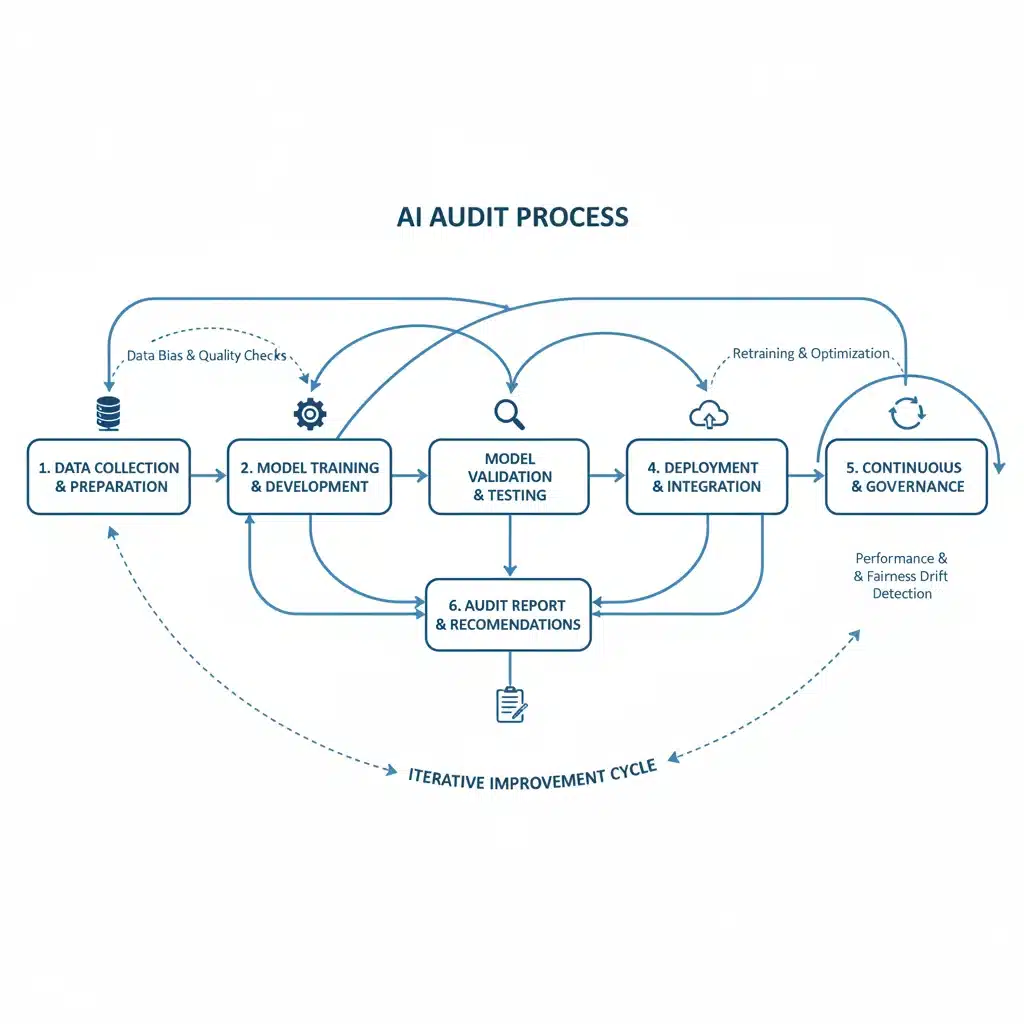
Conducting a thorough audit of AI algorithms for bias requires a systematic and multi-stage process. This isn’t a one-time check but an ongoing commitment to ethical AI governance. Here’s a structured approach that organizations can adopt in 2026:
Phase 1: Pre-Deployment Audit – Design and Data Assessment
This initial phase focuses on proactive identification and mitigation of bias before the AI system is even deployed. It’s the most cost-effective stage for intervention.
- Define Fairness Metrics and Objectives: Before any technical analysis, clearly define what ‘fairness’ means for your specific AI application. This involves engaging stakeholders, including ethicists, legal experts, and representatives of potentially impacted groups. Are you aiming for demographic parity, equal opportunity, or predictive parity? These definitions will guide your audit.
- Data Collection and Preparation Audit:
- Data Source Scrutiny: Examine the provenance of all training data. Is it representative? Are there known biases in its collection?
- Demographic Analysis: Analyze the demographic composition of your training, validation, and test datasets. Identify underrepresented groups or significant imbalances.
- Feature Engineering Review: Scrutinize the features used. Are there any proxies for sensitive attributes that could inadvertently introduce bias? Are all necessary features included to ensure fairness across groups?
- Data Labeling Audit: If human annotators are involved, audit their guidelines and output for consistency and potential human biases.
- Model Design and Training Audit:
- Algorithm Selection Review: Understand why a particular algorithm was chosen and assess its known sensitivities to bias.
- Hyperparameter Optimization Review: Evaluate if hyperparameter tuning processes were fair across different subgroups.
- Bias Mitigation Techniques Integration: Check if bias mitigation techniques (e.g., re-sampling, re-weighting, adversarial debiasing) were considered and applied during training.
- Documentation and Transparency: Ensure comprehensive documentation of data sources, preprocessing steps, model architecture, training procedures, and fairness considerations. This transparency is crucial for future audits and accountability.
Phase 2: Post-Deployment Audit – Performance Monitoring and Continuous Evaluation
Once an AI system is in production, the audit process must continue to monitor its performance, detect emerging biases, and ensure ongoing fairness.
- Performance Monitoring Across Subgroups: Continuously monitor the AI system’s performance (e.g., accuracy, precision, recall, F1-score) across different demographic or protected groups. Disparities in these metrics can indicate bias.
- Fairness Metric Tracking: Implement dashboards and automated alerts to track the predefined fairness metrics in real-time. This helps in quickly identifying deviations from established fairness thresholds.
- Adversarial Testing and Stress Testing: Subject the deployed AI system to adversarial attacks and stress tests specifically designed to expose blind spots or vulnerabilities related to bias. This can involve injecting deliberately skewed data or edge cases.
- User Feedback Loops: Establish robust mechanisms for collecting and analyzing user feedback, especially from individuals who might be disproportionately affected by biased outcomes. This qualitative data is invaluable for uncovering subtle biases.
- Concept Drift and Data Drift Detection: Monitor for changes in the input data distribution (data drift) or changes in the relationship between input features and target variables (concept drift). These drifts can introduce new biases over time.
- Retraining and Re-auditing: Based on continuous monitoring, establish clear triggers for retraining models and conducting full re-audits. This ensures that mitigation strategies remain effective as data and real-world conditions evolve.
Methodologies and Tools for Auditing AI Algorithms
The field of AI auditing is rapidly evolving, with new methodologies and tools emerging to address the complex challenges of bias detection and mitigation. In 2026, practitioners have access to a sophisticated suite of approaches.
Quantitative Methodologies for Bias Detection
- Statistical Parity Difference (SPD): Measures the difference in the proportion of favorable outcomes between different groups. A value close to zero indicates fairness.
- Equal Opportunity Difference (EOD): Assesses if the true positive rates (e.g., correctly predicting a positive outcome) are similar across different groups. Crucial for applications where false negatives are particularly harmful.
- Average Odds Difference (AOD): Considers both false positive rates and false negative rates across groups, providing a more comprehensive view of fairness.
- Predictive Parity: Examines if the positive predictive values (precision) are similar across groups. Important when false positives are costly.
- Disparate Impact Ratio (DIR): Calculated as the ratio of the selection rate for a protected group to the selection rate for a majority group. A DIR below 0.8 (the ‘4/5ths rule’ often used in employment law) typically indicates disparate impact.
- Counterfactual Fairness: A more advanced concept that asks whether an individual’s outcome would change if only their sensitive attributes were different, while holding all other non-sensitive attributes constant.
Explainable AI (XAI) for Understanding Bias
XAI techniques are invaluable in auditing AI algorithms as they help understand *why* an AI system makes certain decisions, thus revealing potential biases.
- LIME (Local Interpretable Model-agnostic Explanations): Explains individual predictions by creating locally faithful, interpretable models around specific instances. This can help identify if a decision was fair for that specific instance.
- SHAP (SHapley Additive exPlanations): Provides global and local interpretability by attributing the contribution of each feature to a prediction. SHAP values can highlight features that disproportionately influence outcomes for certain groups.
- Feature Importance Analysis: Identifies which features the model relies on most heavily. If sensitive attributes or their proxies are highly important, it flags potential bias.
- Partial Dependence Plots (PDPs) and Individual Conditional Expectation (ICE) Plots: Visualize the marginal effect of one or two features on the predicted outcome of a machine learning model, helping to see how changes in feature values impact predictions across different groups.
Open-Source Tools for AI Auditing
The open-source community has developed powerful tools to assist in auditing AI algorithms:
- IBM AI Fairness 360 (AIF360): A comprehensive open-source toolkit that includes a wide array of fairness metrics and bias mitigation algorithms, along with tutorials and examples.
- Microsoft Fairlearn: Provides a collection of algorithms and tools for assessing and improving fairness in AI systems, focusing on mitigating harms of unfairness.
- Google What-If Tool (WIT): An interactive visual tool for exploring and analyzing ML models, helping users understand model behavior on different data subsets and identify potential issues like bias.
- Aequitas: An open-source bias audit toolkit for machine learning models, providing a user-friendly interface to assess bias across various fairness metrics.
- TrustyAI (Red Hat): Focuses on explainability and trustworthiness of AI models, offering tools for monitoring and explaining model decisions in production.
These tools, combined with a deep understanding of methodologies, empower auditors to conduct rigorous and insightful analyses when auditing AI algorithms.
Establishing an AI Governance Framework: Beyond the Audit
While auditing AI algorithms is a critical component, it must be embedded within a broader AI governance framework to be truly effective. This framework encompasses policies, processes, roles, and responsibilities that guide the responsible development and deployment of AI.
Key Components of an AI Governance Framework
- Ethical AI Principles: Establish a clear set of organizational principles (e.g., fairness, transparency, accountability, privacy, safety) that guide all AI initiatives.
- Roles and Responsibilities: Define clear roles for AI ethics committees, data ethics officers, AI auditors, and model risk managers. Ensure accountability at every stage of the AI lifecycle.
- AI Impact Assessments (AIIAs): Mandate AI Impact Assessments for all new or significantly modified AI systems. These assessments should evaluate potential societal, ethical, and legal risks, including bias.
- Regular Training and Education: Provide ongoing training for AI developers, data scientists, and business stakeholders on ethical AI principles, bias detection, and mitigation techniques.
- Version Control and Audit Trails: Implement robust version control for models, data, and code, along with detailed audit trails that document all changes and decisions made throughout the AI development process.
- Incident Response Plan: Develop a plan for responding to AI-related incidents, including those involving algorithmic bias, to ensure timely investigation, remediation, and communication.
Integrating Audits into the AI Lifecycle
Effective auditing AI algorithms isn’t a standalone activity; it’s integrated into every stage of the AI lifecycle:
- Planning & Design: Incorporate fairness-by-design principles. Conduct initial bias assessments of data sources and use cases.
- Data Collection & Preparation: Implement rigorous data auditing for representation, quality, and potential bias.
- Model Development & Training: Apply bias mitigation techniques, test for fairness during model selection, and document all decisions.
- Validation & Verification: Conduct comprehensive pre-deployment audits using diverse fairness metrics and XAI tools.
- Deployment: Ensure proper deployment strategies that don’t introduce new biases.
- Monitoring & Maintenance: Implement continuous monitoring for bias, data drift, and concept drift. Establish regular re-auditing schedules.
- Decommissioning: Ensure that when an AI system is retired, its impact is assessed, and lessons learned are documented.

Regulatory Landscape and Future Outlook for AI Auditing
The regulatory environment surrounding AI is rapidly evolving, with a growing emphasis on accountability, transparency, and fairness. In 2026, organizations will face increasing pressure from regulators, consumers, and civil society to demonstrate that their AI systems are free from harmful biases.
Key Regulatory Developments
- EU AI Act: The European Union’s comprehensive AI Act, expected to be fully implemented by 2026, categorizes AI systems by risk level. High-risk AI systems (e.g., in critical infrastructure, law enforcement, employment, credit scoring) will be subject to stringent requirements, including mandatory conformity assessments, risk management systems, data governance, and human oversight. Auditing AI algorithms for bias will be a central pillar of these requirements.
- NIST AI Risk Management Framework (RMF): The National Institute of Standards and Technology (NIST) in the US has developed a voluntary framework designed to help organizations manage risks associated with AI, including bias and fairness. While voluntary, it is becoming a de facto standard for best practices.
- Sector-Specific Regulations: Industries like healthcare and finance are developing their own AI guidelines and regulations, often incorporating requirements for bias detection and mitigation. For example, financial regulators are increasingly scrutinizing AI models used for credit scoring and loan approvals to ensure non-discrimination.
- Consumer Protection Laws: Existing consumer protection laws are being reinterpreted to apply to AI, holding companies accountable for discriminatory outcomes caused by their algorithms.
The Role of Independent AI Audits
As the regulatory landscape matures, the demand for independent, third-party AI audits will surge. These audits provide an objective assessment of an AI system’s fairness, robustness, and compliance with ethical guidelines and legal requirements. Independent auditors can bring specialized expertise, unbiased perspectives, and credibility to the process, helping organizations build trust with stakeholders and demonstrate due diligence.
Future Trends in AI Auditing
- Standardization of Metrics: Expect greater standardization of fairness metrics and reporting formats, making it easier to compare and benchmark AI systems across organizations and industries.
- Automated Auditing Tools: Continued development of more sophisticated automated tools for continuous monitoring and real-time bias detection, reducing the manual effort required for auditing AI algorithms.
- AI for AI Auditing: The emergence of AI-powered tools to assist in the auditing process itself, such as AI systems that can identify potential data biases or flag suspicious model behaviors.
- Ethical AI by Design: A stronger emphasis on embedding ethical considerations and fairness from the very initial stages of AI system design, making audits more efficient and effective.
- Global Collaboration: Increased international collaboration on AI ethics and regulation, leading to more harmonized approaches to AI auditing across borders.
Organizations that proactively embrace robust AI auditing practices and integrate them into their governance frameworks will be better positioned to navigate this evolving landscape, mitigate risks, and harness the full potential of AI responsibly.
Practical Steps for Implementing an AI Auditing Program
Establishing an effective program for auditing AI algorithms requires strategic planning and commitment. Here are practical steps organizations can take:
1. Secure Leadership Buy-in and Allocate Resources
Successful AI auditing starts at the top. Secure commitment from senior leadership for resources, budget, and personnel. Establish a cross-functional team comprising data scientists, ethicists, legal counsel, and business unit representatives.
2. Develop an AI Ethics Policy and Guidelines
Create clear, actionable policies that define the organization’s stance on AI ethics, fairness, transparency, and accountability. These guidelines should inform every stage of AI development and deployment and serve as a benchmark for audits.
3. Inventory and Prioritize AI Systems for Audit
Not all AI systems pose the same level of risk. Create an inventory of all AI systems in development and deployment. Prioritize systems for audit based on their potential impact on individuals, societal groups, and the organization (e.g., high-risk systems under EU AI Act).
4. Standardize Data Collection and Documentation Practices
Implement strict protocols for data collection, preprocessing, and feature engineering. Mandate comprehensive documentation for all datasets, including their provenance, characteristics, and any known limitations or biases. This makes future audits significantly easier and more effective.
5. Integrate Fairness-Aware Development Practices
Train development teams on fairness-aware machine learning techniques. Encourage the use of bias mitigation strategies during model training and incorporate fairness metrics into model evaluation pipelines from the outset, not just as an afterthought.
6. Implement Robust Testing and Validation Protocols
Develop rigorous testing protocols that include: unit testing for individual components, integration testing for system-level interactions, and dedicated fairness testing across various demographic subgroups. Utilize both quantitative fairness metrics and qualitative assessments.
7. Establish Continuous Monitoring and Alert Systems
Deploy real-time monitoring tools to track model performance, data drift, concept drift, and fairness metrics in production. Set up automated alerts to notify relevant teams when performance or fairness thresholds are breached, allowing for rapid intervention.
8. Foster a Culture of Responsible AI
Beyond processes and tools, cultivate an organizational culture where responsible AI is a shared value. Encourage open dialogue about ethical dilemmas, provide safe spaces for reporting concerns, and reward behaviors that prioritize fairness and accountability. Regular workshops, seminars, and internal forums can help embed this culture.
9. Consider Independent Third-Party Audits
For critical or high-risk AI systems, engage independent third-party auditors. This not only provides an objective assessment but also enhances credibility with regulators and the public. These external audits can validate internal processes and identify blind spots.
10. Iterative Improvement and Feedback Loops
Treat AI auditing as an iterative process. Use the insights gained from audits to refine data collection, model development, and deployment strategies. Establish feedback loops between audit findings and AI development teams to ensure continuous improvement in fairness and ethical performance.
By diligently following these steps, organizations can move beyond merely reacting to bias to proactively building and deploying AI systems that are fair, transparent, and trustworthy, thereby realizing the full, equitable potential of artificial intelligence.
Conclusion: The Imperative of Ethical AI in 2026
As we navigate further into 2026, the discussion around artificial intelligence has shifted from simply what AI *can* do to what AI *should* do. The immense power and pervasive integration of AI into our daily lives demand an unwavering commitment to ethical principles, with fairness and bias mitigation at the forefront. The process of auditing AI algorithms is no longer an optional add-on but a fundamental requirement for any organization serious about responsible innovation.
The journey to fair and unbiased AI is multifaceted, requiring a deep understanding of the various sources and types of bias, a structured approach to auditing across the entire AI lifecycle, and the deployment of sophisticated methodologies and tools. From meticulous data auditing and explainable AI techniques to continuous monitoring and a robust governance framework, every step plays a crucial role in safeguarding against discriminatory outcomes.
Moreover, the evolving global regulatory landscape, exemplified by initiatives like the EU AI Act and NIST’s RMF, underscores the increasing legal and ethical obligations placed upon AI developers and deployers. Organizations that embrace proactive and comprehensive AI auditing will not only comply with these regulations but will also build greater trust with their users, enhance their reputation, and ultimately create more robust and impactful AI solutions.
The future of AI is not just about technological advancement; it is about human-centric design, ethical stewardship, and ensuring that these powerful tools serve all of humanity equitably. By prioritizing and effectively implementing strategies for auditing AI algorithms, we collectively move closer to an AI-powered future that is truly fair, inclusive, and beneficial for everyone.