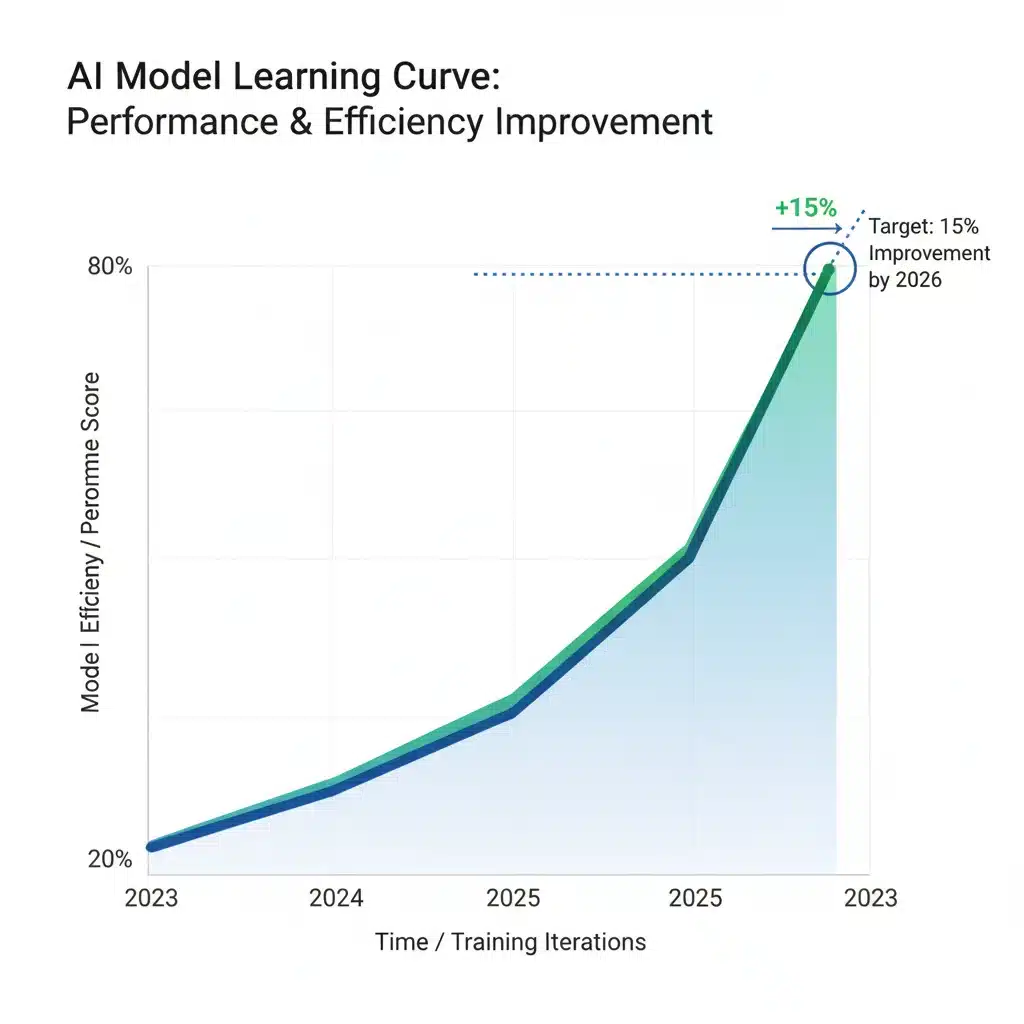
Reinforcement Learning Industrial Efficiency: 15% Gains by 2026
The 2026 Landscape of Reinforcement Learning: Achieving 15% Model Efficiency Gains in Industrial Applications
In the rapidly evolving landscape of artificial intelligence, Reinforcement Learning (RL) stands out as a transformative technology, poised to redefine industrial operations. As we approach 2026, the potential for RL to drive significant model efficiency gains in industrial applications is not just a theoretical concept but a tangible, measurable goal. Experts predict that industrial sectors leveraging advanced RL techniques could see an average of 15% improvement in model efficiency, leading to unprecedented levels of operational optimization, cost reduction, and innovation. This article delves deep into the mechanisms, challenges, and immense opportunities presented by this exciting frontier, focusing on the critical role of reinforcement learning industrial applications.
Understanding Reinforcement Learning in Industrial Contexts
Reinforcement Learning, a subset of machine learning, involves an agent learning to make decisions by performing actions in an environment to maximize a cumulative reward. Unlike supervised learning, which relies on labeled data, or unsupervised learning, which finds patterns in unlabeled data, RL agents learn through trial and error, much like humans. This inherent capability to learn optimal strategies from interaction makes RL exceptionally well-suited for dynamic and complex industrial environments where conditions are constantly changing and optimal actions are not always obvious.
The Foundation of Industrial RL
At its core, reinforcement learning industrial applications are built upon several key components:
- Agents: These are the algorithms or systems that make decisions. In an industrial setting, an agent could be a control system for a robotic arm, a predictive maintenance algorithm, or an energy management system.
- Environment: This refers to the industrial process or system with which the agent interacts. This could be a manufacturing line, a supply chain network, a power grid, or a chemical plant.
- States: The current situation or configuration of the environment. For example, the temperature of a furnace, the inventory level of a warehouse, or the speed of a conveyor belt.
- Actions: The decisions or interventions the agent can take within the environment. This might include adjusting a machine’s parameters, rerouting a logistics path, or altering energy consumption.
- Rewards: Feedback from the environment that guides the agent’s learning. Positive rewards encourage desired behaviors (e.g., increased production, reduced energy waste), while negative rewards discourage undesirable ones.
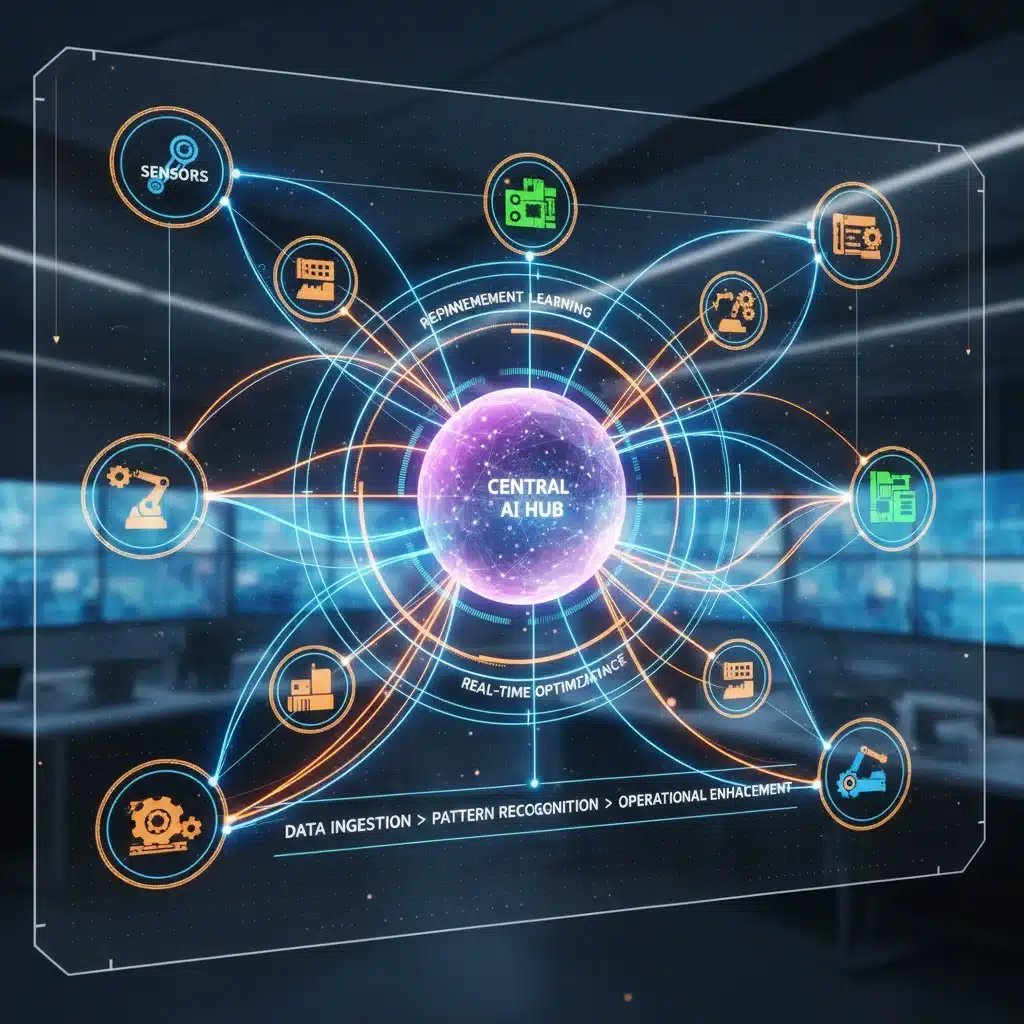
The iterative process of an agent observing the environment’s state, taking an action, receiving a reward, and updating its policy to maximize future rewards is what drives the learning in industrial RL. This continuous learning loop is crucial for adapting to real-world industrial complexities and achieving sustained efficiency gains.
Why 15% Model Efficiency Gains?
The projection of a 15% model efficiency gain by 2026 is not an arbitrary figure. It is based on several converging factors:
- Advancements in Algorithms: Recent breakthroughs in deep reinforcement learning (DRL), including algorithms like Deep Q-Networks (DQN), Proximal Policy Optimization (PPO), and Soft Actor-Critic (SAC), have significantly enhanced RL’s ability to handle high-dimensional state and action spaces, which are common in industrial settings.
- Increased Computational Power: The proliferation of powerful GPUs and specialized AI hardware has made it feasible to train complex RL models within reasonable timeframes, overcoming a major bottleneck of earlier RL implementations.
- Availability of Data: Industrial environments are increasingly instrumented with sensors, generating vast amounts of data. This data, while not always labeled, provides a rich source of information for RL agents to learn from, either through direct interaction or simulated environments built from real-world data.
- Development of Simulation Environments: High-fidelity simulation platforms allow RL agents to train safely and efficiently in virtual environments before deployment in real-world industrial systems, accelerating the learning process and reducing risks.
- Growing Expertise: A burgeoning community of researchers and engineers specializing in industrial AI and RL is driving innovation and practical application, translating theoretical concepts into deployable solutions.
These factors collectively create a fertile ground for RL to achieve substantial improvements in how industrial models operate, leading to more precise control, better resource allocation, and ultimately, greater efficiency.
Key Areas for Reinforcement Learning Industrial Impact
The application of reinforcement learning industrial solutions spans a wide array of sectors, each presenting unique challenges and opportunities for efficiency enhancement. The 15% efficiency gain is a holistic average, with some sectors potentially exceeding this, while others might achieve slightly less but still significant improvements.
Manufacturing and Robotics
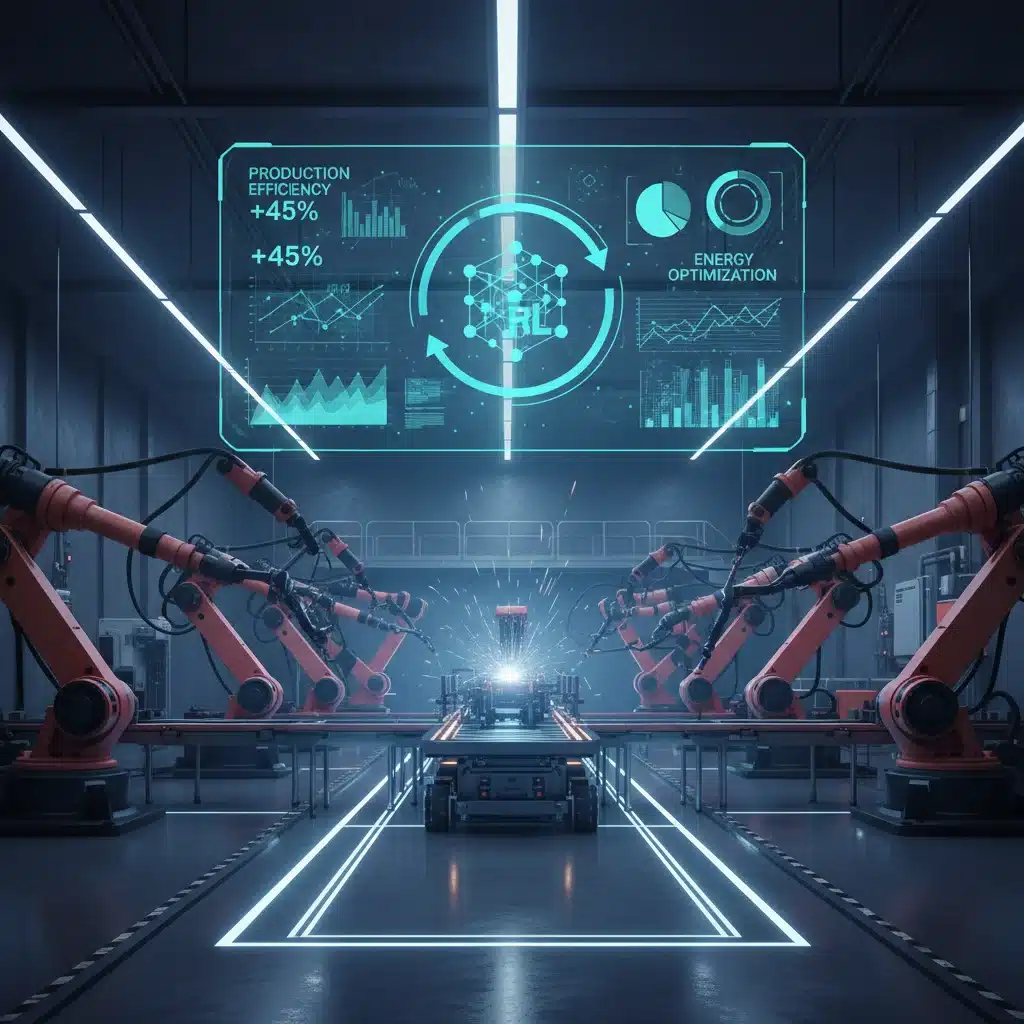
In manufacturing, RL is revolutionizing automation. Robotic arms can learn complex manipulation tasks with greater dexterity and adaptability than traditionally programmed robots. For instance, an RL agent can learn to assemble intricate components by minimizing errors and optimizing movement paths, leading to faster cycles and fewer defects. Predictive maintenance, another critical area, uses RL to schedule maintenance activities optimally, reducing downtime and extending equipment lifespan by anticipating failures before they occur. This proactive approach, guided by RL models, can drastically cut operational expenditure and boost overall equipment effectiveness (OEE).
Supply Chain and Logistics
Optimizing supply chains is a monumental task involving countless variables. RL agents can learn to manage inventory levels, optimize routing for delivery fleets, and dynamically adjust to disruptions like weather events or sudden demand shifts. By learning from historical data and real-time feedback, RL models can reduce transportation costs, minimize warehousing expenses, and ensure timely deliveries, directly impacting customer satisfaction and profitability. Imagine a system where delivery routes are autonomously adjusted every few minutes based on traffic, weather, and new order placements – that is the power of reinforcement learning industrial optimization in logistics.
Energy Management and Smart Grids
The energy sector is ripe for RL applications, particularly in managing smart grids and optimizing energy consumption. RL agents can learn to balance energy supply and demand, integrate renewable energy sources more effectively, and optimize the operation of HVAC systems in large industrial complexes. By predicting energy prices and consumption patterns, RL can help industries reduce their energy bills significantly and contribute to sustainability goals. A 15% efficiency gain in energy usage for a large industrial plant translates into substantial savings and a reduced carbon footprint.
Process Control and Chemical Engineering
Complex chemical processes often require precise control over multiple parameters to ensure product quality and safety. RL can develop optimal control policies for these processes, adapting to variations in raw materials or environmental conditions. This leads to higher yield, reduced waste, and safer operations. For example, an RL agent could learn to fine-tune temperature, pressure, and flow rates in a reactor to maximize the desired chemical output while minimizing unwanted byproducts. This level of dynamic control is difficult, if not impossible, with traditional control systems.
Challenges and Considerations for RL Adoption
While the promise of reinforcement learning industrial applications is immense, several challenges must be addressed for widespread adoption and to fully realize the projected 15% efficiency gains.
Data Requirements and Quality
Although RL doesn’t require labeled data in the traditional sense, it does demand high-quality, relevant data from the environment to learn effectively. Poor data quality, sensor inaccuracies, or insufficient data can lead to suboptimal policies and hinder the agent’s ability to generalize. Industrial environments often present noisy and incomplete data, necessitating robust data preprocessing and filtering techniques.
Safety and Reliability
Deploying RL agents in critical industrial systems raises significant safety concerns. Unlike traditional control systems with predictable behavior, RL agents can exhibit emergent behaviors that are difficult to anticipate. Ensuring the reliability and safety of RL-driven systems requires rigorous testing, robust simulation environments, and mechanisms for human oversight and intervention. The ‘black box’ nature of some deep RL models also poses challenges for interpretability and trustworthiness.
Computational Resources and Infrastructure
Training advanced RL models can be computationally intensive, requiring significant hardware resources and cloud infrastructure. While costs are decreasing, it remains a substantial investment for many industrial players. Furthermore, deploying and maintaining these complex systems requires specialized IT infrastructure and expertise.
Integration with Existing Systems
Industrial facilities often rely on legacy systems and proprietary technologies. Integrating new RL-based solutions with these existing infrastructures can be complex and costly. Seamless interoperability is crucial for realizing the full benefits of RL without disrupting ongoing operations.
Skill Gap
There is a significant shortage of professionals with expertise in both AI/RL and industrial domain knowledge. Bridging this skill gap through education, training, and cross-disciplinary collaboration is vital for successful implementation of reinforcement learning industrial solutions.
Strategies for Achieving 15% Model Efficiency Gains
To reach the ambitious target of 15% model efficiency gains by 2026, industries need to adopt a multi-faceted approach, combining technological innovation with strategic implementation.
Leveraging Advanced RL Techniques
- Offline RL: This approach allows agents to learn from pre-collected data without direct interaction with the environment, which is crucial for safety-critical industrial applications where real-world exploration is risky or costly.
- Multi-Agent RL: For complex systems with multiple interacting components (e.g., a fleet of autonomous robots or interconnected production lines), multi-agent RL can optimize the collective behavior of several agents, leading to system-wide efficiencies.
- Meta-Reinforcement Learning: This enables RL agents to learn how to learn, allowing them to adapt quickly to new tasks or changing environments with minimal retraining, a significant advantage in dynamic industrial settings.
- Reward Shaping and Inverse RL: Carefully designing reward functions or inferring them from expert demonstrations can significantly accelerate the learning process and guide agents towards desired behaviors more effectively.
Investing in Simulation and Digital Twins
High-fidelity simulation environments and digital twin technologies are indispensable for developing and testing industrial RL solutions. Digital twins, virtual replicas of physical assets, processes, or systems, provide a safe and cost-effective platform for RL agents to train, experiment, and optimize their policies without impacting real-world operations. This allows for rapid iteration and validation, significantly reducing deployment risks and accelerating the path to efficiency gains. The more accurate the digital twin, the more effectively the reinforcement learning industrial agent can learn and transfer its knowledge to the physical system.
Focusing on Data Infrastructure and MLOps
Robust data pipelines and MLOps (Machine Learning Operations) practices are essential. This includes establishing mechanisms for collecting, storing, processing, and validating industrial data. MLOps ensures that RL models are continuously monitored, updated, and retrained as environmental conditions change, maintaining their performance and efficiency over time. This operational rigor is critical for sustained efficiency improvements.
Cultivating Cross-Disciplinary Expertise
Successful RL implementation requires collaboration between AI researchers, data scientists, and domain experts (e.g., manufacturing engineers, logistics managers). Companies should invest in training programs, foster internal communities of practice, and potentially partner with academic institutions or specialized AI firms to build the necessary expertise.
The Future Outlook: Beyond 2026
The journey towards 15% model efficiency gains by 2026 is just one milestone in the broader trajectory of reinforcement learning industrial transformation. Looking beyond this immediate horizon, several trends suggest even greater potential.
Generative AI and RL Synergy
The convergence of generative AI models with RL holds immense promise. Generative models could create more realistic and diverse simulation environments, enabling RL agents to train in even more challenging and varied scenarios. They could also assist in designing optimal system configurations or generating novel solutions that traditional RL might not discover.
Explainable RL (XRL)
Addressing the ‘black box’ problem, Explainable Reinforcement Learning (XRL) will become increasingly important. As RL agents take on more critical roles in industrial operations, the ability to understand their decision-making processes, debug errors, and ensure compliance will be paramount. Advances in XRL will foster greater trust and accelerate adoption in highly regulated industries.
Edge AI and Decentralized RL
With the proliferation of IoT devices and edge computing, RL models will increasingly operate closer to the data source. Decentralized RL, where multiple agents learn collaboratively or independently at the edge, will enable faster response times, reduced latency, and enhanced resilience in distributed industrial systems. This shift will be particularly impactful for large-scale operations spread across vast geographical areas.
Ethical AI and Responsible Deployment
As RL becomes more pervasive, the ethical implications of its deployment in industrial settings will require careful consideration. Issues such as job displacement, bias in decision-making, and accountability for autonomous systems will necessitate robust ethical frameworks and regulatory guidelines to ensure responsible innovation.
Conclusion
The landscape of industrial operations is on the cusp of a profound transformation, with Reinforcement Learning at its forefront. The ambitious target of achieving 15% model efficiency gains by 2026 is not merely an aspiration but a realistic outcome driven by technological advancements, growing expertise, and strategic investments. From optimizing manufacturing processes and streamlining supply chains to revolutionizing energy management and enhancing process control, the impact of reinforcement learning industrial applications will be far-reaching and transformative.
While challenges related to data quality, safety, computational resources, and skill gaps remain, proactive strategies focusing on advanced RL techniques, robust simulation, strong data infrastructure, and cross-disciplinary collaboration will pave the way for success. As we move towards and beyond 2026, RL will continue to evolve, promising even greater efficiencies, unprecedented levels of automation, and a more intelligent, resilient, and sustainable industrial future. Industries that embrace this powerful technology today will be the leaders of tomorrow, reaping the substantial benefits of optimized operations and enhanced competitive advantage.