AI for Supply Chain Optimization: Cut Costs 20% by 2026
In the fiercely competitive U.S. market, businesses are constantly seeking innovative strategies to gain an edge. One of the most critical areas for competitive differentiation and sustainable growth lies within the supply chain. Traditional supply chain management, while effective to a degree, often struggles with the complexities, volatilities, and sheer volume of data inherent in modern global logistics. This is where Artificial Intelligence (AI) emerges as a game-changer, offering unprecedented opportunities to not only streamline operations but also to achieve significant cost reductions. Our ambitious goal for 2026 is a 20% cut in operational costs through advanced AI supply chain optimization.
The promise of AI in the supply chain is not merely theoretical; it’s a rapidly evolving reality. From automating mundane tasks to predicting demand with uncanny accuracy, AI is reshaping how goods move from source to consumer. For U.S. businesses, this means navigating a complex landscape of domestic regulations, diverse consumer demands, and often unpredictable external factors. AI provides the tools to not just react to these challenges, but to proactively manage and even anticipate them, turning potential disruptions into opportunities for optimization.
This comprehensive guide will delve into the transformative power of AI in supply chain management, specifically focusing on how U.S. companies can leverage these technologies to achieve substantial operational cost savings. We will explore the core principles, practical applications, benefits, and the strategic roadmap necessary to integrate AI effectively and realize that ambitious 20% cost reduction target by 2026. The journey to a leaner, more efficient, and more resilient supply chain begins now.
The Imperative for AI Supply Chain Optimization in the U.S. Market
The U.S. supply chain landscape is characterized by its vastness, complexity, and dynamic nature. Factors such as fluctuating fuel prices, labor shortages, infrastructure challenges, and geopolitical shifts constantly exert pressure on operational costs. Traditional methods often rely on historical data and manual processes, which are inherently reactive and prone to human error. This often leads to inefficiencies, excess inventory, stockouts, and suboptimal routing, all of which inflate costs.
The emergence of AI provides a powerful antidote to these challenges. AI’s ability to process and analyze massive datasets at speeds and scales impossible for humans allows for a level of insight and foresight previously unimaginable. By identifying patterns, predicting future events, and automating decision-making, AI can transform a reactive supply chain into a proactive, intelligent network. This shift is not just about incremental improvements; it’s about a fundamental re-engineering of processes that can unlock significant cost efficiencies.
Moreover, U.S. consumers have increasingly high expectations for speed, transparency, and personalization. This puts additional strain on supply chains, demanding greater agility and responsiveness. AI helps meet these demands by optimizing every stage, from procurement to last-mile delivery, ensuring that products are available when and where customers want them, without incurring excessive costs.
Key Drivers for Adopting AI in U.S. Supply Chains:
- Rising Operational Costs: Fuel, labor, and transportation expenses continue to climb, necessitating smarter ways to manage resources.
- Increased Volatility and Uncertainty: Global events, economic shifts, and natural disasters can severely disrupt supply chains. AI offers better risk management.
- Consumer Demands: Expectations for faster delivery, greater transparency, and personalized experiences are pushing companies to innovate.
- Data Deluge: The sheer volume of data generated across the supply chain can only be effectively analyzed and leveraged with AI.
- Competitive Pressure: Companies that fail to adopt advanced technologies risk being outmaneuvered by more agile, AI-powered competitors.
Strategic Pillars for Achieving 20% Cost Reduction with AI
To achieve a substantial 20% reduction in operational costs by 2026, U.S. businesses must focus on several strategic pillars where AI supply chain optimization can deliver the most significant impact. These pillars encompass various stages of the supply chain, from planning and procurement to logistics and inventory management.
1. Predictive Demand Forecasting and Inventory Optimization
One of the largest drivers of supply chain costs is inaccurate demand forecasting, leading to either excessive inventory (carrying costs, obsolescence) or stockouts (lost sales, expedited shipping). AI, particularly machine learning algorithms, can analyze vast historical sales data, market trends, seasonal variations, promotional activities, and even external factors like weather patterns or social media sentiment to generate highly accurate demand forecasts.
With precise demand predictions, companies can optimize inventory levels across their network. AI-driven systems can determine optimal reorder points, safety stock levels, and distribution strategies, minimizing holding costs while ensuring product availability. This prevents capital from being tied up in slow-moving inventory and reduces waste.
Impact on Costs: Reduces warehousing costs, minimizes obsolescence, cuts down on expedited shipping, and prevents lost sales due to stockouts.
2. Intelligent Logistics and Route Optimization
Transportation often represents a significant portion of supply chain expenditures. AI can revolutionize logistics by optimizing routes, consolidating shipments, and selecting the most cost-effective carriers in real-time. Advanced algorithms consider factors such as traffic conditions, fuel prices, delivery windows, vehicle capacity, and driver availability to create dynamic, efficient routes.
Furthermore, AI can facilitate load optimization, ensuring that trucks and containers are filled to their maximum capacity, thereby reducing the number of trips required. For last-mile delivery, AI can map out the most efficient sequences for multiple deliveries, shaving minutes and miles off each route, which cumulatively leads to substantial savings.
Impact on Costs: Lowers fuel consumption, reduces labor costs (drivers’ time), minimizes wear and tear on vehicles, and optimizes carrier selection.
3. Automated Warehouse Operations and Robotics
Warehouses are hubs of activity, but they can also be sources of significant inefficiency. AI-powered automation and robotics are transforming warehouse operations, from goods receipt and storage to picking, packing, and shipping. Autonomous Mobile Robots (AMRs) can transport goods, robotic arms can pick and pack items, and AI vision systems can monitor inventory and quality.
AI algorithms can optimize warehouse layouts, slotting strategies, and picking paths, reducing travel time for human workers or robots. This leads to faster processing times, fewer errors, and a reduced reliance on manual labor for repetitive tasks, allowing human employees to focus on more complex, value-added activities.
Impact on Costs: Decreases labor costs, improves inventory accuracy, reduces damage and errors, and accelerates order fulfillment.
4. Supplier Relationship Management and Procurement Optimization
AI can significantly enhance procurement processes by analyzing supplier performance, identifying potential risks (e.g., financial instability, ethical concerns), and optimizing contract terms. Machine learning can predict supplier reliability and help negotiate better deals by providing insights into market prices and supplier capabilities.
Furthermore, AI can automate the processing of invoices and purchase orders, reducing administrative overhead and errors. By ensuring that procurement decisions are data-driven, companies can secure better pricing, reduce lead times, and mitigate supply chain disruptions.
Impact on Costs: Achieves better pricing for raw materials and components, reduces administrative costs in procurement, and mitigates risks of supply disruptions.
5. Enhanced Visibility and Risk Management
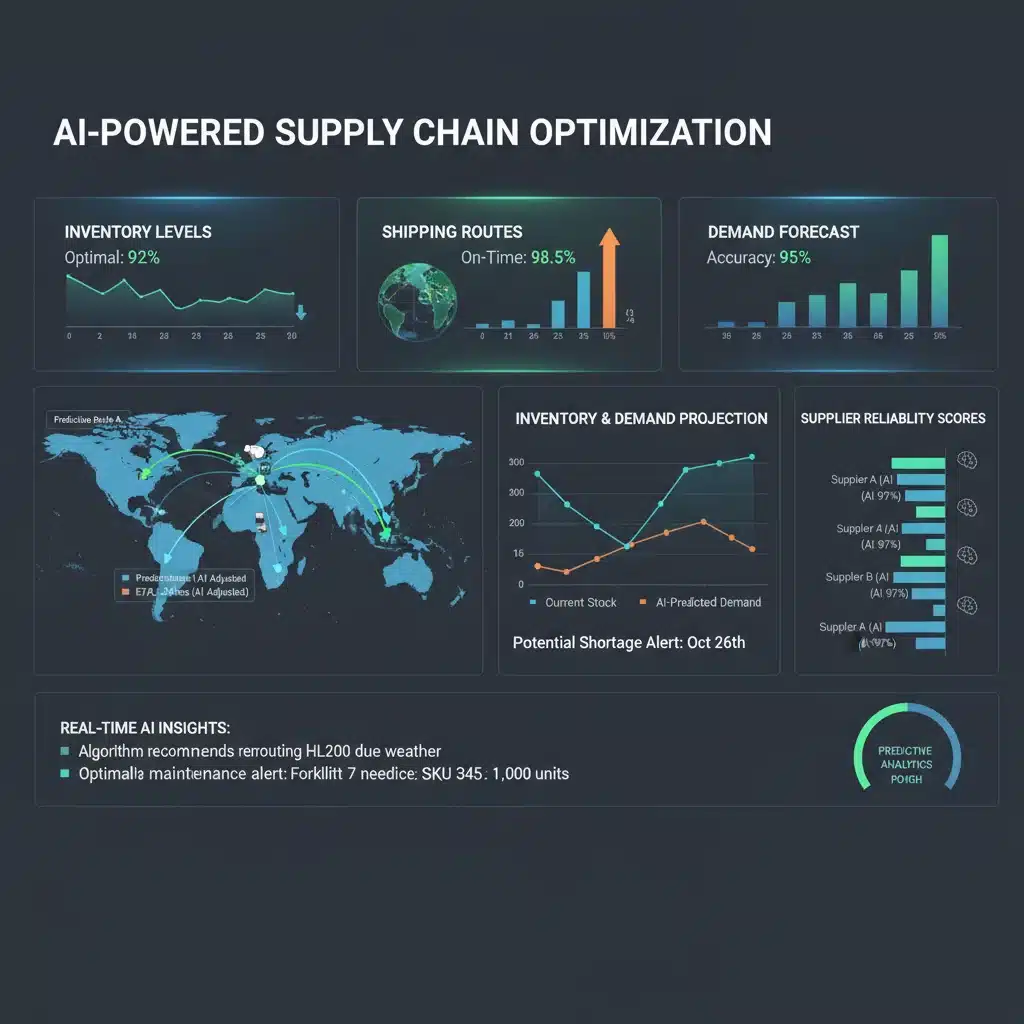
A lack of end-to-end visibility is a major vulnerability in many supply chains. AI, combined with IoT sensors and blockchain technology, can provide real-time tracking of goods, vehicles, and assets across the entire network. This enhanced visibility allows businesses to detect anomalies, anticipate potential disruptions (e.g., weather delays, port congestion), and react quickly.
AI algorithms can analyze vast amounts of data from various sources to identify potential risks before they escalate. For instance, predictive maintenance for fleet vehicles can prevent costly breakdowns, while AI-driven monitoring of geopolitical events can flag potential disruptions to international shipping lanes. Proactive risk management minimizes costly emergencies and ensures business continuity.
Impact on Costs: Reduces costs associated with disruptions, minimizes insurance claims, prevents production stoppages, and improves decision-making during crises.
Implementing AI Supply Chain Optimization: A Roadmap for U.S. Businesses
Achieving a 20% cost reduction by 2026 requires a structured, phased approach to AI implementation. It’s not about deploying a single AI solution, but rather integrating AI capabilities across various supply chain functions.
Phase 1: Assessment and Strategy (6-9 Months)
- Identify Pain Points: Conduct a thorough audit of current supply chain operations to pinpoint areas with the highest potential for cost reduction and efficiency gains. Where are costs highest? Where are inefficiencies most pronounced?
- Data Readiness Assessment: Evaluate the quality, quantity, and accessibility of existing data. AI thrives on data, so ensuring clean, structured, and relevant data is paramount. Identify data gaps and plan for data collection strategies.
- Define Clear Objectives: Set specific, measurable, achievable, relevant, and time-bound (SMART) goals for AI implementation, directly linking them to the 20% cost reduction target.
- Build an AI Strategy Team: Assemble a cross-functional team including supply chain experts, data scientists, IT specialists, and business leaders.
- Pilot Project Selection: Choose a small, manageable pilot project with a high probability of success to demonstrate AI’s value and build internal buy-in. This could be optimizing a single warehouse process or a specific delivery route.
- Vendor Selection: Research and evaluate AI solution providers, considering their expertise, scalability, integration capabilities, and track record in the supply chain domain.
Phase 2: Pilot Implementation and Proof of Concept (9-12 Months)
- Data Integration and Preparation: Implement robust data pipelines to feed clean, real-time data into AI models. This often involves integrating data from ERP, WMS, TMS, and other systems.
- Model Development and Training: Work with data scientists to develop and train AI/ML models based on the identified use cases (e.g., demand forecasting, route optimization).
- Pilot Deployment: Deploy the AI solution in the selected pilot area. Monitor its performance closely, collecting metrics related to cost savings, efficiency gains, and accuracy.
- Iterate and Refine: Based on pilot results, fine-tune the AI models and processes. Learn from challenges and adapt the strategy as needed.
- Measure ROI: Quantify the financial benefits of the pilot project to build a strong business case for broader deployment.
Phase 3: Scaled Deployment and Integration (12-18 Months)
- Phased Rollout: Gradually expand the AI solutions to other areas of the supply chain, prioritizing those with the highest potential impact and lowest implementation risk.
- System Integration: Ensure seamless integration of AI platforms with existing enterprise systems (ERP, CRM, WMS, TMS) to create a unified, intelligent ecosystem.
- Change Management and Training: Invest in comprehensive training programs for employees who will interact with AI systems. Address concerns, communicate benefits, and foster a culture of data-driven decision-making.
- Continuous Monitoring and Optimization: AI models are not static. Continuously monitor their performance, retrain them with new data, and adapt them to changing market conditions and business requirements.
- Establish Governance: Put in place robust governance frameworks for data privacy, security, and ethical AI usage.
Phase 4: Advanced Optimization and Expansion (Beyond 2026)
- Explore Advanced AI: Investigate emerging AI technologies like Generative AI for supply chain design, Digital Twins for simulation, and advanced reinforcement learning for complex decision-making.
- Supplier and Partner Collaboration: Extend AI capabilities to collaborate more deeply with suppliers and logistics partners, creating a truly interconnected and optimized ecosystem.
- Sustainability Integration: Use AI to identify opportunities for reducing environmental impact within the supply chain, aligning with growing consumer and regulatory demands for sustainability.
Challenges and Considerations for U.S. Businesses
While the benefits of AI supply chain optimization are compelling, U.S. businesses must be prepared to address several challenges:
- Data Quality and Availability: Poor data quality, siloed data, and a lack of standardized data formats can hinder AI effectiveness. Significant effort may be needed for data cleansing and integration.
- Talent Gap: A shortage of skilled data scientists, AI engineers, and professionals with both AI and supply chain expertise can be a bottleneck. Investing in training or partnering with specialized firms is crucial.
- Integration Complexity: Integrating new AI systems with legacy IT infrastructure can be complex and time-consuming. A modular approach and careful planning are essential.
- Initial Investment: The upfront cost of AI software, hardware, and talent can be substantial. A clear ROI projection is necessary to secure executive buy-in.
- Change Management: Resistance to new technologies from employees who fear job displacement or are uncomfortable with new processes can impede adoption. Effective communication and training are vital.
- Ethical AI and Bias: Ensuring AI models are fair, unbiased, and transparent is critical, especially when making decisions that impact jobs or livelihoods.
- Scalability: Solutions that work for a pilot project may not scale seamlessly across an entire enterprise. Planning for scalability from the outset is important.
Addressing these challenges requires a strategic, long-term commitment from leadership, coupled with a willingness to invest in technology, talent, and organizational change.

Real-World Impact: Case Studies and Examples
Numerous U.S. companies are already reaping the rewards of AI supply chain optimization. While specific cost reduction percentages can vary, the trends are clear:
- E-commerce Giants: Companies like Amazon leverage AI extensively for demand forecasting, warehouse automation (robotics), and last-mile delivery optimization, enabling them to offer rapid shipping while managing vast inventories efficiently. Their ability to predict what customers will buy and where they will buy it from significantly reduces holding costs and improves delivery times.
- Retail Chains: Major U.S. retailers are using AI to optimize inventory allocation across thousands of stores, reducing overstocking in some locations and preventing stockouts in others. This leads to higher sales, lower markdown losses, and reduced warehousing costs.
- Manufacturing Sector: Manufacturers are employing AI for predictive maintenance of machinery, optimizing production schedules, and improving quality control. This reduces downtime, minimizes waste, and lowers operational expenses. AI also helps in optimizing the procurement of raw materials, identifying the best suppliers and negotiating favorable terms.
- Logistics Providers: Freight carriers and logistics companies use AI to optimize trucking routes, consolidate shipments, and predict potential delays, leading to significant fuel savings and improved delivery reliability. This directly translates to lower operational costs and better customer service.
These examples underscore the tangible benefits and the potential for achieving the ambitious 20% cost reduction target. The key is to start small, learn fast, and scale strategically.
The Future of Supply Chain: Beyond 2026
Looking beyond 2026, the integration of AI in supply chains will only deepen. We can anticipate even more sophisticated applications:
- Self-Optimizing Supply Chains: AI systems will evolve to become largely autonomous, making real-time decisions across the entire chain without human intervention, from procurement to delivery.
- Hyper-Personalization: AI will enable supply chains to cater to individual customer preferences with unprecedented precision, offering highly customized products and delivery options at scale.
- Sustainable Supply Chains: AI will play a crucial role in optimizing for environmental impact, reducing waste, energy consumption, and carbon footprints across the entire value chain.
- Resilient and Adaptive Networks: AI will create supply chains that are inherently more resilient, capable of self-healing and rapidly adapting to unforeseen disruptions through predictive and prescriptive analytics.
- Digital Twins: The creation of digital replicas of physical supply chains will allow for extensive simulation and scenario planning, enabling businesses to test changes and predict outcomes before real-world implementation, further refining AI supply chain optimization.
The journey towards a 20% cost reduction by 2026 is just the beginning. It’s a stepping stone towards a future where supply chains are not just efficient, but intelligent, agile, and sustainable, driving unprecedented value for U.S. businesses and consumers alike.
Conclusion: Embracing the AI-Driven Supply Chain Revolution
The goal of cutting operational costs by 20% in the U.S. supply chain by 2026 is ambitious, yet entirely achievable through the strategic implementation of Artificial Intelligence. AI offers a powerful suite of tools to address the inherent complexities and inefficiencies of modern logistics, from precise demand forecasting and inventory optimization to intelligent routing, automated warehousing, and proactive risk management.
For U.S. businesses, embracing AI supply chain optimization is no longer an option but a strategic imperative. The competitive landscape demands greater efficiency, responsiveness, and cost-effectiveness. By following a structured roadmap that includes thorough assessment, careful pilot implementation, phased scaling, and continuous optimization, companies can systematically unlock significant savings and build a more resilient and future-proof supply chain.
While challenges such as data quality, talent gaps, and integration complexities exist, they are surmountable with strategic planning, investment, and a commitment to change management. The rewards – a leaner, more agile, and significantly more cost-efficient operation – far outweigh the initial hurdles. The time to act is now. By leveraging the transformative power of AI, U.S. businesses can not only meet their 2026 cost reduction targets but also establish a sustainable competitive advantage in an increasingly dynamic global market.