ML Model Deployment 2026: 5 Latency Reduction Strategies

Achieving a 15% reduction in machine learning model deployment latency by 2026 for US enterprises requires a strategic focus on optimized infrastructure, efficient model serving, and robust MLOps practices.
In the rapidly evolving landscape of artificial intelligence, achieving optimal performance in machine learning model deployment latency is paramount for US enterprises. As we look towards 2026, the demand for real-time insights and instantaneous decision-making intensifies, making every millisecond count. This article explores five practical strategies designed to reduce model latency by a significant 15%, ensuring your AI initiatives deliver maximum impact and competitive advantage.
The Imperative of Low-Latency ML Deployment in 2026
The year 2026 marks a pivotal moment for machine learning adoption, where the integration of AI models into core business operations has become standard. Low-latency deployment is no longer a luxury but a fundamental requirement for maintaining competitiveness and delivering superior user experiences. Enterprises across various sectors, from finance to healthcare and e-commerce, rely on real-time predictions to drive critical functions.
Consider the implications of even a slight delay in fraud detection, personalized recommendations, or autonomous systems. Such delays can translate into significant financial losses, compromised user trust, and operational inefficiencies. Therefore, understanding and actively addressing latency in machine learning pipelines is crucial for maximizing the return on AI investments and ensuring robust, responsive AI-powered services.
The Business Impact of High Latency
High latency directly impacts business outcomes by hindering real-time decision-making processes. In dynamic environments, delayed responses can lead to missed opportunities or sub-optimal actions, eroding the competitive edge that AI is meant to provide.
- Customer Dissatisfaction: Slow response times in AI-driven applications, such as chatbots or recommendation engines, frustrate users and lead to poor experiences.
- Operational Inefficiency: Delays in automated processes, like supply chain optimization or predictive maintenance, can disrupt operations and increase costs.
- Revenue Loss: In high-stakes applications like algorithmic trading or fraud prevention, even minor latency can result in substantial financial losses.
Ultimately, the drive to reduce latency is about enhancing the value proposition of AI within the enterprise. By prioritizing speed and responsiveness, organizations can unlock the full potential of their machine learning models, transforming them from analytical tools into agile, impactful decision-making engines.
Strategy 1: Optimized Model Architecture and Quantization
One of the most effective ways to reduce latency at its core is by optimizing the machine learning model itself. This isn’t just about choosing a simpler model; it involves a meticulous process of selecting efficient architectures and employing techniques like model quantization. By making models lighter and more efficient, we can significantly reduce the computational resources and time required for inference, leading to faster response times.
Modern deep learning models, while powerful, often come with a substantial computational footprint. Techniques like pruning, where unnecessary connections in neural networks are removed, and distillation, where a smaller model learns from a larger one, are becoming increasingly vital. These methods aim to maintain predictive accuracy while drastically cutting down on model size and complexity.
Leveraging Quantization for Performance Gains
Quantization is a powerful technique that reduces the precision of numbers used to represent a model’s weights and activations, typically from 32-bit floating-point numbers to 8-bit integers. This reduction in data size leads to several benefits:
- Reduced Memory Footprint: Smaller models require less memory, which speeds up loading times and allows more models to be hosted on a single server.
- Faster Computations: Operations on lower-precision integers are generally faster and consume less power than those on floating-point numbers, especially on specialized hardware.
- Improved Throughput: With faster computations and smaller data transfers, more inference requests can be processed per unit of time, reducing overall latency.
Implementing quantization requires careful consideration to ensure that the reduction in precision does not lead to an unacceptable drop in model accuracy. Post-training quantization, quantization-aware training, and dynamic quantization are common approaches, each with its own trade-offs. Successfully applying these techniques can yield significant latency improvements without compromising the model’s effectiveness in real-world scenarios.
Strategy 2: Edge Computing and Distributed Inference
Moving beyond centralized cloud deployments, edge computing and distributed inference offer compelling solutions for reducing latency in machine learning model deployment latency. By bringing computation closer to the data source or the end-user, the physical distance data must travel is minimized, thereby cutting down network latency significantly. This approach is particularly beneficial for applications requiring instantaneous responses and operating in environments with intermittent connectivity.
Imagine autonomous vehicles, smart factories, or patient monitoring systems where every millisecond counts. Centralized cloud processing introduces inherent delays due to data transmission. Edge computing sidesteps this by processing data locally, often on specialized hardware designed for efficient AI inference. This paradigm shift not only reduces latency but also enhances data privacy and security by keeping sensitive information on-device.
Implementing Edge Inference for Critical Applications
Deploying models at the edge involves careful planning and consideration of hardware capabilities, model size, and update mechanisms. Edge devices typically have limited computational power and memory compared to cloud servers, making model optimization (as discussed in Strategy 1) even more crucial.
- Specialized Edge Hardware: Utilizing AI-optimized chips and accelerators on edge devices can dramatically improve inference speed.
- Containerized Deployment: Packaging models and their dependencies into lightweight containers (e.g., Docker) simplifies deployment and management across diverse edge environments.
- Hybrid Architectures: Combining edge processing for immediate responses with cloud processing for complex analytics or model retraining offers a balanced approach.
The rise of 5G networks further amplifies the potential of edge computing by providing high-bandwidth, low-latency connectivity, creating a powerful synergy for distributed AI. Enterprises that strategically adopt edge computing can unlock new levels of responsiveness and reliability for their AI-powered services, especially in critical, time-sensitive operations.
Strategy 3: High-Performance Model Serving Frameworks
The choice of model serving framework plays a critical role in minimizing machine learning model deployment latency. Generic web servers, while versatile, are often not optimized for the specific demands of AI inference. High-performance frameworks are purpose-built to efficiently load, manage, and execute machine learning models, offering features like batching, dynamic scaling, and optimized resource utilization.
These specialized frameworks are designed to handle high throughput and low-latency requests, which is essential for production-grade AI systems. They abstract away much of the complexity involved in serving models, allowing developers to focus on model development rather only on infrastructure. By leveraging these tools, enterprises can transform raw models into robust, scalable, and lightning-fast APIs.
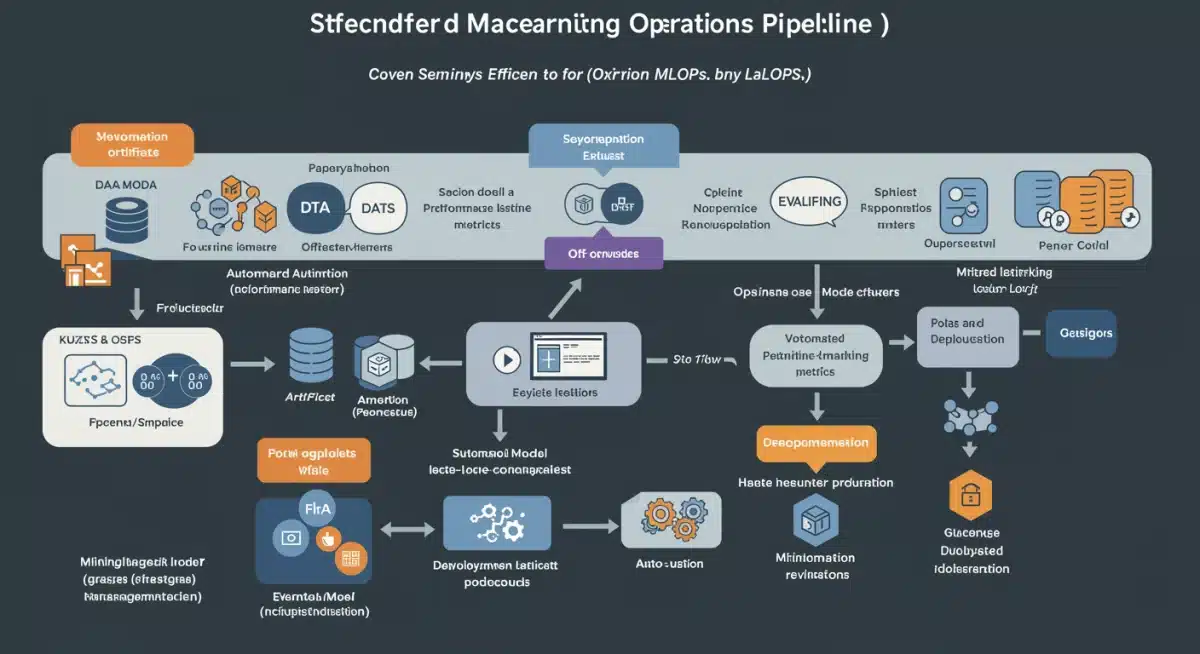
Key Features of Efficient Model Serving Frameworks
Modern model serving frameworks come equipped with a suite of features engineered to reduce latency and improve overall performance:
- Batching and Concurrency: They can process multiple inference requests simultaneously or in batches, significantly improving throughput and reducing the average latency per request.
- GPU Acceleration: Seamless integration with GPUs and other accelerators allows for parallel processing of complex computations, dramatically speeding up inference.
- Model Versioning and A/B Testing: Support for deploying multiple model versions enables seamless updates and experimentation without downtime, ensuring continuous service.
- Request Pre- and Post-processing: Built-in capabilities to handle data transformations before and after model inference reduce the overhead on application code.
Popular examples include TensorFlow Serving, TorchServe, NVIDIA Triton Inference Server, and ONNX Runtime. Each offers distinct advantages, and the optimal choice often depends on the specific machine learning framework used and the deployment environment. Adopting one of these high-performance options is a foundational step towards achieving ambitious latency reduction targets for enterprise AI applications.
Strategy 4: Optimized Infrastructure and Hardware Acceleration
Beyond software and model-level optimizations, the underlying infrastructure and hardware choices profoundly impact machine learning model deployment latency. Investing in the right compute, storage, and networking resources is crucial for creating an environment where models can perform at their peak. Generic infrastructure might suffice for development, but production AI systems demand specialized, high-performance setups.
The era of CPU-only inference is largely behind us for demanding applications. Modern AI workloads thrive on parallel processing capabilities offered by specialized hardware. This strategy focuses on selecting and configuring infrastructure components that are specifically designed to accelerate AI inference, ensuring that computational bottlenecks are minimized at every layer.
Harnessing the Power of GPUs and TPUs
Graphics Processing Units (GPUs) and Tensor Processing Units (TPUs) are at the forefront of hardware acceleration for machine learning. Their architecture, with thousands of smaller cores, is perfectly suited for the parallel computations inherent in neural networks.
- GPU Integration: Deploying models on servers equipped with powerful GPUs can reduce inference times by orders of magnitude compared to CPUs, especially for deep learning models.
- TPU for Specific Workloads: Google’s TPUs are custom-designed ASICs for deep learning, offering unparalleled performance for certain types of models, particularly in Google Cloud environments.
- FPGA and ASIC Customization: For highly specialized and latency-critical applications, custom Field-Programmable Gate Arrays (FPGAs) or Application-Specific Integrated Circuits (ASICs) can provide tailored acceleration.
However, hardware acceleration isn’t just about the compute unit. High-speed NVMe SSDs for model loading, low-latency interconnects (like InfiniBand or high-speed Ethernet), and efficient container orchestration (e.g., Kubernetes with GPU scheduling) are equally vital. A holistic approach to infrastructure optimization ensures that every component contributes to minimizing latency, creating a robust and highly responsive AI serving environment.
Strategy 5: Proactive Monitoring and Continuous Optimization (MLOps)
Once machine learning models are deployed, the journey to low latency doesn’t end. Proactive monitoring and continuous optimization, facilitated by robust MLOps practices, are essential for sustaining and further reducing machine learning model deployment latency. Models can degrade over time, data distributions can shift, and infrastructure performance can fluctuate. Without vigilant oversight, initial latency gains can quickly erode.
MLOps bridges the gap between machine learning development and operations, bringing engineering discipline to the entire AI lifecycle. It ensures that models are not only deployed efficiently but also continuously validated, updated, and managed in production. This continuous feedback loop is critical for identifying and addressing latency issues before they impact business operations.
Implementing an Effective MLOps Strategy
A comprehensive MLOps strategy for latency reduction involves several key components:
- Real-time Performance Monitoring: Establish dashboards and alerts to track key metrics like inference latency, throughput, error rates, and resource utilization. This allows for immediate detection of performance degradation.
- Data Drift and Model Decay Detection: Monitor incoming data and model predictions for shifts that might indicate a need for model retraining or recalibration, which can impact accuracy and indirectly affect perceived latency if models are making poor decisions.
- Automated Retraining and Redeployment: Implement automated pipelines for retraining models with fresh data and seamlessly redeploying updated versions, minimizing manual intervention and downtime.
- A/B Testing and Canary Deployments: Use these techniques to safely introduce new model versions or infrastructure changes, allowing for performance comparison and gradual rollout to minimize risk.
By embedding MLOps principles into their AI workflows, US enterprises can create a dynamic and adaptive system that continuously optimizes model performance and latency. This proactive approach ensures that AI applications remain performant, reliable, and aligned with evolving business needs, delivering sustained value into 2026 and beyond.
| Strategy | Brief Description |
|---|---|
| Optimized Model Architecture | Streamline models via pruning, distillation, and quantization to reduce size and computational demands for faster inference. |
| Edge Computing | Process data closer to the source or user, minimizing network latency and enhancing real-time responsiveness. |
| High-Performance Serving | Utilize specialized frameworks (e.g., TensorFlow Serving) for efficient model loading, batching, and GPU acceleration. |
| Proactive MLOps | Implement continuous monitoring, automated retraining, and feedback loops for ongoing latency optimization. |
Frequently Asked Questions About ML Latency
Low latency is crucial because modern business applications increasingly rely on real-time insights and instantaneous decisions. Delays in ML model responses can lead to poor user experiences, operational inefficiencies, and significant financial losses, especially in dynamic and competitive markets.
Model quantization reduces the precision of a model’s weights and activations, typically from 32-bit floats to 8-bit integers. This technique significantly shrinks model size and speeds up computations, lowering memory usage and improving inference times without substantial accuracy loss.
Edge computing reduces latency by moving computation closer to the data source or end-user. This minimizes the physical distance data travels, drastically cutting down network latency and enabling near real-time responses for critical applications like autonomous systems and IoT devices.
High-performance serving frameworks like TensorFlow Serving, TorchServe, and NVIDIA Triton Inference Server are ideal. They offer features such as batching, GPU acceleration, and optimized resource management, specifically designed to handle high-throughput, low-latency inference requests efficiently.
MLOps provides the framework for continuous monitoring, validation, and optimization of deployed models. It enables real-time performance tracking, automated retraining, and safe deployment strategies, ensuring that latency improvements are sustained and models remain efficient over their lifecycle.
Conclusion
The pursuit of minimal machine learning model deployment latency is a continuous journey, particularly as we advance into 2026. For US enterprises, achieving a 15% reduction in latency is not merely a technical goal; it’s a strategic imperative that directly translates into enhanced competitiveness, superior customer experiences, and optimized operational efficiency. By meticulously implementing optimized model architectures, embracing edge computing, leveraging high-performance serving frameworks, investing in specialized hardware, and establishing robust MLOps practices, organizations can build AI systems that are not only intelligent but also exceptionally responsive. The future of enterprise AI hinges on speed, and these strategies provide a clear roadmap to unlock that critical advantage.