AI Project Management Tools: Save 10 Hours Weekly by Q1 2026

The landscape of project management is undergoing a profound transformation, driven by the relentless advancement of artificial intelligence. In an era where efficiency and productivity are paramount, businesses are constantly seeking innovative solutions to streamline operations, reduce overheads, and empower their teams to achieve more with less. This is precisely where AI Project Management tools step in, promising not just incremental improvements but a revolutionary leap in how projects are conceived, executed, and delivered.
Our goal with this comprehensive guide is to delve deep into the world of AI Project Management, exploring its myriad benefits and practical applications. We aim to demonstrate how organizations can realistically expect to save their teams an astonishing 10 hours weekly by Q1 2026, simply by strategically integrating these intelligent systems into their workflows. This isn’t a futuristic fantasy; it’s a tangible, achievable reality for forward-thinking businesses.
The traditional methods of project management, while foundational, often struggle with the complexities and demands of modern projects. Manual task assignment, time-consuming progress tracking, and reactive risk management can lead to bottlenecks, missed deadlines, and ultimately, project failures. AI, however, offers a powerful antidote to these challenges, bringing automation, predictive analytics, and intelligent insights to the forefront. By offloading repetitive tasks to AI, project managers and their teams can refocus their energies on strategic thinking, creative problem-solving, and meaningful collaboration.
This article will serve as your definitive resource, covering everything from understanding the core capabilities of AI Project Management tools to selecting the right solutions for your specific needs, and crucially, implementing them effectively to achieve the promised time savings. We’ll explore real-world examples, discuss best practices, and provide a roadmap for embracing this transformative technology. Prepare to redefine what’s possible in project delivery and unlock a new era of productivity for your team.
The Dawn of Intelligent Project Management: Why AI Matters Now More Than Ever
The pace of business in the 21st century is unprecedented. Projects are growing in complexity, teams are often geographically dispersed, and the volume of data generated is staggering. In this dynamic environment, traditional project management methodologies, while still relevant, often fall short in providing the agility and foresight required to navigate challenges successfully. This is where AI Project Management emerges as a game-changer.
Addressing Core Project Management Challenges with AI
- Manual Overload: Project managers spend a significant portion of their time on administrative tasks like scheduling, data entry, and report generation. AI can automate these mundane yet essential activities, freeing up valuable human capital.
- Lack of Real-time Insights: Traditional reporting can be retrospective, meaning issues are often identified after they’ve become significant problems. AI provides real-time data analysis and predictive insights, allowing for proactive intervention.
- Resource Optimization: Allocating the right resources to the right tasks at the right time is a constant struggle. AI algorithms can analyze skill sets, availability, and project demands to optimize resource allocation, preventing burnout and maximizing output.
- Risk Management: Identifying and mitigating risks before they materialize is crucial for project success. AI can analyze historical data and current project parameters to predict potential risks, offering early warnings and suggesting mitigation strategies.
- Communication Gaps: In large or distributed teams, communication breakdowns are common. AI-powered tools can facilitate seamless communication, provide centralized information hubs, and even summarize discussions to keep everyone on the same page.
The integration of AI into project management isn’t merely about automating tasks; it’s about augmenting human intelligence. It provides project managers with a powerful co-pilot, offering data-driven recommendations, identifying patterns invisible to the human eye, and enabling more informed decision-making. This paradigm shift allows teams to move from reactive problem-solving to proactive strategic planning, ensuring projects stay on track and within budget.
Key Features of Advanced AI Project Management Tools
To truly understand how AI Project Management can deliver significant time savings, it’s essential to examine the core features that differentiate these intelligent platforms from their traditional counterparts. These features are designed to tackle various aspects of project lifecycle, from initiation to closure, with unparalleled efficiency.
Automated Task Management and Scheduling
One of the most immediate benefits of AI in project management is the automation of routine tasks. AI systems can:
- Auto-assign Tasks: Based on team member skills, availability, and workload, AI can intelligently assign tasks, optimizing distribution and preventing bottlenecks.
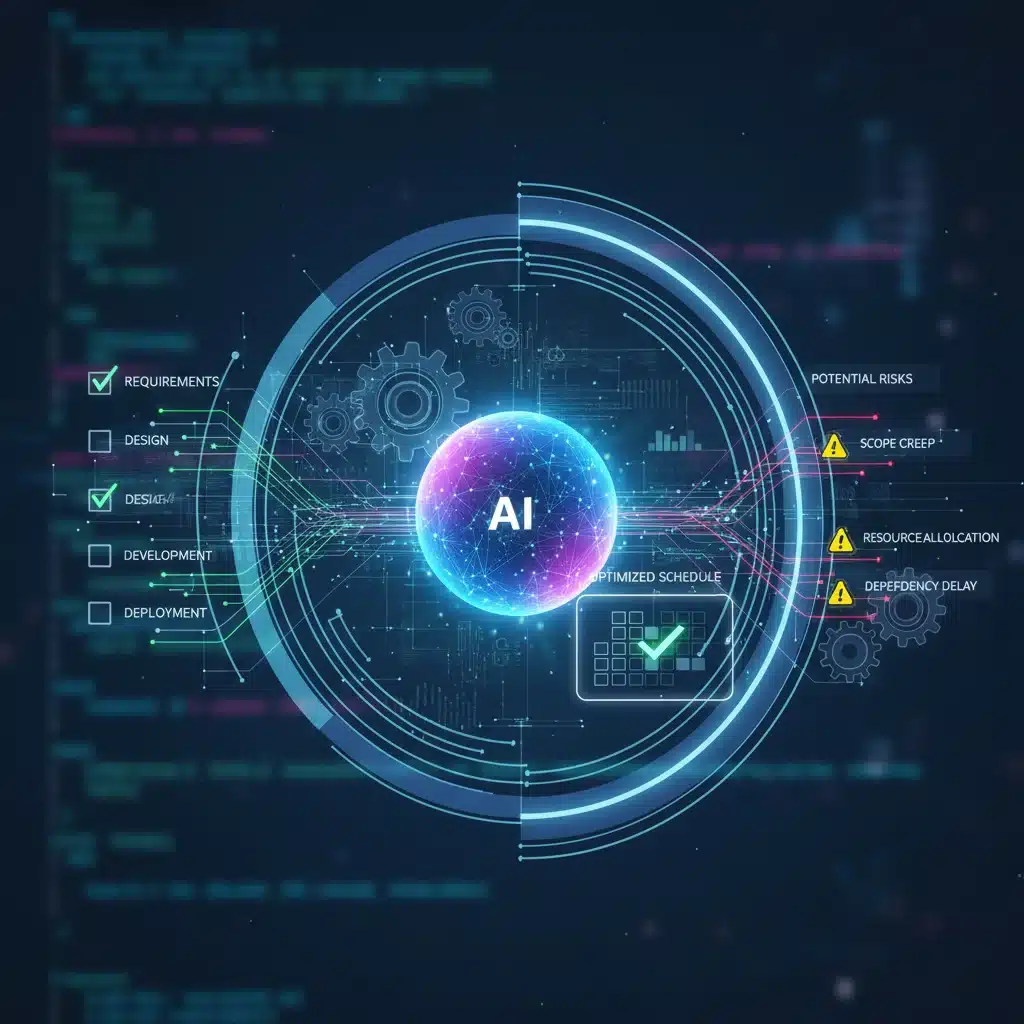
- Dynamic Scheduling: AI can create and adjust project schedules in real-time, adapting to unforeseen delays, resource conflicts, or changes in priority. This eliminates the need for manual rescheduling, which can be incredibly time-consuming.
- Dependency Management: Complex projects often have intricate task dependencies. AI can automatically identify these dependencies and alert managers to potential conflicts or critical path issues, ensuring smooth progression.
Predictive Analytics and Risk Assessment
The ability to foresee potential issues is a cornerstone of effective project management. AI excels in this area by:
- Predicting Delays and Cost Overruns: By analyzing historical project data, current progress, and external factors, AI can predict the likelihood of missing deadlines or exceeding budgets, allowing for early intervention.
- Identifying Potential Risks: AI algorithms can scan project plans, communication logs, and external news for indicators of potential risks, such as resource shortages, scope creep, or market shifts.
- Recommending Mitigation Strategies: Beyond identification, some advanced AI tools can suggest actionable strategies to mitigate identified risks, drawing from best practices and successful past projects.
Intelligent Resource Management
Optimizing resource utilization is critical for project success and team well-being. AI Project Management tools can:
- Skill-Based Allocation: Match tasks with team members possessing the most relevant skills, enhancing quality and efficiency.
- Workload Balancing: Monitor team members’ workloads in real-time, proactively identifying individuals who are over-allocated or under-utilized, and suggesting reassignments to maintain balance and prevent burnout.
- Capacity Planning: Provide insights into future resource needs based on the project pipeline, helping organizations plan for hiring or training to meet demand.
Enhanced Collaboration and Communication
Effective communication is the lifeblood of any project. AI-powered tools can:
- Automated Meeting Summaries: Transcribe and summarize meeting discussions, highlighting key decisions, action items, and assigned responsibilities, saving hours of manual note-taking.
- Smart Notifications: Deliver personalized notifications and reminders to team members about upcoming deadlines, outstanding tasks, or important updates, reducing the need for constant manual follow-ups.
- Sentiment Analysis: Some advanced AI tools can analyze communication patterns to gauge team sentiment, helping project managers identify potential conflicts or morale issues before they escalate.
Data-Driven Performance Insights
Measuring and improving project performance is easier with AI’s analytical capabilities:
- Automated Reporting: Generate comprehensive project reports, dashboards, and analytics, providing stakeholders with real-time insights into project health, progress, and performance metrics, without manual compilation.
- Performance Benchmarking: Compare current project performance against historical data and industry benchmarks, identifying areas for improvement and best practices.
- Root Cause Analysis: When issues arise, AI can help analyze data to pinpoint the root causes of delays or inefficiencies, enabling targeted corrective actions.
Achieving 10 Hours Weekly Savings: A Roadmap to Q1 2026
The promise of saving 10 hours weekly per team member by Q1 2026 with AI Project Management is not an overstatement. It’s an achievable goal with a strategic approach and commitment to embracing technological change. Here’s a roadmap to realize these significant time savings:
Phase 1: Assessment and Planning (Q1-Q2 2024)
The first step involves a thorough understanding of your current project management landscape. This phase is crucial for identifying pain points and setting clear objectives for AI integration.
- Audit Current Processes: Document existing project management workflows, identifying time-consuming manual tasks, communication bottlenecks, and areas prone to errors.
- Define Key Performance Indicators (KPIs): Establish measurable goals for time savings, such as reduced meeting times, faster task completion, fewer project delays, and improved resource utilization.
- Research AI Tools: Explore various AI Project Management platforms available in the market. Look for tools that align with your specific needs, industry, and budget. Consider factors like scalability, integration capabilities, and user-friendliness.
- Pilot Program Design: Select a small, manageable project or team for a pilot program. This allows for testing the chosen AI solution in a controlled environment and gathering initial feedback.
Phase 2: Pilot Implementation and Optimization (Q3-Q4 2024)
Once a suitable AI tool is identified, the focus shifts to practical implementation and fine-tuning.
- Tool Integration: Integrate the chosen AI Project Management tool with existing systems (e.g., CRM, communication platforms, document management).
- Team Training: Provide comprehensive training to the pilot team. Emphasize the benefits of the new tool and address any concerns or resistance to change. User adoption is key to success.
- Feedback and Iteration: Continuously collect feedback from the pilot team. Use this input to optimize the tool’s configuration, refine workflows, and address any technical glitches.
- Measure Initial Savings: Quantify the initial time savings and productivity gains achieved during the pilot phase. This data will be crucial for building a business case for broader adoption.
Phase 3: Phased Rollout and Scaling (Q1-Q4 2025)
Building on the success of the pilot, expand the AI Project Management solution across the organization.
- Develop a Rollout Plan: Create a phased implementation strategy, starting with departments or teams that stand to benefit most, or those that are most receptive to change.
- Ongoing Training and Support: Provide continuous training and support to new users. Establish a dedicated support channel to address questions and issues promptly.
- Refine Best Practices: Document and share best practices learned from earlier phases. Create internal guidelines for effective use of the AI tool.
- Monitor and Report Progress: Regularly monitor KPIs across all implemented teams. Generate reports to track overall time savings and demonstrate the ROI of the AI investment.
Phase 4: Optimization and Advanced Integration (Q1 2026 onwards)
By Q1 2026, the goal is to have achieved significant time savings and established a culture of AI-powered project management. This phase focuses on continuous improvement and leveraging advanced AI capabilities.
- Advanced AI Features: Explore and implement more sophisticated AI features, such as advanced predictive analytics, natural language processing for deeper insights, or integration with external data sources for broader context.
- Customization and Automation: Further customize the AI tool to meet unique organizational needs. Develop custom automation rules and integrations to maximize efficiency.
- Performance Review & Benchmarking: Conduct a comprehensive review of the achieved time savings against the initial target of 10 hours weekly. Benchmark against industry leaders to identify further opportunities for improvement.
- Foster an AI-First Culture: Encourage continuous innovation and exploration of new AI applications within project management, ensuring that the organization remains at the forefront of productivity.
Real-World Impact: Case Studies of AI in Project Management
While the theoretical benefits of AI Project Management are compelling, its true power is best illustrated through real-world applications. Numerous organizations across various industries are already leveraging AI to transform their project delivery, achieving remarkable results.
Case Study 1: Streamlining Software Development at TechCo Innovations
TechCo Innovations, a fast-growing software development firm, struggled with project delays and resource allocation challenges due to the dynamic nature of their projects. They implemented an AI-powered project management platform that:
- Automated Backlog Refinement: The AI tool analyzed user stories and bug reports, prioritizing them based on business impact and technical dependencies, significantly reducing the manual effort of product owners.
- Predictive Sprint Planning: By analyzing past sprint data and team velocity, the AI suggested optimal task assignments and sprint durations, leading to a 15% increase in sprint completion rates.
- Early Risk Detection: The system flagged potential bottlenecks in the development pipeline based on code complexity and developer workload, allowing managers to reallocate resources proactively.
Result: TechCo Innovations reported an average saving of 12 hours weekly per developer by reducing time spent on administrative tasks and rework, enabling them to deliver features faster and with higher quality.
Case Study 2: Optimizing Construction Projects at BuildRight Group
BuildRight Group, a large construction company, faced challenges with project scheduling, material procurement, and on-site resource management across multiple complex projects. They adopted an AI Project Management solution focused on predictive scheduling and supply chain optimization.
- Dynamic Schedule Adjustments: The AI platform continuously monitored weather patterns, material delivery schedules, and on-site progress, automatically adjusting project timelines and alerting managers to potential delays.
- Material Procurement Optimization: By analyzing historical data and current project needs, the AI predicted optimal material order quantities and delivery times, reducing waste and preventing costly delays.
- Resource Leveling: The system optimized the deployment of heavy machinery and skilled labor across different construction sites, minimizing idle time and maximizing utilization.
Result: BuildRight Group achieved a 10% reduction in project completion times and a 5% decrease in material costs, translating to substantial savings and improved project profitability.
Case Study 3: Enhancing Marketing Campaigns at Global Brands Inc.
Global Brands Inc., a multinational marketing agency, struggled with managing numerous campaigns simultaneously, leading to communication breakdowns and inconsistent performance. They implemented an AI-driven project management tool with advanced collaboration and performance analytics features.
- Automated Campaign Reporting: The AI automatically aggregated data from various marketing channels (social media, email, ads) to generate real-time campaign performance reports, eliminating hours of manual data compilation.
- Content Calendar Optimization: Based on audience engagement data and trend analysis, the AI suggested optimal content posting schedules and topic ideas, improving campaign effectiveness.
- Team Communication Hub: The platform served as a central communication hub, with AI summarizing discussions and highlighting action items, ensuring all team members were aligned and informed.
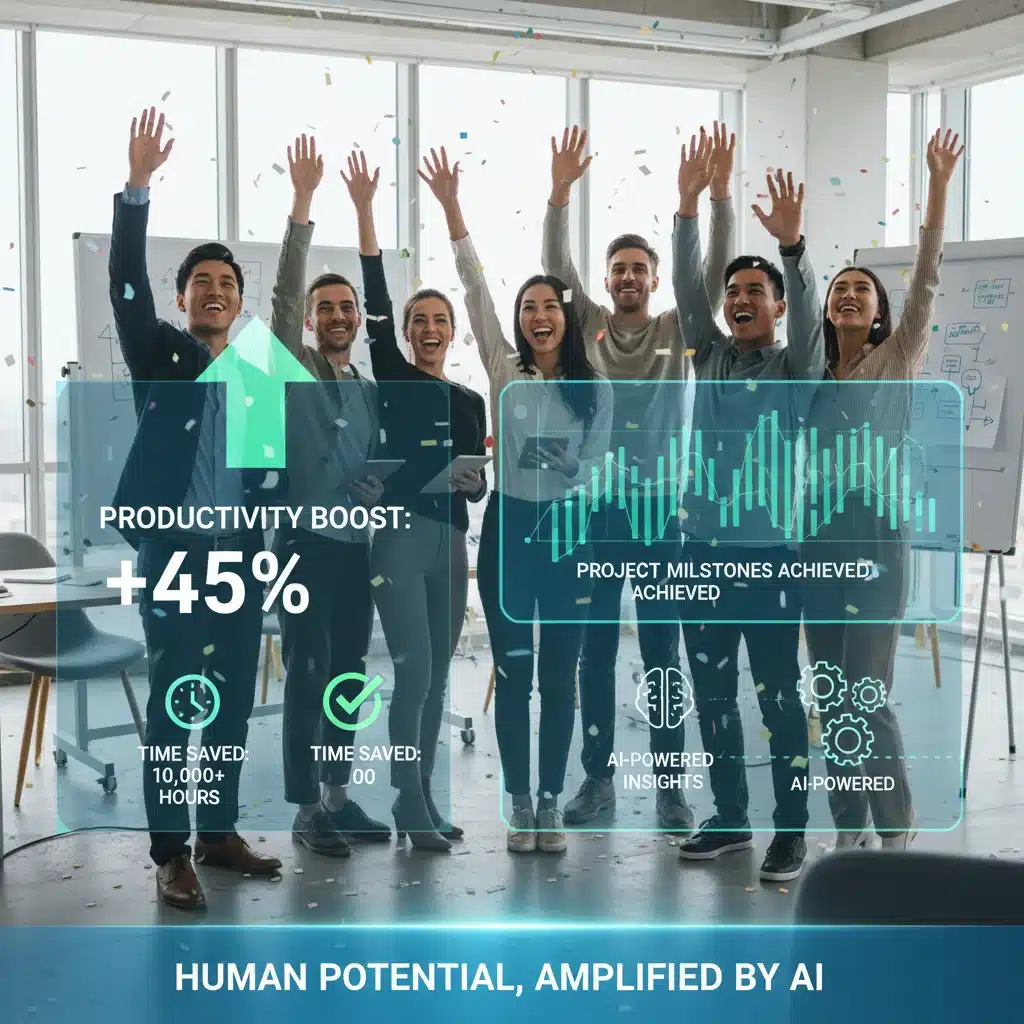
Result: Global Brands Inc. saw a 20% increase in campaign efficiency, with marketing specialists saving an average of 8-10 hours weekly on reporting and coordination, allowing them to focus more on creative strategy.
These case studies underscore the versatile and transformative potential of AI Project Management across diverse industries. The common thread is the ability of AI to automate, predict, and optimize, thereby freeing up human talent to focus on higher-value, strategic activities.
Overcoming Challenges and Ensuring Successful AI Adoption
While the benefits of AI Project Management are clear, successful adoption is not without its challenges. Organizations must proactively address these hurdles to ensure a smooth transition and maximize their return on investment.
Data Quality and Availability
AI systems are only as good as the data they are fed. Poor data quality, inconsistencies, or a lack of historical data can significantly impact the effectiveness of AI. Organizations must invest in data governance, data cleansing, and establishing robust data collection processes.
Integration with Existing Systems
Many organizations operate with a complex ecosystem of legacy systems. Integrating new AI Project Management tools with these existing platforms can be technically challenging. It requires careful planning, API development, and potentially, a phased integration approach.
Resistance to Change
Perhaps the most significant hurdle is human resistance to change. Team members may be apprehensive about new technologies, fearing job displacement or the need to learn complex new systems. Effective change management strategies are crucial:
- Clear Communication: Articulate the ‘why’ behind AI adoption, emphasizing how it will augment roles, not replace them, and free up time for more fulfilling work.
- Comprehensive Training: Provide ample training and ongoing support to ensure users are comfortable and proficient with the new tools.
- Involve Stakeholders: Engage project managers and team members in the selection and implementation process to foster a sense of ownership.
Vendor Selection and Scalability
The market for AI Project Management tools is rapidly evolving. Choosing the right vendor requires careful due diligence. Consider:
- Features and Functionality: Does the tool meet your specific project management needs?
- Scalability: Can the tool grow with your organization’s needs?
- Security and Compliance: Does the vendor adhere to relevant data security and privacy standards?
- Support and Updates: What kind of customer support and ongoing updates can you expect?
Ethical Considerations and Bias
AI algorithms can inadvertently perpetuate existing biases present in the data they are trained on. Organizations must be mindful of ethical considerations, regularly audit AI outputs for fairness, and ensure transparency in how AI makes recommendations, particularly in areas like resource allocation.
By proactively addressing these challenges, organizations can lay a strong foundation for successful AI adoption, ensuring that the transition to intelligent project management is smooth, effective, and ultimately, highly rewarding.
The Future of Work: Project Management in an AI-Powered World
As we look towards Q1 2026 and beyond, the role of AI Project Management will only continue to grow in sophistication and impact. The future of project management is one where AI and human intelligence work in seamless synergy, creating a more efficient, strategic, and ultimately, more human-centric work environment.
Evolving Role of the Project Manager
Project managers will transition from being primarily task administrators to strategic orchestrators. Their focus will shift to:
- Strategic Vision: Leveraging AI insights to make higher-level strategic decisions and define project objectives.
- Team Leadership and Coaching: Focusing on team development, fostering creativity, and resolving complex interpersonal challenges that AI cannot address.
- Stakeholder Engagement: Building stronger relationships with stakeholders and communicating complex project information more effectively.
- Ethical Oversight: Ensuring the responsible and ethical use of AI within project workflows.
Hyper-Personalized Project Experiences
AI will enable highly personalized project experiences, tailoring tools and workflows to individual team members’ preferences, working styles, and skill sets. This will enhance job satisfaction and productivity.
Continuous Learning and Adaptation
AI systems will continuously learn from project data, becoming more intelligent and accurate over time. This continuous learning loop will enable organizations to adapt more quickly to market changes and optimize project delivery in real-time.
Integration with Emerging Technologies
The convergence of AI Project Management with other emerging technologies like the Internet of Things (IoT), blockchain, and virtual/augmented reality (VR/AR) will unlock new possibilities. Imagine AI-powered drones monitoring construction progress, or VR environments for collaborative design reviews, all managed through intelligent project platforms.
The journey to saving 10 hours weekly by Q1 2026 is just the beginning. The ongoing evolution of AI promises a future where project management is not just about completing tasks, but about fostering innovation, empowering teams, and achieving unprecedented levels of success. Organizations that embrace this future will undoubtedly gain a significant competitive advantage.
Conclusion: Embrace the AI Revolution in Project Management
The evidence is clear: AI Project Management is not a fleeting trend but a fundamental shift in how projects are managed and delivered. The potential for saving teams 10 hours weekly by Q1 2026 is a compelling testament to its power, offering businesses a tangible pathway to enhanced productivity, reduced costs, and improved project outcomes.
By automating repetitive tasks, providing predictive insights, optimizing resource allocation, and fostering seamless collaboration, AI tools empower project managers and their teams to transcend the limitations of traditional methodologies. They free up valuable human capital to focus on strategic thinking, creativity, and the complex human elements that drive true innovation.
The roadmap to successful AI adoption requires a strategic approach, encompassing careful assessment, phased implementation, continuous optimization, and a commitment to change management. Overcoming challenges related to data quality, integration, and resistance to change is vital for realizing the full potential of these transformative technologies.
As we move towards an increasingly intelligent future, organizations that proactively embrace AI Project Management will not only achieve significant operational efficiencies but also cultivate a more agile, resilient, and forward-thinking culture. The time to invest in AI-powered project management is now. Prepare your teams for a future where productivity is redefined, and project success is not just an aspiration, but a consistent reality.