AI Accountability: US Legal Frameworks 2026 Explained

The rapid evolution of artificial intelligence (AI) has brought forth unprecedented technological advancements, transforming industries and daily life. However, alongside these innovations, a critical question looms large: who is accountable when AI systems make errors, cause harm, or exhibit bias? As we approach 2026, the United States is at a pivotal juncture in defining the legal and ethical boundaries for AI, grappling with how to foster innovation while ensuring robust accountability. Understanding the emerging AI Legal Frameworks 2026 is paramount for developers, businesses, policymakers, and the general public alike.
The concept of accountability in AI is multifaceted. It encompasses not just legal liability for damages, but also ethical responsibility for algorithmic fairness, transparency, and human oversight. The challenge lies in adapting existing legal structures, which were largely developed for human-centric actions, to the complex and often opaque operations of AI systems. This article will delve into the current landscape, anticipated developments, and potential pathways for establishing comprehensive AI Legal Frameworks 2026 in the U.S.
The Current State of AI Regulation in the U.S.
Unlike the European Union, which has pursued a more centralized and comprehensive approach with its AI Act, the U.S. regulatory landscape for AI is currently more fragmented and sector-specific. Rather than a single overarching federal law, regulation is emerging through a patchwork of executive orders, agency guidance, state-level initiatives, and the application of existing statutes. This decentralized approach reflects the U.S. emphasis on fostering innovation and avoiding overly prescriptive regulations that could stifle technological progress.
Executive Orders and Federal Guidance
A significant driver of federal policy has been presidential executive orders. These orders often lay the groundwork for agency actions and policy recommendations. For instance, recent executive orders have focused on promoting safe, secure, and trustworthy AI, directing federal agencies to develop standards, conduct risk assessments, and establish guidelines for AI use within their respective domains. These directives are crucial in shaping the preliminary understanding of accountability within federal agencies, influencing procurement practices, and setting a precedent for responsible AI deployment.
Furthermore, various federal agencies have begun issuing their own guidance. The National Institute of Standards and Technology (NIST) has released its AI Risk Management Framework, a voluntary resource designed to help organizations manage the risks associated with AI. While not legally binding, frameworks like NIST’s are expected to become de facto standards, influencing industry best practices and potentially serving as a benchmark in future legal disputes concerning negligence or due diligence in AI development. Other agencies, such as the Equal Employment Opportunity Commission (EEOC) and the Federal Trade Commission (FTC), have also issued guidance on the use of AI in employment and consumer protection, respectively, highlighting how existing laws can be applied to AI-related issues.
State-Level Initiatives and Sector-Specific Regulations
States are also playing an increasingly active role in shaping AI Legal Frameworks 2026. California, for example, has been at the forefront of data privacy legislation with the California Consumer Privacy Act (CCPA) and its successor, the California Privacy Rights Act (CPRA), which have implications for how AI systems collect, process, and use personal data. Other states are exploring legislation specifically targeting AI, particularly in areas like facial recognition technology, algorithmic bias in lending, and autonomous vehicles.
Sector-specific regulations are another key component. In healthcare, the use of AI is governed by existing regulations like HIPAA, which addresses patient data privacy and security. In finance, AI applications are subject to regulations concerning fair lending practices and consumer protection. The challenge here is to ensure that these existing regulations are adequately adapted to the unique characteristics of AI, such as its ability to learn and evolve, and the potential for emergent behaviors that were not explicitly programmed.
Key Legal Theories for AI Accountability
As the U.S. moves towards more defined AI Legal Frameworks 2026, several existing legal theories are being adapted and reinterpreted to address AI accountability. These include product liability, negligence, and contract law, alongside emerging discussions around specific AI liability frameworks.
Product Liability
Product liability law holds manufacturers and sellers responsible for harm caused by defective products. This theory is particularly relevant for AI systems embedded in physical products, such as autonomous vehicles or medical devices. The challenge with AI, however, lies in defining what constitutes a ‘defect’ in a system that learns and adapts. Is a defect a flaw in the initial design, a problem with the training data, or an emergent behavior that was unforeseen? Courts will need to grapple with these nuances, potentially distinguishing between design defects (flaws in the algorithm’s architecture), manufacturing defects (errors in deploying the algorithm or training data), and failure-to-warn defects (insufficient information provided to users about AI limitations).
Negligence
Negligence law focuses on a party’s failure to exercise reasonable care, resulting in harm to another. In the context of AI, this could apply to developers who fail to adequately test their AI systems for bias, security vulnerabilities, or performance issues. It could also extend to deployers of AI who fail to implement appropriate oversight mechanisms or use AI in contexts for which it was not designed. Establishing a ‘duty of care’ for AI developers and deployers will be a critical aspect of future litigation. This duty might include obligations to conduct thorough risk assessments, ensure data quality, implement robust validation processes, and provide clear documentation of AI capabilities and limitations.
Contract Law and Warranties
For businesses utilizing AI services or products, contract law will continue to play a significant role. Service level agreements (SLAs) and warranties can specify performance expectations, liability limitations, and dispute resolution mechanisms. However, the rapidly changing nature of AI means that contracts must be carefully drafted to account for potential unforeseen issues and to clearly delineate responsibilities between AI vendors and users. The scope of implied warranties, such as fitness for a particular purpose, will also be tested as AI systems are deployed in novel applications.
Emerging AI-Specific Liability Frameworks
While existing laws are being adapted, there is a growing recognition that a more tailored approach may be necessary. Discussions are underway regarding the potential for specific AI liability frameworks. These could involve establishing a strict liability standard for certain high-risk AI applications, where fault does not need to be proven, only that the AI caused harm. Another approach could be to create an AI-specific tort, defining new causes of action for damages caused by algorithmic bias or lack of transparency. The European Union’s proposed AI Act, with its emphasis on high-risk AI systems, provides a model for such a framework, and the U.S. may draw inspiration from it while adapting it to its own legal traditions.

Ethical Considerations and Their Legal Implications
Beyond traditional legal liability, ethical considerations are increasingly influencing the development of AI Legal Frameworks 2026. Issues such as algorithmic bias, transparency, fairness, and human oversight are not merely ethical ideals but are becoming foundational elements of responsible AI and, consequently, legal compliance.
Algorithmic Bias and Discrimination
Algorithmic bias occurs when AI systems produce unfair or discriminatory outcomes based on factors like race, gender, or socioeconomic status. This bias can stem from biased training data, flawed algorithms, or inappropriate deployment. The legal implications are significant, particularly under existing anti-discrimination laws such as the Civil Rights Act, the Equal Credit Opportunity Act, and the Fair Housing Act. Regulators like the EEOC and the Department of Justice are actively investigating and prosecuting cases where AI systems lead to discriminatory outcomes. Future AI Legal Frameworks 2026 are likely to include explicit requirements for bias detection, mitigation, and regular auditing of AI systems, especially in sensitive areas like hiring, lending, and criminal justice.
Transparency and Explainability (XAI)
The ‘black box’ problem, where AI systems make decisions in ways that are opaque even to their creators, poses a significant challenge to accountability. How can one hold an AI accountable if its decision-making process cannot be understood or explained? The push for Explainable AI (XAI) aims to develop AI systems whose outputs can be interpreted and understood by humans. Legally, transparency requirements could manifest as obligations to provide clear explanations for AI-driven decisions, particularly when those decisions impact individuals’ rights or opportunities. This could be crucial in areas like loan applications, insurance claims, or even judicial sentencing recommendations. The absence of explainability could be viewed as a failure to exercise reasonable care, leading to negligence claims.
Human Oversight and Control
Maintaining meaningful human oversight over AI systems is another critical ethical and legal consideration. While AI can automate tasks and augment human capabilities, complete autonomy raises profound questions about responsibility. AI Legal Frameworks 2026 are expected to emphasize the need for ‘human-in-the-loop’ or ‘human-on-the-loop’ approaches, ensuring that humans retain the ultimate authority to intervene, override, or disengage AI systems when necessary. This is particularly relevant for high-stakes applications such as autonomous weapons systems or critical infrastructure management. The failure to provide adequate human oversight could be a basis for liability when an AI system causes harm.
Anticipated Developments in U.S. AI Policy by 2026
Looking ahead to 2026, several key trends and anticipated developments are likely to shape the U.S. approach to AI accountability. The fragmented nature of current regulation suggests that a single, monolithic AI law is unlikely, but rather an evolution of existing frameworks and targeted new legislation.
Increased Congressional Scrutiny and Potential Legislation
While a comprehensive federal AI law akin to the EU AI Act may not materialize by 2026, increased congressional engagement is highly probable. Lawmakers are becoming more aware of the societal impact of AI and the need for clear rules. We can expect to see more hearings, bipartisan working groups, and potentially targeted legislation addressing specific AI risks, such as deepfakes, facial recognition, or the use of AI in critical infrastructure. These legislative efforts will aim to clarify liability, establish federal standards for testing and auditing, and potentially create new enforcement mechanisms.
Enhanced Regulatory Enforcement
Federal agencies like the FTC, DOJ, and sector-specific regulators (e.g., FDA for medical AI, NHTSA for autonomous vehicles) are expected to intensify their enforcement actions related to AI. They will likely leverage existing consumer protection, anti-discrimination, and safety laws to address harms caused by AI. This will involve issuing more specific guidance, conducting investigations, and imposing penalties for non-compliance. The focus will be on ensuring that companies are transparent about their AI practices, mitigate risks, and adhere to fair and ethical principles.
Development of Industry Standards and Best Practices
In the absence of a complete federal framework, industry standards and best practices will continue to play a crucial role in shaping AI Legal Frameworks 2026. Organizations like NIST, ISO, and various industry consortia are developing voluntary standards for AI risk management, trustworthiness, and ethical development. These standards, while not legally binding, can influence legal interpretations of ‘reasonable care’ and ‘due diligence’ in future litigation. Companies that adhere to recognized standards may be in a stronger position to defend against liability claims, while those that disregard them could face increased scrutiny.
Focus on Data Governance and Privacy
Data is the lifeblood of AI, and concerns about data privacy, security, and governance will remain central to AI accountability. We can anticipate further developments in data privacy legislation at both federal and state levels, which will directly impact how AI systems collect, process, and utilize personal information. Stronger data governance frameworks will be crucial for ensuring the quality, integrity, and ethical sourcing of training data, thereby mitigating bias and enhancing the trustworthiness of AI systems.
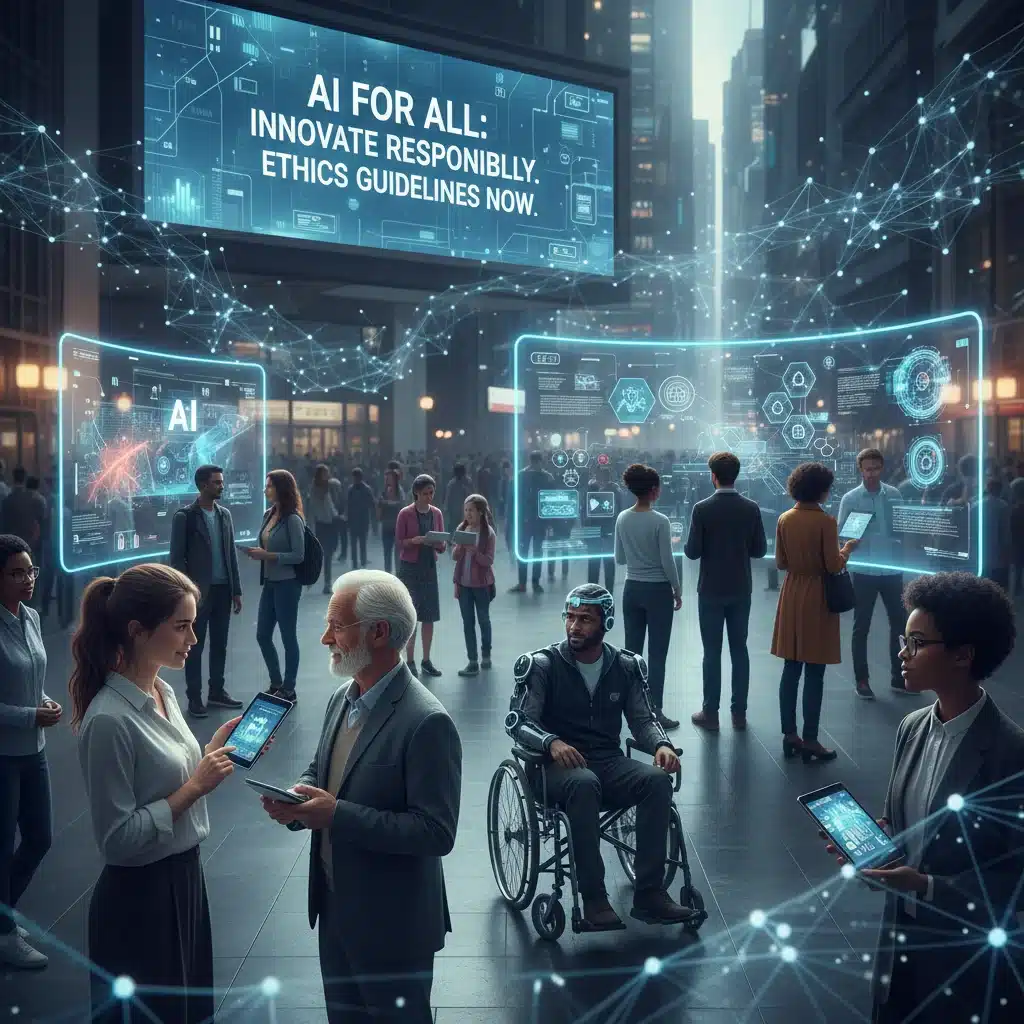
Challenges and Future Outlook for AI Accountability
Establishing effective AI Legal Frameworks 2026 is not without its challenges. The rapid pace of AI innovation often outstrips the legislative process, making it difficult for laws to keep up. The technical complexity of AI also poses hurdles for policymakers and legal professionals who may lack the specialized expertise to fully understand its implications.
Defining ‘AI’ and its Scope
A fundamental challenge is defining what constitutes ‘AI’ for regulatory purposes. The term is broad, encompassing everything from simple algorithms to highly complex neural networks. Overly broad definitions could stifle innovation, while overly narrow ones could create loopholes. Policymakers will need to develop nuanced definitions that can adapt to future technological advancements.
Global Harmonization vs. National Sovereignty
AI is a global technology, yet legal frameworks are often national or regional. The lack of international harmonization in AI regulation could create compliance burdens for multinational companies and lead to ‘jurisdiction shopping’ where AI development gravitates to less regulated environments. While full global harmonization by 2026 is unlikely, increased international dialogue and cooperation on best practices and interoperable standards will be essential.
Ensuring Enforcement and Remediation
Even with robust legal frameworks, effective enforcement and meaningful remediation for victims of AI harm remain critical. This involves ensuring that regulatory bodies have the necessary resources and expertise, and that individuals have accessible avenues for redress. The development of specialized AI courts or expert panels could be considered to handle the technical complexities of AI-related disputes.
Balancing Innovation and Regulation
Ultimately, the overarching challenge for U.S. policymakers is to strike a delicate balance between fostering AI innovation, which promises immense societal benefits, and implementing effective regulation to ensure accountability and mitigate risks. The goal is not to halt AI progress but to guide it in a responsible and ethical direction. The lessons learned from previous technological revolutions, such as the internet, will inform how the U.S. navigates this complex terrain.
Conclusion: Navigating the Future of AI Accountability
By 2026, the U.S. will likely have a more defined, though still evolving, set of AI Legal Frameworks 2026 addressing accountability. This will be characterized by a continued blend of existing legal theories adapted to AI, targeted new legislation addressing specific risks, enhanced regulatory guidance and enforcement, and the growing influence of industry standards and ethical principles. Companies developing and deploying AI systems must proactively engage with these evolving frameworks, prioritizing ethical AI design, robust risk management, and transparent practices.
The journey towards comprehensive AI accountability is ongoing. It requires continuous dialogue between technologists, legal experts, ethicists, policymakers, and the public. As AI becomes even more integrated into the fabric of society, establishing clear lines of responsibility and robust mechanisms for redress will be essential to building public trust and ensuring that AI serves humanity’s best interests. Staying informed about these developments will be crucial for anyone operating within the AI ecosystem, as the legal landscape of artificial intelligence continues to mature and solidify.