Revolutionizing US Healthcare: Transfer Learning AI for 90% Accuracy by 2026
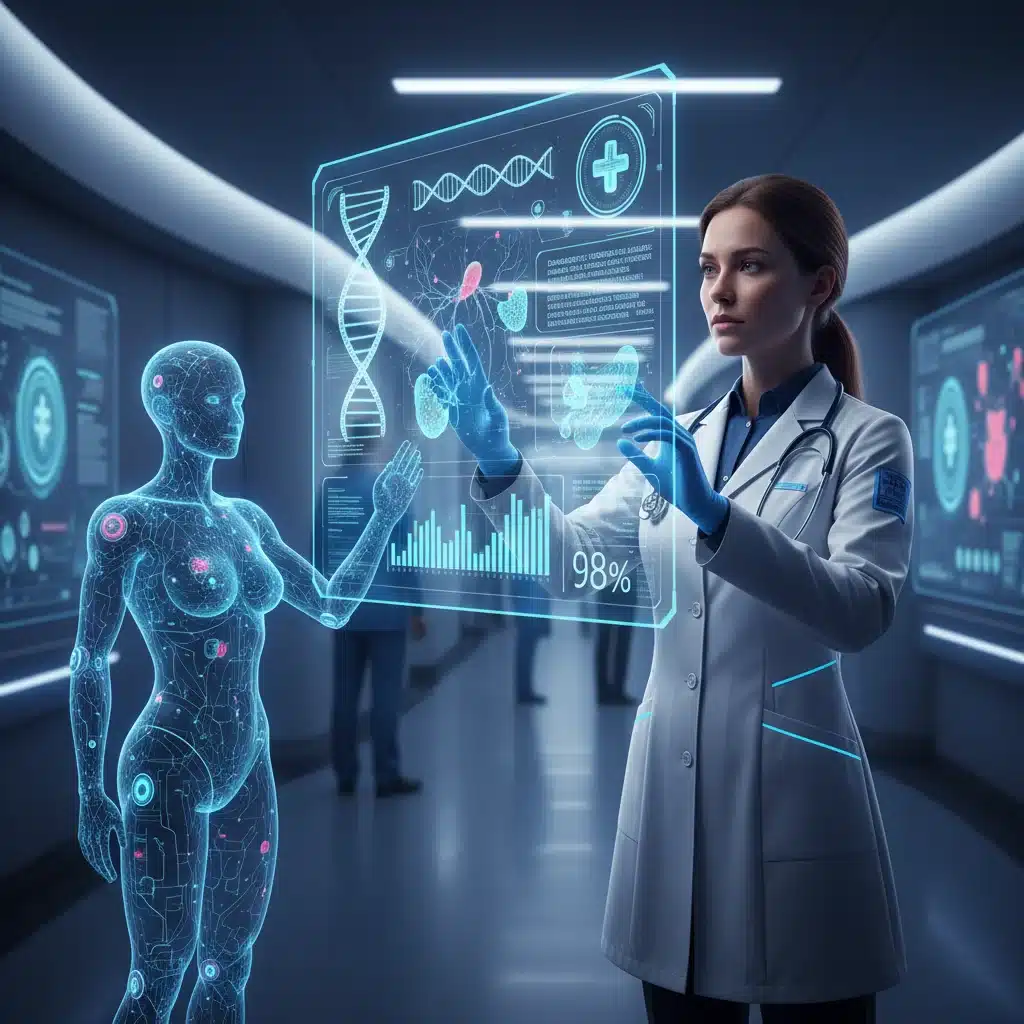
The landscape of modern medicine is undergoing a profound transformation, driven by the relentless march of artificial intelligence. Among the myriad AI methodologies, transfer learning healthcare stands out as a particularly potent force, promising to revolutionize diagnostic accuracy, treatment efficacy, and operational efficiency within the US healthcare system. By 2026, experts predict that AI models leveraging transfer learning will achieve an astonishing 90% accuracy, even with the inherent challenge of limited domain-specific data. This article delves into the intricacies of transfer learning, its pivotal role in healthcare, and the exciting future it portends for patients and practitioners alike.
The Dawn of a New Era: Understanding Transfer Learning in Healthcare
At its core, transfer learning is a machine learning technique where a model developed for a task is reused as the starting point for a model on a second task. Instead of training a new model from scratch, which requires vast amounts of labeled data and computational resources, transfer learning allows us to leverage pre-existing knowledge. Imagine teaching a child to recognize different types of animals; once they understand the concept of ‘animal’ and can distinguish between a cat and a dog, it becomes much easier for them to learn about a less common animal like a panda. This is analogous to how transfer learning healthcare operates.
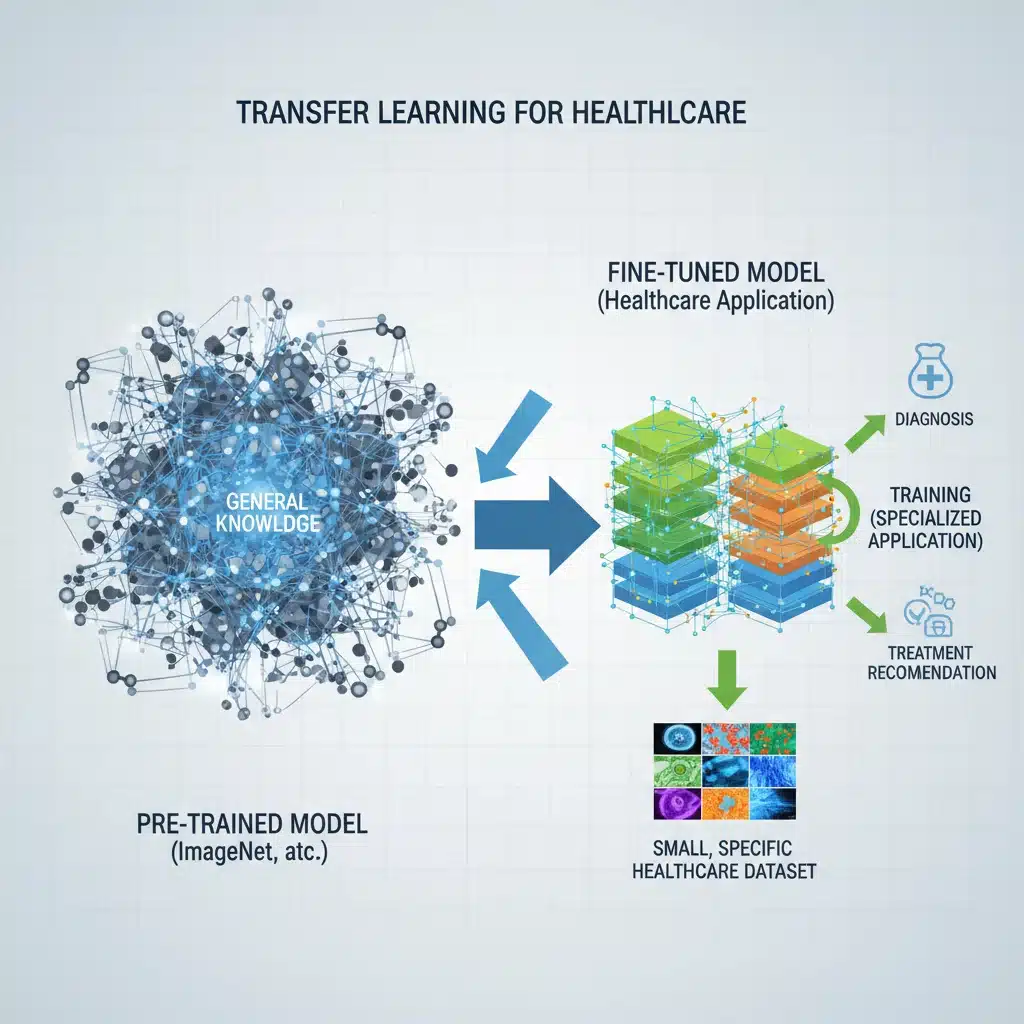
In the context of healthcare, this means taking a large, pre-trained AI model – often one trained on massive datasets of general images, text, or sounds – and fine-tuning it with a smaller, more specific dataset relevant to a particular medical condition or task. For instance, a model initially trained to classify millions of everyday objects could be adapted to detect anomalies in medical images, such as X-rays, MRIs, or CT scans, with significantly less medical data than would otherwise be required. This capability is paramount in healthcare, where obtaining vast, perfectly labeled medical datasets can be prohibitively expensive, time-consuming, and often ethically complex due to patient privacy concerns.
The potential for transfer learning healthcare to achieve 90% accuracy by 2026 is not merely aspirational; it’s grounded in the rapid advancements we’re witnessing today. The ability to generalize knowledge from one domain to another effectively bridges the data gap, accelerating the development and deployment of highly accurate AI solutions in critical medical applications.
Why Limited Data is a Major Hurdle in Medical AI
Traditional deep learning models thrive on colossal amounts of data. The more data they ingest, the better they learn to identify patterns and make accurate predictions. However, healthcare data presents unique challenges:
- Scarcity of Labeled Data: Medical data often requires expert annotation (e.g., a radiologist labeling a tumor in an image), which is a labor-intensive and costly process.
- Privacy Concerns (HIPAA): Strict regulations like HIPAA in the US limit how patient data can be shared and used, creating silos and hindering large-scale data aggregation.
- Class Imbalance: Many rare diseases have very few examples, making it difficult for models to learn effectively without overfitting.
- Data Heterogeneity: Medical data comes in various formats (images, text, time-series, genomics) from different institutions, making standardization challenging.
- Cost of Data Acquisition: Generating new medical data, especially for research, can be extremely expensive.
These hurdles have historically slowed the progress of AI in healthcare. This is precisely where transfer learning healthcare emerges as a game-changer, offering a pragmatic solution to overcome these data limitations and unlock the full potential of AI in medicine.
Key Applications of Transfer Learning in US Healthcare
The versatility of transfer learning allows its application across a broad spectrum of healthcare domains. Its ability to achieve high accuracy with limited data makes it ideal for many critical tasks:
1. Medical Imaging Analysis and Diagnostics
This is perhaps the most prominent application. Pre-trained convolutional neural networks (CNNs) – often trained on ImageNet, a dataset of millions of everyday images – can be fine-tuned to detect diseases from medical scans. For instance:
- Radiology: Detecting cancerous tumors in X-rays, CT scans, and MRIs (e.g., lung nodules, breast cancer).
- Pathology: Analyzing histopathology slides for cancer detection and grading.
- Ophthalmology: Identifying retinal diseases like diabetic retinopathy or glaucoma from fundus images.
- Dermatology: Classifying skin lesions as benign or malignant from dermatoscopic images.
By leveraging features learned from general image recognition, these models require significantly fewer labeled medical images to achieve expert-level performance, often surpassing human capabilities in speed and consistency. The goal of 90% accuracy with transfer learning healthcare in these areas is already within reach for many specific diagnoses.
2. Natural Language Processing (NLP) for Clinical Text
Healthcare generates vast amounts of unstructured text data in electronic health records (EHRs), clinical notes, research papers, and patient forums. Transfer learning, particularly with models like BERT, GPT, and their medical variants (e.g., BioBERT, ClinicalBERT), is transforming how this data is utilized:
- Information Extraction: Automatically extracting key information like diagnoses, medications, procedures, and symptoms from clinical notes.
- Clinical Decision Support: Providing relevant information to clinicians based on patient records, helping in diagnosis and treatment planning.
- Patient Cohort Identification: Identifying patients for clinical trials or specific treatment programs based on criteria extracted from their records.
- Medical Literature Review: Summarizing research papers and identifying relevant studies for specific conditions.
These NLP models, pre-trained on massive text corpuses, can be fine-tuned with relatively small medical text datasets to understand complex medical terminology and context, leading to highly accurate insights.
3. Predictive Analytics and Risk Stratification
Predicting patient outcomes, identifying at-risk individuals, and forecasting disease outbreaks are critical for proactive healthcare. Transfer learning healthcare contributes by:
- Disease Progression Prediction: Predicting the likelihood of a disease worsening or recurring based on patient history and clinical data.
- Readmission Risk: Identifying patients at high risk of hospital readmission, allowing for targeted interventions.
- Drug Discovery: Accelerating the identification of potential drug candidates and predicting their efficacy and side effects.
- Personalized Medicine: Tailoring treatment plans based on an individual’s genetic makeup, lifestyle, and medical history, using models pre-trained on genomic and phenotypic data.
The ability to transfer learning from general biomedical datasets to specific patient populations is crucial for developing robust predictive models, even when individual hospital datasets are limited.
The Mechanics of Achieving 90% Accuracy with Limited Data
Achieving such high accuracy levels with limited data using transfer learning healthcare involves several sophisticated techniques:
1. Feature Extraction
The most basic form of transfer learning involves using a pre-trained model as a fixed feature extractor. The pre-trained model (e.g., the convolutional layers of a CNN) learns to identify general features (edges, textures, shapes) from a vast dataset. These learned features are then extracted from new, domain-specific medical data and fed into a simpler, newly trained classifier (like a support vector machine or a small neural network). This approach is highly effective when the new dataset is small and similar to the original pre-training dataset.
2. Fine-Tuning
A more advanced and often more effective approach is fine-tuning. Here, the pre-trained model’s architecture is largely retained, but its final layers are replaced or modified to suit the new task. The entire model, or just the newly added layers and some of the original layers, are then re-trained (fine-tuned) on the smaller, specific medical dataset. This allows the model to adapt the general features it learned to the nuances of the medical domain, leading to superior performance. This is the primary method driving the projected 90% accuracy in transfer learning healthcare applications.
3. Domain Adaptation
When the source domain (where the model was pre-trained) and the target domain (the medical task) are significantly different, domain adaptation techniques come into play. These methods aim to reduce the discrepancy between the feature distributions of the two domains, allowing the transferred knowledge to be more effectively utilized. Techniques include adversarial training, where a discriminator tries to distinguish between features from the source and target domains, while the feature extractor tries to fool it, thereby learning domain-invariant features.
4. Self-Supervised Learning (SSL)
A burgeoning area that complements transfer learning, especially with limited labeled data, is self-supervised learning. SSL involves training a model to predict parts of its input from other parts, generating its own supervisory signals from unlabeled data. For example, predicting missing words in a sentence or predicting rotated versions of an image. Once these models learn robust representations from vast amounts of unlabeled medical data, they can then be fine-tuned with a small amount of labeled data using transfer learning to achieve high accuracy. This combined approach is particularly powerful for advancing transfer learning healthcare.
Benefits of Transfer Learning for US Healthcare by 2026
The adoption of transfer learning healthcare is not just about technical prowess; it translates into tangible benefits:
- Accelerated Development: Significantly reduces the time and resources needed to develop high-performing AI models for new medical tasks.
- Reduced Data Requirements: Overcomes the challenge of limited labeled medical data, making AI accessible for rare diseases and specialized conditions.
- Improved Accuracy and Reliability: Leads to more accurate diagnoses, better prognoses, and more reliable treatment recommendations, reducing human error.
- Cost-Effectiveness: Lowers computational costs by avoiding training large models from scratch and reduces the expense of extensive data annotation.
- Democratization of AI: Enables smaller institutions or research groups with limited resources to leverage state-of-the-art AI.
- Enhanced Patient Outcomes: Ultimately, more accurate and timely interventions lead to better health outcomes for patients.
- Faster Research and Drug Discovery: Accelerates the analysis of complex biological data, speeding up the development of new treatments.
The target of 90% accuracy by 2026 is a testament to these benefits, indicating a future where AI-powered diagnostics are not just a supplement but an integral, highly reliable part of clinical practice.
Challenges and Considerations for Widespread Adoption
While the promise of transfer learning healthcare is immense, several challenges must be addressed for its widespread and ethical adoption:
1. Data Bias and Fairness
If the pre-trained model or the fine-tuning dataset is biased (e.g., predominantly representing one demographic group), the resulting AI model may perpetuate or even amplify these biases, leading to unequal care. Ensuring diverse and representative datasets at all stages is crucial.
2. Interpretability and Explainability
Healthcare professionals need to understand why an AI model makes a particular prediction. Black-box models, common in deep learning, can hinder trust and adoption. Developing interpretable AI (XAI) techniques for transfer learning models is vital.
3. Regulatory Hurdles
The FDA and other regulatory bodies are still developing frameworks for approving AI in medical devices. Clear guidelines for validation, performance monitoring, and safety are essential, especially for models fine-tuned on diverse datasets.
4. Integration into Clinical Workflows
AI tools must seamlessly integrate into existing EHR systems and clinical workflows to be effective. Poor integration can lead to clinician burnout or underutilization of valuable insights.
5. Continuous Monitoring and Update
Medical knowledge evolves, and patient populations change. AI models, even those leveraging transfer learning, need continuous monitoring for performance degradation (model drift) and periodic retraining to maintain their accuracy and relevance.
6. Ethical Considerations
Questions around AI accountability, patient consent for data usage, and the potential for deskilling human expertise need careful consideration and robust ethical frameworks.
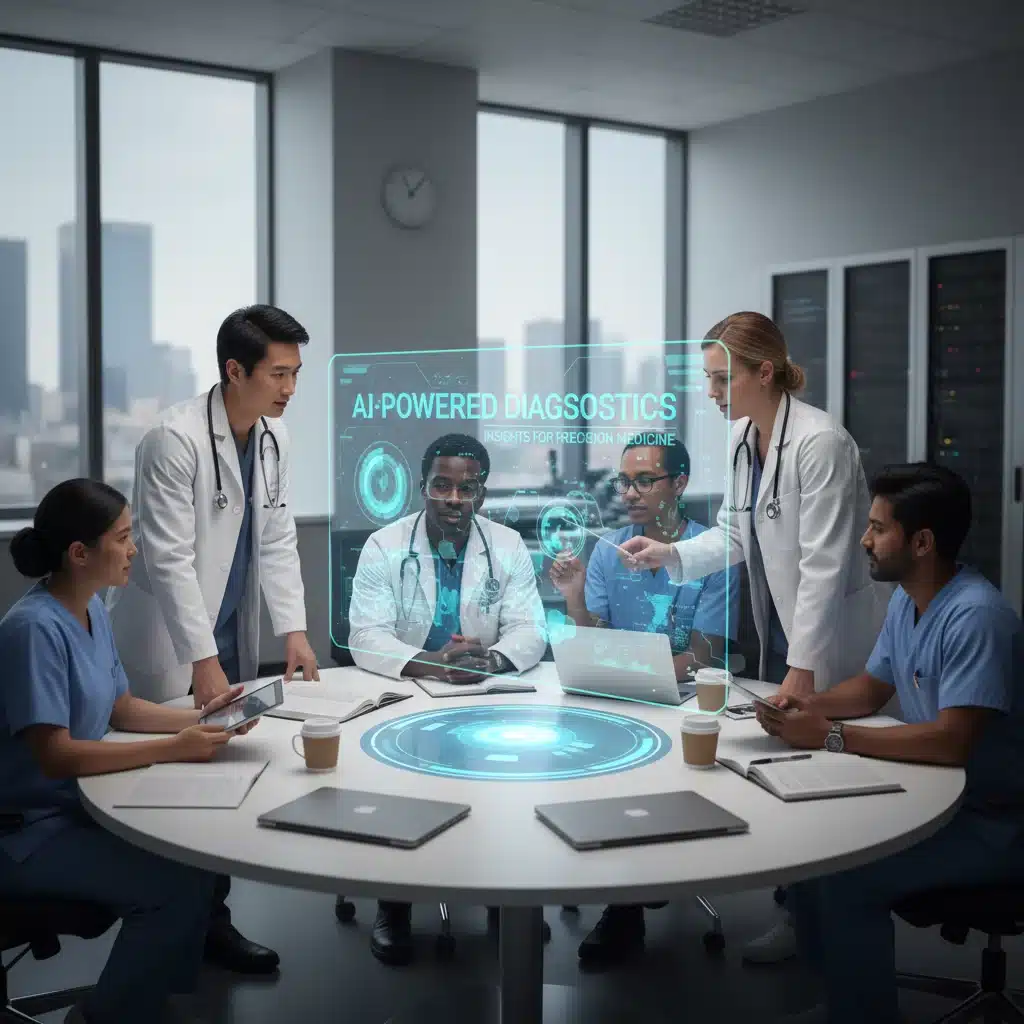
The Road Ahead: What to Expect by 2026 and Beyond
The trajectory towards 90% accuracy in US healthcare AI by 2026, powered by transfer learning healthcare, is exciting and transformative. We can anticipate several key developments:
1. Proliferation of Specialized AI Models
Instead of general-purpose medical AI, we will see a surge in highly specialized models, each excelling in a narrow domain (e.g., detecting a specific type of cancer from a particular imaging modality). Transfer learning will enable rapid development of these niche solutions.
2. Hybrid Human-AI Decision-Making
AI will not replace human clinicians but augment their capabilities. The 90% accuracy target implies that AI will serve as a highly reliable second opinion, helping clinicians make more informed decisions, reduce diagnostic errors, and allocate their time more effectively to complex cases requiring human empathy and nuanced judgment.
3. Federated Learning and Data Cooperatives
To overcome data privacy concerns and limited data silos, federated learning, often combined with transfer learning, will become more prevalent. This approach allows models to be trained on decentralized datasets at individual institutions without sharing raw patient data, enabling collaborative AI development while preserving privacy.
4. AI-Powered Personalized Treatment Plans
The integration of genomic data, real-time patient monitoring, and predictive analytics will enable highly personalized treatment plans, moving away from a one-size-fits-all approach. Transfer learning healthcare will be critical in adapting general genomic insights to individual patient profiles.
5. Focus on Proactive and Preventative Care
With highly accurate predictive models, healthcare will shift further towards proactive and preventative measures, identifying at-risk individuals earlier and implementing interventions before severe conditions develop.
Conclusion: A Healthier Future Driven by Transfer Learning
The promise of transfer learning healthcare reaching 90% accuracy in the US by 2026 is a beacon of hope for a more efficient, accurate, and equitable healthcare system. By cleverly reusing knowledge and adapting it to specific medical challenges, transfer learning bypasses the traditional bottlenecks of data scarcity and computational intensity. While challenges remain in terms of ethics, regulation, and integration, the relentless innovation in AI, coupled with a growing understanding of its application in medicine, paints a clear picture of a healthier future. The synergy between human expertise and advanced AI, particularly through the lens of transfer learning, is not just an incremental improvement; it is a fundamental shift that will redefine medical practice and significantly enhance patient care in the years to come.
Embracing this technology thoughtfully and strategically will be paramount for healthcare providers, policymakers, and technology developers alike. The journey to 90% accuracy is well underway, and its impact on the well-being of millions will be profound.