Building Ethical AI Teams: 4 Practices for US Companies in 2026

Building ethical AI teams is paramount for US companies in 2026 to ensure responsible innovation, requiring clear governance, diverse perspectives, continuous training, and transparent accountability frameworks.
In the rapidly evolving landscape of artificial intelligence, the imperative to establish and nurture ethical AI teams has never been more critical for US companies in 2026. As AI systems become more autonomous and integrated into daily operations, ensuring their development aligns with societal values and avoids unintended biases is not merely a compliance issue but a cornerstone of sustainable innovation and public trust.
Establishing a Robust Ethical AI Governance Framework
Creating a strong ethical AI governance framework is the foundational step for any US company serious about responsible AI development. This framework provides the structure and guidelines necessary to navigate complex ethical dilemmas, ensuring that every AI project adheres to a predefined set of principles and values. Without clear governance, even well-intentioned teams can inadvertently introduce biases or create systems with unforeseen negative impacts.
The governance framework in 2026 must be dynamic, adapting to new technological advancements and evolving societal expectations. It should not be a static document but rather a living system that continually assesses risks, identifies potential harms, and implements corrective measures. This proactive approach helps companies stay ahead of regulatory changes and maintain public confidence.
Defining Core Ethical Principles and Values
At the heart of any effective governance framework are clearly articulated ethical principles. These principles serve as the moral compass for AI teams, guiding their decisions from conception to deployment. Companies must move beyond generic statements and define actionable values that resonate with their specific operations and the broader ethical landscape.
- Transparency: Ensuring that AI decision-making processes are understandable and explainable to stakeholders.
- Fairness: Actively working to mitigate bias and ensure equitable outcomes for all users, regardless of background.
- Accountability: Establishing clear lines of responsibility for AI system performance and any unintended consequences.
- Privacy: Protecting user data and ensuring that AI systems handle personal information with the utmost care and compliance.
These principles must be integrated into every stage of the AI lifecycle, from initial design discussions to post-deployment monitoring. Regular audits and reviews are essential to verify ongoing adherence to these foundational values.
Fostering Diversity and Inclusion within AI Teams
Diversity within AI teams is not just a matter of social responsibility; it is a critical component of building ethical and robust AI systems. Homogeneous teams are more likely to inadvertently embed their own biases into algorithms, leading to systems that perform poorly or unfairly for diverse user groups. In 2026, US companies recognize that a variety of perspectives is indispensable for identifying and mitigating these risks.
An inclusive environment encourages open dialogue and critical self-reflection, allowing team members to challenge assumptions and uncover blind spots that might otherwise go unnoticed. This proactive approach to diversity helps create AI solutions that are more equitable, representative, and ultimately, more effective for a broader user base.
Recruiting for Cognitive and Experiential Diversity
Beyond traditional demographic diversity, companies should actively seek cognitive and experiential diversity. This means assembling teams with varied educational backgrounds, professional experiences, and problem-solving approaches. A team composed of engineers, ethicists, sociologists, and legal experts can provide a holistic view of potential AI impacts.
- Interdisciplinary Recruitment: Actively seeking candidates from non-traditional tech backgrounds, such as humanities or social sciences.
- Bias Mitigation Training: Implementing training programs to address unconscious biases in hiring and team management.
- Inclusive Culture: Creating a workplace where all voices are heard and respected, fostering a sense of psychological safety.
- Mentorship Programs: Establishing initiatives to support and elevate underrepresented groups within AI development roles.
By intentionally cultivating diverse teams, companies can significantly enhance their capacity to build AI systems that are not only technologically advanced but also ethically sound and socially beneficial. The insights gained from varied perspectives are invaluable in preventing algorithmic discrimination and promoting fairness.
Implementing Continuous Ethical AI Training and Education
The field of AI ethics is constantly evolving, with new challenges and best practices emerging regularly. Therefore, continuous training and education are paramount for maintaining high ethical standards within AI teams. In 2026, it is no longer sufficient to provide a one-off ethics seminar; ongoing learning must be embedded into the professional development of every team member involved in AI.
This commitment to continuous education ensures that teams remain abreast of the latest ethical considerations, regulatory updates, and technological capabilities. It empowers them to proactively identify and address ethical risks, fostering a culture of perpetual improvement and responsible innovation.
Modular Training Programs for All Roles
Ethical AI training should not be limited to a select few; it must be comprehensive and tailored to different roles within the AI development lifecycle. Data scientists, engineers, product managers, and legal counsel all have distinct responsibilities and require specific ethical insights relevant to their work.
- Core Ethics Modules: General training on fundamental AI ethics principles for all team members.
- Role-Specific Workshops: Deep dives into ethical considerations pertinent to data collection, algorithm design, or deployment strategies.
- Case Study Analysis: Regular sessions discussing real-world ethical AI dilemmas and their potential resolutions.
- Regulatory Updates: Continuous education on emerging AI legislation and compliance requirements in the US and globally.
By investing in a robust and continuous training program, US companies can equip their AI teams with the knowledge and tools necessary to make ethically informed decisions, preventing costly mistakes and building a reputation for responsible AI leadership.
Developing Transparent Accountability Mechanisms
Even with the most robust governance frameworks, diverse teams, and continuous training, ethical lapses can occur. This is why transparent accountability mechanisms are crucial for any company committed to ethical AI. In 2026, US businesses understand that demonstrating clear lines of responsibility and a commitment to redress is vital for maintaining public trust and regulatory compliance.
Accountability ensures that when ethical issues arise, there is a clear process for investigation, remediation, and learning. It moves beyond simply identifying problems to actively implementing solutions and preventing future occurrences. This proactive stance reinforces the company’s dedication to ethical AI practices.
Establishing Clear Reporting and Remediation Pathways
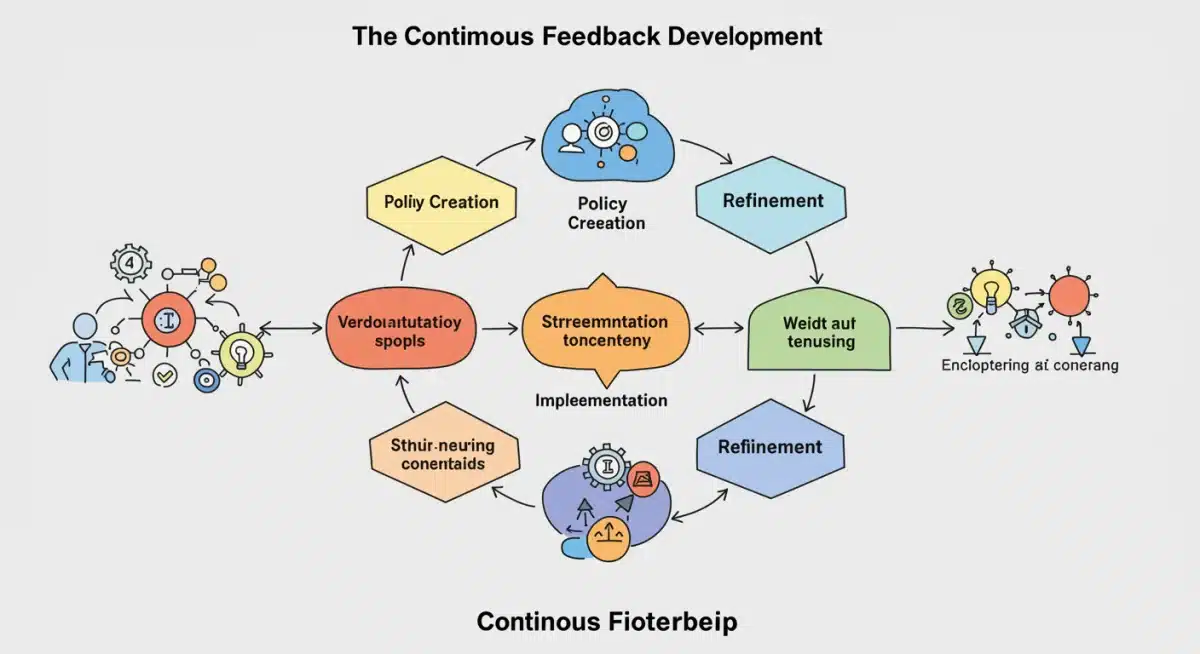
Effective accountability requires well-defined channels for reporting ethical concerns and robust processes for addressing them. This includes internal mechanisms for team members to raise issues confidentially, as well as external channels for users or affected parties.
- Internal Ethics Review Boards: Cross-functional committees dedicated to reviewing AI projects for ethical compliance.
- Whistleblower Protections: Safeguarding employees who report ethical concerns without fear of retaliation.
- Post-Mortem Analysis: Conducting thorough investigations into ethical incidents to understand root causes and implement preventive measures.
- Public Transparency Reports: Publishing regular reports on AI ethics initiatives, challenges, and progress to foster external trust.
By implementing these transparent accountability mechanisms, US companies can build a strong foundation of trust, both internally within their teams and externally with their customers and the broader public. This commitment to accountability is a hallmark of truly ethical AI development.
Integrating Ethics into the AI Development Lifecycle
For ethical AI to be truly effective, it cannot be an afterthought or a separate compliance step; it must be deeply integrated into every phase of the AI development lifecycle. In 2026, leading US companies are adopting a ‘privacy by design’ and ‘ethics by design’ approach, embedding ethical considerations from the very inception of an AI project rather than attempting to bolt them on later.
This holistic integration ensures that ethical considerations influence every decision, from data collection and model training to deployment and ongoing monitoring. It helps prevent ethical debt from accumulating, making it easier and more cost-effective to address potential issues when they are identified early.
Ethical Checkpoints and Tools
To facilitate this integration, companies are developing specific ethical checkpoints and employing specialized tools throughout the AI development process. These tools and processes help teams systematically evaluate and address ethical implications at each stage.
- Ethical Impact Assessments: Conducting mandatory assessments at project initiation to identify potential societal, economic, and individual impacts.
- Bias Detection Tools: Utilizing software to analyze datasets and model outputs for algorithmic bias and unfairness.
- Explainable AI (XAI) Techniques: Employing methods that make AI model decisions more interpretable and transparent to humans.
- Continuous Ethical Monitoring: Implementing systems to track AI system performance in real-world scenarios for unforeseen ethical issues.
By embedding ethics directly into the AI development lifecycle, US companies ensure that ethical considerations are not just theoretical principles but practical, actionable steps that guide the creation of responsible and beneficial AI solutions.
Cultivating an Ethical AI Culture from the Top Down
Ultimately, the success of any ethical AI initiative hinges on the organizational culture that underpins it. In 2026, US companies understand that ethical AI is not solely the responsibility of a dedicated team or a set of policies, but a shared value that must be championed from the highest levels of leadership down to every individual contributor. A strong ethical culture permeates all decision-making and fosters a collective commitment to responsible innovation.
Leadership must not only articulate ethical values but also actively model them through their actions and resource allocation. When ethical considerations are visibly prioritized by executives, it sends a powerful message throughout the organization, encouraging all employees to uphold these standards in their daily work.
Leadership Buy-in and Resource Allocation
True ethical AI culture requires significant investment—in time, training, and personnel. Leadership must be prepared to allocate the necessary resources to support ethical AI initiatives, demonstrating their commitment through tangible means.
- Executive Sponsorship: Designating senior leaders to champion ethical AI within the organization and advocate for its importance.
- Dedicated Ethics Roles: Creating roles such as AI Ethicists or Responsible AI Program Managers to guide and oversee efforts.
- Incentivizing Ethical Behavior: Integrating ethical AI practices into performance reviews and reward systems.
- Open Communication Channels: Encouraging employees to openly discuss ethical dilemmas and seek guidance without fear of reprisal.
By actively cultivating an ethical AI culture from the top down, US companies can ensure that responsible AI development becomes an ingrained part of their DNA, leading to more trustworthy, innovative, and socially beneficial AI systems.
| Key Practice | Brief Description |
|---|---|
| Ethical Governance | Implement dynamic frameworks with clear principles for responsible AI development. |
| Diverse Teams | Foster cognitive and experiential diversity to mitigate bias and broaden perspectives. |
| Continuous Training | Provide ongoing, role-specific education on AI ethics and regulatory updates. |
| Transparent Accountability | Establish clear reporting and remediation pathways for ethical issues. |
Frequently Asked Questions about Ethical AI Teams
Building ethical AI teams is crucial in 2026 because it ensures AI systems align with societal values, mitigates biases, fosters public trust, and helps companies navigate complex regulatory landscapes. It’s essential for sustainable innovation and avoiding reputational damage.
Diversity, both demographic and cognitive, profoundly impacts ethical AI development by bringing varied perspectives. This helps identify and mitigate inherent biases, preventing discriminatory outcomes and creating AI solutions that are more equitable and effective for a broader user base.
Continuous, role-specific training is necessary, including core ethics modules, workshops on data collection and algorithm design, case study analysis, and regular updates on AI legislation. This ensures teams stay informed and can make ethically sound decisions.
Key components include internal ethics review boards, whistleblower protections, post-mortem analysis of incidents, and public transparency reports. These mechanisms ensure clear responsibility, facilitate remediation, and build trust with stakeholders and the public.
Companies can integrate ethics through ‘ethics by design’ principles, implementing ethical impact assessments at project initiation, using bias detection tools, employing Explainable AI (XAI) techniques, and continuous ethical monitoring of deployed systems. This ensures ethics is proactive, not reactive.
Conclusion
The journey towards building truly ethical AI teams in 2026 for US companies is multifaceted, demanding a holistic approach that intertwines robust governance, diverse perspectives, continuous learning, and unwavering accountability. By prioritizing these four essential practices—establishing clear ethical frameworks, fostering inclusive environments, investing in ongoing education, and developing transparent accountability mechanisms—companies can not only mitigate risks but also unlock the full, responsible potential of artificial intelligence. This strategic commitment ensures that AI innovation serves humanity ethically and equitably, cementing trust and driving sustainable growth in an increasingly AI-driven world.