Unlocking Efficiency: 4 AI Tools for Project Management That Save 10 Hours Weekly

Integrating artificial intelligence into project management streamlines operations, automates routine tasks, and offers predictive insights, collectively saving project teams significant time and enhancing overall productivity.
In today’s fast-paced business environment, project managers are constantly seeking innovative ways to improve productivity and deliver projects on time and within budget. The advent of artificial intelligence (AI) has revolutionized numerous industries, and project management is no exception. This article delves into how leveraging AI project management tools can dramatically boost efficiency, potentially saving your team up to 10 hours weekly.
The Transformative Power of AI in Project Management
Artificial intelligence is no longer a futuristic concept; it’s a present-day reality transforming how projects are planned, executed, and monitored. AI tools bring unparalleled capabilities to project management, from automating mundane tasks to providing deep analytical insights that human managers might miss. This shift allows teams to focus on strategic initiatives rather than getting bogged down in administrative overhead.
The integration of AI into project workflows means less time spent on manual data entry, scheduling conflicts, and risk assessment. Instead, AI algorithms can process vast amounts of data, identify patterns, and even predict potential roadblocks before they materialize. This proactive approach is a game-changer for project success rates and team morale.
Automating Routine Tasks
One of the most immediate benefits of AI in project management is the automation of routine, repetitive tasks. These can include setting up meetings, sending reminders, generating status reports, and even initial data analysis.
- Automated Scheduling: AI-powered calendars can find optimal meeting times across multiple time zones, considering availability and preferences.
- Report Generation: AI can compile project data into comprehensive reports, summarizing progress, budget adherence, and potential issues.
- Data Entry and Updates: Tools can automatically update task statuses and project timelines based on real-time data inputs from team members.
By delegating these time-consuming activities to AI, project managers and their teams can reclaim valuable hours. This newfound time can then be redirected towards more complex problem-solving, creative brainstorming, and direct stakeholder communication, ultimately fostering a more strategic and impactful work environment.
In essence, AI acts as a sophisticated assistant, handling the groundwork and ensuring that all administrative aspects of a project run smoothly. This enables project teams to operate with greater agility and responsiveness, adapting quickly to changes and maintaining focus on overarching project goals.
AI Tool 1: Predictive Analytics for Proactive Decision-Making
Predictive analytics, powered by AI, represents a significant leap forward in project management. Instead of merely reacting to events, project managers can now anticipate them, thanks to algorithms that analyze historical data and current trends to forecast future outcomes. This capability is crucial for mitigating risks and optimizing resource allocation.
Imagine a tool that can warn you about potential budget overruns weeks before they happen, or identify team members who might be nearing burnout. This is the power of predictive AI. It transforms project management from a reactive process into a proactive one, allowing for timely interventions and more informed decisions.
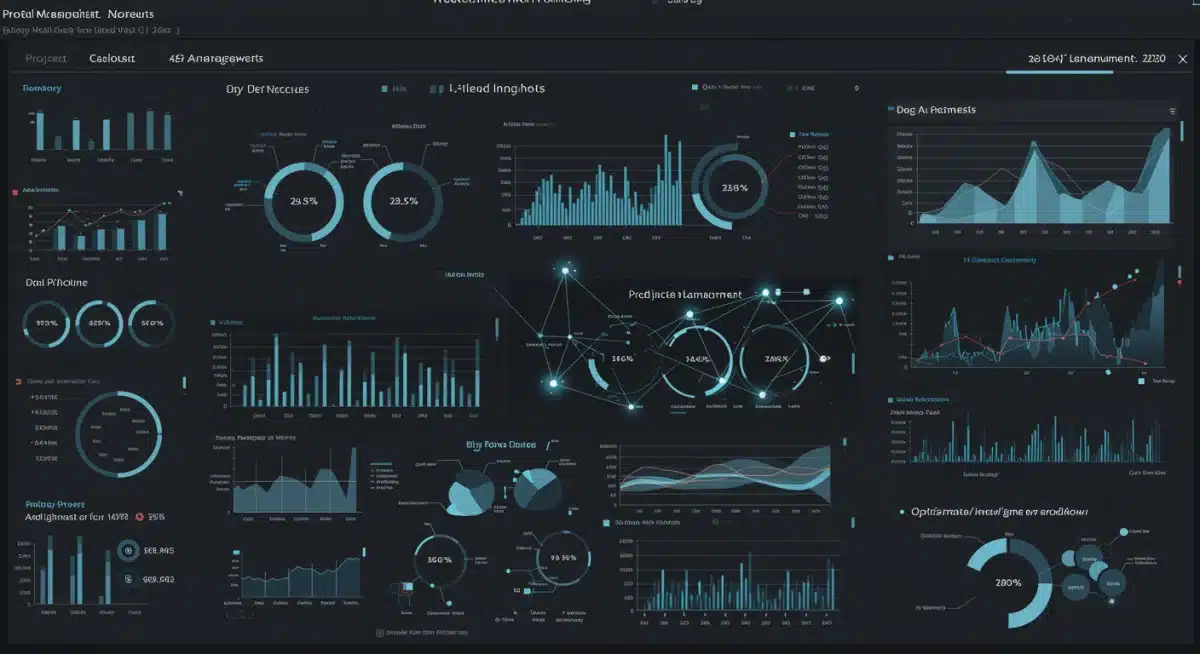
One prominent example of this is AI’s ability to analyze past project performance data, including task durations, resource utilization, and actual costs versus estimates. By identifying correlations and deviations, the AI can then predict the likelihood of similar issues arising in current or future projects. This foresight is invaluable for strategic planning.
Early Risk Identification
AI tools excel at sifting through vast datasets to pinpoint subtle indicators of risk that might be imperceptible to human analysis. These could include dependencies, resource bottlenecks, or scope creep that could derail a project.
- Dependency Analysis: AI can map out complex task dependencies and highlight critical paths that are most susceptible to delays.
- Resource Forecasting: By analyzing workloads and availability, AI predicts resource shortages or over-allocations, enabling adjustments before they become problems.
- Scope Creep Detection: Monitoring changes in project requirements against the original scope, AI can flag potential scope creep early on.
The ability to identify these risks early allows project managers to implement preventative measures, such as reallocating resources, adjusting timelines, or initiating communication with stakeholders to manage expectations. This proactive stance significantly reduces the chances of project failure and keeps projects on track.
Ultimately, predictive analytics empowers project managers with a crystal ball, offering insights that lead to better planning and execution. By leveraging these tools, teams can avoid costly mistakes and navigate projects with a higher degree of certainty, directly contributing to time savings and improved project outcomes.
AI Tool 2: Intelligent Resource Allocation and Optimization
Resource allocation is often one of the most challenging aspects of project management, requiring a delicate balance of skills, availability, and project demands. AI tools are revolutionizing this process by offering intelligent solutions that optimize resource deployment, ensuring the right people are on the right tasks at the right time.
Traditional methods of resource allocation can be cumbersome and prone to human error, leading to over-utilization of some team members and under-utilization of others. AI, however, can analyze individual skill sets, availability, and project requirements with precision, creating optimal assignments that maximize productivity and minimize burnout.
These advanced algorithms consider not only current workloads but also future project pipelines and individual development goals. This holistic view ensures that resources are not just efficiently allocated for the present project but also strategically managed for long-term organizational success. The result is a more balanced and effective team.
Matching Skills with Tasks
AI-powered platforms can maintain detailed profiles of team members, including their skills, experience levels, certifications, and even their preferred types of work. When new tasks arise, the AI can suggest the most suitable individuals.
- Skill-Based Assignment: Automatically identifies team members with the specific skills required for a task, improving efficiency and quality.
- Workload Balancing: Distributes tasks evenly across the team, preventing overload for some members and ensuring others are productive.
- Availability Management: Integrates with calendars to factor in vacations, holidays, and other commitments, ensuring realistic scheduling.
By intelligently matching skills with tasks, AI ensures that work is completed by the most qualified individuals, leading to higher quality outputs and fewer revisions. This targeted allocation also reduces the time spent by managers on manual assignment, freeing them up for more strategic oversight.
The optimization of resource allocation through AI tools directly translates into significant time savings. Projects progress more smoothly, bottlenecks are avoided, and team members can work at their most productive capacity. This intelligent approach to resource management is a cornerstone of modern, efficient project execution.
AI Tool 3: Enhanced Communication and Collaboration Platforms
Effective communication and seamless collaboration are the lifeblood of any successful project. AI is enhancing these crucial aspects by integrating into communication platforms, making interactions more efficient, and ensuring that information flows freely and intelligently across teams. These AI-driven enhancements lead to clearer objectives and faster problem resolution.
Gone are the days of endless email chains and scattered information. AI-powered communication tools centralize discussions, automatically summarize conversations, and even suggest relevant information to team members. This creates a unified and informed project environment, reducing misunderstandings and improving decision-making speed.
Furthermore, AI can act as a facilitator, identifying communication gaps or areas where additional clarity is needed. By analyzing the sentiment of discussions, it can even flag potential conflicts or areas of team disagreement, allowing project managers to intervene proactively and maintain team cohesion. This intelligent oversight is invaluable for complex projects.
Smart Notifications and Summaries
AI tools can filter out noise and deliver only the most relevant information to team members, preventing information overload. They can also provide concise summaries of lengthy discussions, saving time for those catching up.
- Prioritized Alerts: AI learns user preferences to send notifications for critical updates, ignoring less urgent messages.
- Meeting Summaries: Automatically transcribes and summarizes meeting discussions, highlighting key decisions and action items.
- Contextual Information: Suggests relevant documents or past conversations based on the current discussion topic.
These smart features ensure that team members are always informed without being overwhelmed. The ability of AI to distill complex information into digestible summaries is a major time-saver, allowing individuals to quickly grasp the essence of discussions and make contributions without having to read through extensive threads.
By streamlining communication and fostering better collaboration, AI tools significantly reduce the time lost due to miscommunication or information searching. This enhanced connectivity ensures that all team members are aligned, working towards common goals with greater efficiency and fewer roadblocks, ultimately contributing to substantial weekly time savings.
AI Tool 4: Performance Monitoring and Continuous Improvement
Continuous improvement is a cornerstone of agile project management, and AI tools are uniquely positioned to facilitate this by offering sophisticated performance monitoring and analytical capabilities. These tools go beyond simply tracking metrics; they provide actionable insights that drive ongoing optimization of project processes and team performance.
AI-driven monitoring systems can continuously analyze project data, identify trends, and detect anomalies that indicate areas for improvement. This constant feedback loop allows project managers to make data-backed adjustments in real-time, ensuring that projects remain healthy and on track. It transforms performance review from a periodic event into an ongoing process.
The beauty of AI in this context is its ability to learn and adapt. As more project data is fed into the system, the AI’s recommendations become increasingly accurate and tailored to the specific context of the organization. This iterative learning process ensures that the insights provided are always relevant and impactful, leading to sustained improvements over time.
Identifying Bottlenecks and Inefficiencies
AI algorithms can quickly pinpoint areas where projects are slowing down or where resources are being underutilized. By visualizing these bottlenecks, project managers can take immediate corrective action.
- Workflow Analysis: Maps out project workflows and identifies stages or tasks that consistently cause delays.
- Productivity Metrics: Tracks individual and team productivity against benchmarks, highlighting areas for support or training.
- Process Optimization Suggestions: Based on performance data, AI can suggest modifications to processes to enhance efficiency.
By providing clear visibility into project performance and identifying inefficiencies, AI tools empower project managers to implement targeted improvements. This data-driven approach removes guesswork from the equation, allowing for precise interventions that yield measurable results in terms of time saved and improved outcomes.
The continuous monitoring and improvement capabilities of AI tools are invaluable for maintaining project momentum and fostering a culture of excellence. By constantly refining processes and optimizing performance, teams can achieve higher levels of efficiency, consistently saving time and delivering superior project results.
Implementing AI: Best Practices for Maximum Impact
While the benefits of AI in project management are clear, successful implementation requires a thoughtful approach. Simply adopting a tool without a clear strategy can lead to underutilization or even resistance from team members. To truly unlock the efficiency gains, organizations must consider several best practices.
First and foremost, it’s crucial to identify the specific pain points within your current project management processes that AI can address. Is it scheduling? Resource allocation? Communication? A targeted approach ensures that the chosen AI tools directly solve existing problems, providing immediate value and demonstrating the technology’s effectiveness.
Another critical aspect is change management. Introducing new technology often requires a shift in mindset and workflow. Providing adequate training, communicating the benefits clearly, and involving team members in the adoption process can significantly ease the transition and ensure buy-in. A phased rollout can also help teams adapt gradually.
Selecting the Right Tools
The market for AI project management tools is growing rapidly, offering a wide array of options. Choosing the right tools involves assessing your organization’s unique needs, budget, and existing infrastructure.
- Assess Integration Capabilities: Ensure the AI tool can seamlessly integrate with your existing project management software and other business applications.
- Evaluate Scalability: Choose tools that can grow with your organization and adapt to increasing project complexity and team size.
- Prioritize User-Friendliness: Opt for tools with intuitive interfaces that require minimal training for your team to adopt effectively.
Investing time in thorough research and pilot programs can help identify the tools that best fit your organization’s specific requirements. Engaging key stakeholders in the selection process ensures that the chosen solutions address a broad range of needs and receive widespread support.
Furthermore, it’s important to remember that AI tools are meant to augment human capabilities, not replace them. The most successful implementations see AI as a powerful assistant that frees up project managers to focus on strategic thinking, mentorship, and complex problem-solving. This symbiotic relationship between human intelligence and artificial intelligence is where true efficiency is found.
| Key Aspect | AI Impact on Project Management |
|---|---|
| Time Savings | Automates routine tasks, freeing up to 10 hours weekly for strategic work. |
| Decision Making | Predictive analytics offers proactive insights, reducing risks and improving outcomes. |
| Resource Optimization | Intelligently allocates resources based on skills and availability, preventing overload. |
| Collaboration | Enhances communication through smart notifications and automated meeting summaries. |
Frequently Asked Questions About AI in Project Management
AI in project management offers numerous benefits, including automation of routine tasks, enhanced predictive analytics for risk mitigation, optimized resource allocation, and improved communication and collaboration. These collectively lead to significant time savings and better project outcomes.
While savings can vary based on project complexity and team size, many organizations report saving up to 10 hours weekly per team by leveraging AI tools for task automation, intelligent scheduling, and proactive issue identification. This allows teams to focus on higher-value activities.
Implementation difficulty varies by tool and organizational readiness. While some tools are plug-and-play, others require integration with existing systems and data. Proper planning, stakeholder buy-in, and adequate training are crucial for a smooth transition and successful adoption.
No, AI is designed to augment, not replace, human project managers. AI excels at data processing, automation, and predictive analysis, freeing up managers to focus on strategic thinking, team leadership, stakeholder engagement, and complex problem-solving that require human intuition and emotional intelligence.
Key considerations include integration capabilities with existing software, scalability to meet future needs, user-friendliness for team adoption, and the specific pain points the tool addresses. It’s also important to assess the vendor’s support and long-term development plans for the AI solution.
Conclusion
The integration of AI into project management is not just a trend; it’s a fundamental shift towards more efficient, predictive, and collaborative project execution. By leveraging the power of AI tools for task automation, predictive analytics, intelligent resource allocation, and enhanced communication, organizations can unlock unprecedented levels of efficiency. The potential to save up to 10 hours weekly per team is a compelling driver for adoption, allowing project managers and their teams to redirect valuable time from administrative burdens to strategic initiatives and creative problem-solving. As AI technology continues to evolve, its role in shaping the future of project management will only grow, making it an indispensable asset for any organization striving for excellence and sustained success in a competitive landscape. Embracing these innovations is crucial for staying ahead and delivering projects with greater impact and less effort.