AI Ethics Failures: Employee Training is Key by 2025

By 2025, 70% of US AI ethics failures will originate from a critical lack of employee training, underscoring the urgent need for comprehensive educational initiatives to foster responsible AI development and deployment.
The rise of artificial intelligence presents unprecedented opportunities and complex challenges. However, a critical oversight is emerging: AI ethics training. Many organizations are investing heavily in AI technologies but are failing to equip their workforce with the necessary ethical understanding, a gap projected to cause 70% of US AI ethics failures by 2025.
the critical gap in AI ethics education
As artificial intelligence permeates every facet of business and society, the ethical implications of its deployment become increasingly pronounced. Organizations are rushing to implement AI solutions, often without adequately preparing their human capital for the moral and societal responsibilities that accompany such powerful technology. This creates a significant vulnerability, where technical prowess outpaces ethical foresight, leading to unintended consequences and reputational damage.
The problem isn’t a lack of awareness regarding AI’s ethical dilemmas; rather, it’s a systemic failure to translate that awareness into actionable knowledge and behavior across the entire workforce. From data scientists to marketing professionals, every individual interacting with or impacted by AI systems needs a foundational understanding of ethical principles to prevent biased outcomes, privacy breaches, and discriminatory practices.
understanding the scope of the problem
The rapid evolution of AI technology often leaves regulatory frameworks and internal guidelines struggling to keep pace. This dynamism necessitates a proactive approach to ethics, one that is embedded within the organizational culture through continuous learning and adaptation. Without it, companies risk deploying AI systems that reflect societal biases or operate without transparency, eroding public trust and inviting regulatory scrutiny.
- Lack of standardized ethical guidelines within organizations.
- Insufficient resources allocated for comprehensive AI ethics training programs.
- Underestimation of the ethical impact of AI on various business functions.
- Failure to integrate ethical considerations into the AI development lifecycle.
The consequences of this ethical vacuum extend beyond mere compliance. They touch upon brand reputation, customer loyalty, and long-term viability. Companies that prioritize ethical AI development and deployment will not only mitigate risks but also gain a competitive advantage by fostering trust and demonstrating responsible innovation.
the human factor: root cause of ethical lapses
While AI systems are complex algorithms and data structures, their design, implementation, and oversight are inherently human endeavors. Every decision, from data selection to model architecture, carries human fingerprints, and with them, human biases and blind spots. It is this human element, often untrained in specific AI ethical considerations, that becomes the weak link in the chain, leading to significant ethical failures.
Employees, irrespective of their technical background, may not fully grasp how their daily tasks contribute to the ethical posture of an AI system. A data analyst might inadvertently introduce bias through data curation, or a product manager might overlook the potential for misuse of an AI-powered feature. These aren’t malicious acts but rather consequences of a knowledge gap.
identifying common human-induced ethical risks
The range of ethical risks stemming from human oversight is broad. It includes everything from the subtle perpetuation of stereotypes through biased training data to more overt issues like insufficient data security leading to privacy violations. Without proper training, individuals may not recognize these pitfalls until an incident occurs, often with severe repercussions.
- Unconscious biases influencing data collection and labeling.
- Lack of diverse perspectives in AI development teams.
- Inadequate understanding of privacy regulations (e.g., GDPR, CCPA).
- Failure to implement robust explainability and transparency mechanisms.
Moreover, the pressure to deliver results quickly can sometimes overshadow ethical considerations. Employees might prioritize speed over thorough ethical vetting if the organizational culture doesn’t explicitly value and reward ethical diligence. This highlights the need for training that not only imparts knowledge but also cultivates a strong ethical culture.
building a robust framework for AI ethics training
To counteract the looming threat of AI ethics failures, organizations must proactively establish and implement comprehensive training programs. These programs should not be a one-time event but rather an ongoing process that evolves with AI technology and societal expectations. A robust framework encompasses various levels of training, tailored to different roles and responsibilities within the organization.
The initial step involves assessing the current level of ethical AI understanding across the workforce and identifying specific areas where knowledge gaps exist. This assessment can help in designing targeted training modules that address the most pressing needs and risks.
key components of effective training programs
Effective AI ethics training goes beyond theoretical concepts. It involves practical exercises, case studies, and real-world scenarios that allow employees to apply ethical principles to their specific roles. It should also foster open dialogue and encourage employees to raise concerns without fear of reprisal.
- Foundational courses on AI principles and ethical considerations for all employees.
- Specialized modules for AI developers, data scientists, and engineers on responsible AI design.
- Training for leadership and management on ethical governance and oversight.
- Regular workshops and seminars on emerging ethical challenges in AI.
Furthermore, the training framework should emphasize the importance of interdisciplinary collaboration. Ethical AI is not solely the responsibility of technical teams; it requires input from legal, HR, marketing, and executive leadership to ensure a holistic approach. This collaborative spirit must be instilled through training.
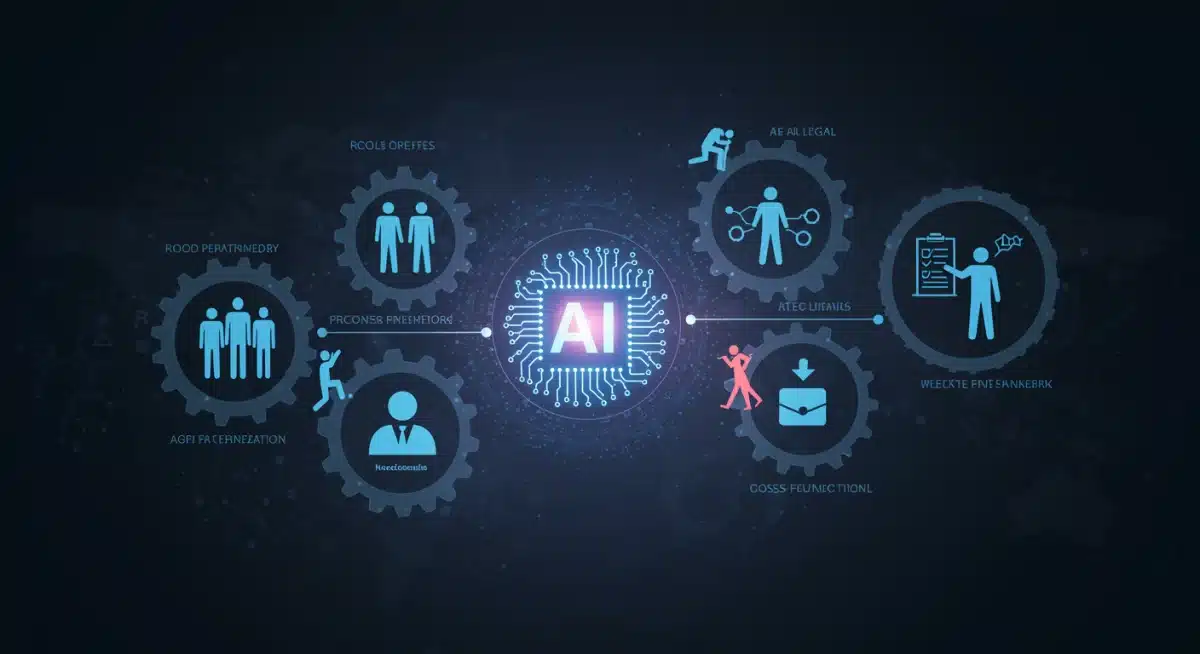
The establishment of clear reporting mechanisms for ethical concerns and a commitment from top leadership to address these concerns are also crucial. Training can empower employees to identify issues, but a supportive organizational structure is needed to resolve them effectively.
the strategic advantages of ethical AI deployment
Investing in comprehensive AI ethics training is not merely a compliance exercise; it is a strategic imperative that offers substantial competitive advantages. Companies that prioritize ethical AI development and deployment build a foundation of trust with their customers, partners, and employees, which is increasingly valuable in a data-driven world.
Ethical AI can lead to more innovative and trustworthy products and services. When ethical considerations are integrated from the outset, it encourages a more thoughtful design process, leading to solutions that are not only effective but also fair, transparent, and respectful of user privacy.
enhancing brand reputation and customer loyalty
In an era where consumers are increasingly conscious of how their data is used and how technology impacts society, a strong ethical stance can differentiate a brand. Companies known for their commitment to ethical AI are likely to attract and retain customers who value responsible business practices.
- Increased customer trust and loyalty.
- Improved brand image and public perception.
- Reduced risk of negative publicity and boycotts.
- Attracting top talent who prioritize ethical work environments.
Moreover, ethical AI practices can help mitigate legal and regulatory risks. As governments worldwide grapple with AI regulation, companies with established ethical frameworks will be better positioned to adapt to new compliance requirements, avoiding costly fines and legal battles. This proactive approach ensures long-term sustainability and growth in the rapidly evolving AI landscape.
overcoming challenges in implementing ethics training
Despite the clear benefits, implementing effective AI ethics training programs is not without its challenges. Organizations often face hurdles such as a lack of resources, resistance to change, and the difficulty of keeping training content up-to-date in a fast-paced technological environment. Addressing these challenges requires a strategic and sustained effort.
One significant challenge is securing adequate funding and executive buy-in. Without strong leadership support, ethics training can be perceived as an ancillary activity rather than a core business function. It’s crucial to articulate the return on investment, not just in terms of risk mitigation but also in enhanced innovation and brand value.
strategies for successful implementation
To overcome resistance, training programs should be designed to be engaging and relevant to employees’ daily tasks. Generic, one-size-fits-all training often fails to resonate. Instead, tailoring content to specific roles and providing practical tools and guidelines can significantly improve engagement and retention.
- Gaining executive sponsorship and allocating dedicated budgets.
- Customizing training content for different departments and roles.
- Utilizing interactive and practical learning methodologies.
- Establishing a clear feedback loop for continuous improvement of training materials.
Furthermore, creating a culture where ethical considerations are openly discussed and valued is paramount. This involves fostering psychological safety, where employees feel comfortable raising ethical dilemmas without fear of blame. Regular communication, leadership modeling ethical behavior, and celebrating ethical wins can help embed this culture within the organization.
the future of responsible AI: a trained workforce
The trajectory of artificial intelligence in the United States, and globally, hinges significantly on the human element. The prediction that 70% of US AI ethics failures by 2025 will stem from a lack of employee training serves as a stark warning and a call to action. The future of responsible AI is not solely about advanced algorithms or sophisticated governance structures; it is fundamentally about the people who create, deploy, and interact with these systems.
Organizations that embrace comprehensive AI ethics training will not only avert potential crises but will also redefine what it means to be a leader in the age of AI. They will foster environments where innovation thrives within ethical boundaries, where technology serves humanity, and where trust is a cornerstone of every AI interaction.
investing in human intelligence for ethical AI
The investment in AI ethics training is an investment in human intelligence and ethical foresight. It empowers individuals to make informed decisions, identify potential biases, and champion responsible practices. This collective ethical intelligence will be the most potent defense against the risks inherent in advanced AI systems.
- Prioritizing continuous learning and development in AI ethics.
- Integrating ethical considerations into every stage of the AI lifecycle.
- Promoting diversity and inclusion in AI development teams to reduce bias.
- Collaborating across industries and with academia to share best practices.
Ultimately, the goal is to cultivate a generation of AI professionals and users who view ethical considerations not as an afterthought but as an integral part of technological advancement. This shift in mindset, driven by effective training, will pave the way for a future where AI’s transformative power is harnessed for good, responsibly and sustainably.
| Key Point | Brief Description |
|---|---|
| Employee Training Gap | 70% of US AI ethics failures by 2025 are projected due to insufficient employee training. |
| Human Factor | Human biases and oversight in AI design and deployment are primary sources of ethical risks. |
| Strategic Advantage | Ethical AI enhances brand reputation, customer loyalty, and mitigates legal risks. |
| Overcoming Challenges | Requires executive buy-in, customized content, and a culture of open ethical discussion. |
frequently asked questions about AI ethics and training
Employee training is crucial because AI systems are designed and managed by people. Without proper ethical guidance, human biases and oversight can lead to discriminatory algorithms, privacy breaches, and other failures, directly impacting the system’s fairness and reliability.
Neglecting AI ethics training risks reputational damage, legal liabilities, loss of customer trust, and the development of biased or harmful AI systems. It can also hinder innovation by creating a fear of ethical missteps, slowing down beneficial AI adoption.
AI ethics training should extend beyond technical teams to include all employees who interact with or are impacted by AI, including executives, product managers, legal teams, HR, and marketing. A holistic approach ensures a shared ethical understanding across the organization.
Effective implementation involves securing executive support, customizing content for different roles, using interactive learning methods, and fostering a culture where ethical concerns are openly discussed. Continuous updates and feedback loops are also vital for relevance.
Prioritizing ethical AI leads to enhanced brand reputation, increased customer loyalty, reduced legal and regulatory risks, and the ability to attract top talent. It also fosters more innovative and trustworthy products, ensuring long-term business sustainability.
conclusion
The impending wave of AI ethics failures, largely attributable to inadequate employee training, presents a critical juncture for organizations across the United States. It underscores that technological advancement without commensurate ethical preparedness is a perilous path. By prioritizing robust, ongoing AI ethics training, businesses can transform a potential vulnerability into a strategic advantage, fostering a culture of responsible innovation that builds trust, mitigates risks, and ultimately shapes a more equitable and beneficial future for artificial intelligence.
investing in human intelligence for ethical AI
The investment in AI ethics training is an investment in human intelligence and ethical foresight. It empowers individuals to make informed decisions, identify potential biases, and champion responsible practices. This collective ethical intelligence will be the most potent defense against the risks inherent in advanced AI systems.
- Prioritizing continuous learning and development in AI ethics.
- Integrating ethical considerations into every stage of the AI lifecycle.
- Promoting diversity and inclusion in AI development teams to reduce bias.
- Collaborating across industries and with academia to share best practices.
Ultimately, the goal is to cultivate a generation of AI professionals and users who view ethical considerations not as an afterthought but as an integral part of technological advancement. This shift in mindset, driven by effective training, will pave the way for a future where AI’s transformative power is harnessed for good, responsibly and sustainably.