AI’s Impact on Employment: Ethical Considerations & Workforce Planning 2026

The inexorable march of artificial intelligence (AI) is reshaping industries, economies, and societies at an unprecedented pace. From automating routine tasks to powering complex decision-making systems, AI’s capabilities are expanding, bringing with them both immense opportunities and significant challenges. One of the most profound areas of impact is employment. As we look towards 2026 and beyond, understanding the multifaceted influence of AI on the workforce, particularly the critical AI employment ethics, becomes paramount for businesses, policymakers, and individuals alike.
The discourse around AI and jobs often oscillates between utopian visions of enhanced productivity and dystopian fears of widespread unemployment. The reality, as always, is far more nuanced. AI is not merely replacing jobs; it’s transforming them, creating new roles, and demanding a fundamental shift in how we approach education, training, and career development. This article delves deep into these transformations, focusing on the ethical considerations that must guide AI integration into the workplace and the strategic workforce planning essential for thriving in an AI-driven future.
Understanding the Scope of AI’s Impact on Employment
Before diving into the ethical complexities, it’s crucial to grasp the sheer scale and variety of AI’s influence on the job market. AI’s impact isn’t uniform; it varies significantly across sectors, job types, and skill levels. While some jobs are highly susceptible to automation, others are augmented, and entirely new categories of employment are emerging. This dynamic landscape necessitates a proactive approach to workforce development and policy-making.
Job Displacement vs. Job Creation
One of the most frequently discussed aspects of AI’s impact is job displacement. AI excels at tasks that are repetitive, data-intensive, and rule-based. This means roles in manufacturing, data entry, customer service, and certain administrative functions are particularly vulnerable to automation. However, it’s a simplification to view this solely as job loss. Historically, technological advancements have always led to shifts in employment, with new technologies creating more jobs than they destroyed in the long run, albeit often different kinds of jobs.
AI is indeed a powerful engine for job creation. The development, deployment, maintenance, and ethical oversight of AI systems themselves require a skilled workforce. This includes AI researchers, machine learning engineers, data scientists, AI ethicists, AI trainers, and specialists in human-AI interaction. Furthermore, AI’s ability to boost productivity and foster innovation can lead to the growth of new industries and services, indirectly generating new employment opportunities that we can barely conceive of today. The key challenge lies in ensuring that the workforce is equipped to transition into these new roles.
Job Augmentation and Transformation
Perhaps even more pervasive than outright displacement or creation is the augmentation of existing jobs. AI tools can empower human workers, allowing them to perform their tasks more efficiently, accurately, and strategically. For example, AI-powered diagnostic tools can assist doctors, predictive analytics can help financial advisors, and automated content generation can support marketers. This trend suggests a future where human-AI collaboration becomes the norm, with AI handling the computational heavy lifting and humans focusing on creativity, critical thinking, emotional intelligence, and complex problem-solving – skills that remain uniquely human.
This augmentation transforms job roles, requiring workers to adapt and acquire new skills to effectively leverage AI tools. The focus shifts from merely performing tasks to managing AI systems, interpreting their outputs, and making informed decisions based on AI-driven insights. This evolution of job descriptions underscores the urgency of continuous learning and skill development across all sectors.
Ethical Considerations in AI Employment for 2026
As AI becomes more deeply embedded in the fabric of employment, a host of ethical dilemmas emerge that demand careful consideration and proactive solutions. Ignoring these AI employment ethics could lead to significant social, economic, and moral challenges.
Bias and Fairness in AI Systems
One of the most pressing ethical concerns is the potential for AI systems to perpetuate or even amplify existing biases. AI models are trained on vast datasets, and if these datasets reflect societal prejudices – whether in hiring practices, performance evaluations, or even loan applications – the AI will learn and replicate these biases. This can lead to unfair treatment, discrimination, and a lack of diversity in the workforce.
For instance, AI recruitment tools might inadvertently favor certain demographics if trained on historical data that showed bias against others. AI-powered surveillance tools in the workplace could disproportionately monitor certain groups. Addressing this requires meticulous data curation, algorithm auditing, and the development of ‘fairness-aware’ AI, along with robust regulatory frameworks to ensure equitable outcomes.
Transparency and Explainability (XAI)
The ‘black box’ nature of many advanced AI algorithms poses another ethical challenge. If an AI system makes a decision that impacts an individual’s employment – such as rejecting a job applicant or recommending a promotion – it is ethically imperative that the reasoning behind that decision is transparent and explainable. Workers and applicants have a right to understand how AI-driven decisions are made, allowing for challenges and corrections if necessary.
The field of Explainable AI (XAI) is dedicated to developing methods that make AI decisions more interpretable to humans. This is crucial not just for fairness but also for building trust in AI systems. Without transparency, suspicion and resistance to AI adoption in the workplace will inevitably grow, hindering its potential benefits.
Privacy and Data Security
AI systems in the workplace often rely on collecting and analyzing vast amounts of employee data, from performance metrics to communication patterns. This raises significant privacy concerns. How is this data collected, stored, and used? Who has access to it? What safeguards are in place to prevent misuse or breaches? These questions are central to maintaining employee trust and protecting individual rights.
Robust data governance policies, clear consent mechanisms, and adherence to privacy regulations (like GDPR) are essential. Employers must be transparent about what data is collected and for what purpose, ensuring that AI surveillance is not intrusive or used to unfairly penalize employees. Balancing the benefits of AI-driven insights with the fundamental right to privacy is a delicate but necessary act.

The Future of Work: Dignity, Autonomy, and Well-being
Beyond technical considerations, AI’s impact on employment touches upon fundamental aspects of human dignity, autonomy, and well-being. Will AI lead to ‘deskilling’ of the workforce, reducing human roles to mere oversight of machines? Will the constant monitoring enabled by AI create undue stress and pressure on employees? How do we ensure that AI enhances, rather than diminishes, the human experience of work?
Ethical considerations here extend to designing AI systems that promote human flourishing, not just corporate efficiency. This means fostering human-AI collaboration where humans retain agency, ensuring that AI augments creative and meaningful work, and mitigating the potential for AI to exacerbate inequalities or create a two-tiered workforce. The goal should be to leverage AI to create better, more fulfilling jobs, not just more productive ones.
Workforce Planning for an AI-Driven 2026
Given the profound impact of AI, strategic workforce planning is no longer a luxury but a necessity for organizations looking to thrive by 2026. This involves a holistic approach that encompasses skill development, organizational restructuring, and cultural adaptation.
Reskilling and Upskilling Initiatives
The most critical component of workforce planning in the age of AI is investing heavily in reskilling and upskilling programs. As routine tasks are automated, the demand for skills that complement AI – such as critical thinking, creativity, emotional intelligence, complex problem-solving, and digital literacy – will soar. Employees need opportunities to acquire new technical skills (e.g., data analysis, AI literacy, prompt engineering) and enhance their ‘human’ skills.
Businesses, educational institutions, and governments must collaborate to create accessible and effective learning pathways. This could involve micro-credentials, online courses, apprenticeships, and internal training programs. The emphasis should be on lifelong learning, preparing individuals not just for a single job, but for a dynamic career path in an evolving landscape. Proactive investment in these areas addresses the ethical imperative of ensuring workers are not left behind.
Redesigning Job Roles and Organizational Structures
AI doesn’t just change individual tasks; it necessitates a re-evaluation of entire job roles and organizational structures. Instead of simply trying to automate existing roles, organizations should consider how AI can be integrated to create entirely new roles that leverage human strengths in conjunction with AI capabilities. This might involve creating ‘AI manager’ positions, ‘human-AI team leads,’ or roles focused on ethical AI oversight.
Organizational structures may also become flatter and more agile, with cross-functional teams collaborating with AI systems. The focus shifts from hierarchical command-and-control to networks of empowered teams augmented by intelligent tools. This requires a cultural shift towards experimentation, continuous learning, and adaptability.
Fostering a Culture of Human-AI Collaboration
Successful integration of AI into the workforce depends heavily on fostering a culture that embraces human-AI collaboration rather than fearing it. This means educating employees about AI’s benefits, addressing their concerns, and involving them in the design and implementation of AI tools. When employees understand how AI can enhance their work and are given agency in its deployment, adoption rates and overall productivity tend to be higher.
Leaders play a crucial role in championing this cultural shift, demonstrating how AI can be a partner, not a competitor. This also involves designing user-friendly AI interfaces and ensuring that AI tools are genuinely helpful and intuitive for human operators, rather than frustrating or overly complex.
Policy and Governance for AI in Employment
The ethical implications and the need for robust workforce planning underscore the vital role of policy and governance. Governments and international bodies must work proactively to shape the future of AI employment ethics and ensure equitable outcomes.
Regulatory Frameworks for Ethical AI
Developing clear and enforceable regulatory frameworks for ethical AI is paramount. These frameworks should address issues such as algorithmic bias, data privacy, transparency, accountability, and the responsible use of AI in hiring and performance management. Regulations should aim to protect workers from discrimination and exploitation while fostering innovation.
Examples include mandating impact assessments for AI systems used in critical employment decisions, requiring explainability for certain AI outputs, and establishing independent oversight bodies to audit AI systems. These regulations need to be flexible enough to adapt to rapidly evolving AI technology while providing a stable foundation for ethical development.
Social Safety Nets and Universal Basic Income (UBI)
While the long-term impact of AI on overall employment levels is debated, it is plausible that certain sectors or demographics may experience significant short-to-medium term displacement. To mitigate the social disruption this could cause, governments may need to strengthen social safety nets.
The concept of Universal Basic Income (UBI) is often discussed in this context as a potential mechanism to provide a safety net for those whose livelihoods are disrupted by automation. While UBI remains a contentious topic, proactive discussions about how to support individuals during periods of significant economic transition are essential to ensure a just and equitable transition into an AI-driven future.
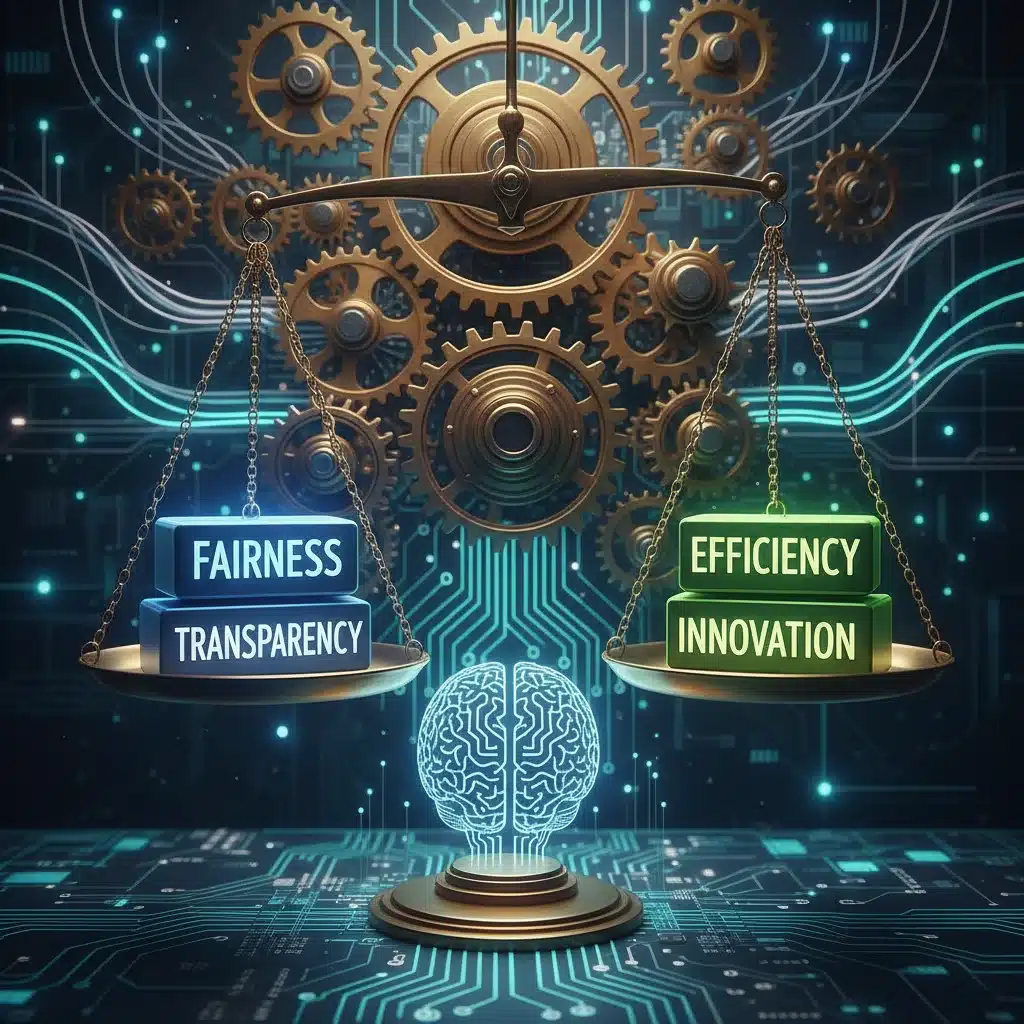
Investment in Education and Lifelong Learning Infrastructure
Governments also have a crucial role in investing in the educational infrastructure necessary for a future workforce. This includes reforming K-12 education to emphasize digital literacy, computational thinking, and human-centric skills; funding higher education programs in AI and related fields; and creating accessible, affordable lifelong learning opportunities for adults.
Public-private partnerships can be instrumental in this regard, leveraging the expertise of industry to inform curriculum development and training programs. A national strategy for skill development in the age of AI is not just an economic imperative but also an ethical one, ensuring that everyone has the opportunity to participate in the new economy.
Challenges in Implementing Ethical AI and Workforce Planning
Despite the clear necessity, implementing ethical AI practices and comprehensive workforce planning presents several significant challenges. These include the rapid pace of technological change, the complexity of ethical dilemmas, and the inertia of existing organizational and governmental structures.
Pace of Technological Change
AI technology is evolving at an astonishing rate. What is cutting-edge today may be obsolete tomorrow. This makes it difficult for regulatory bodies to keep pace, for educational institutions to update curricula, and for businesses to predict future skill demands. The challenge lies in creating frameworks and strategies that are agile and adaptable, rather than rigid and quickly outdated.
Defining and Measuring Ethical Outcomes
The concept of ‘fairness’ or ‘bias’ in AI can be notoriously difficult to define and measure quantitatively. Different stakeholders may have different interpretations of what constitutes an ethical outcome. Developing universally accepted metrics and methodologies for auditing AI systems for bias and ensuring fairness is an ongoing challenge that requires interdisciplinary collaboration among technologists, ethicists, social scientists, and legal experts.
Resistance to Change and Investment Costs
Implementing new technologies, redesigning job roles, and investing in large-scale reskilling initiatives can be costly and met with resistance from employees and management alike. Overcoming this inertia requires strong leadership, clear communication about the benefits of change, and a commitment to supporting employees through the transition. Small and medium-sized enterprises (SMEs) often face particular challenges in accessing the resources needed for AI integration and workforce transformation.
Conclusion: Navigating the AI Employment Frontier Ethically and Strategically
The year 2026 will undoubtedly see AI’s influence on employment deepen and expand. While the prospect of technological disruption can be daunting, a proactive and ethically informed approach can transform these challenges into opportunities. The key lies in understanding that AI is a tool, and its impact on employment is largely determined by how we choose to wield it.
By prioritizing AI employment ethics, investing in continuous learning and reskilling, redesigning work to foster human-AI collaboration, and establishing robust policy frameworks, we can shape a future where AI serves to augment human potential, create more meaningful work, and contribute to a more equitable and prosperous society. The journey ahead requires foresight, collaboration, and a steadfast commitment to putting humanity at the center of the AI revolution.
Embracing this transformative era means viewing AI not as a threat to human labor, but as a catalyst for evolution. It demands a collective effort from individuals, businesses, educators, and governments to build a future of work that is not only technologically advanced but also ethically sound and socially just. The time to plan and act is now, to ensure that the AI-driven world of 2026 and beyond is one where everyone can thrive.