AI Tools for Cybersecurity: 3 Essential Updates for 2025

AI tools for cybersecurity are set to receive three essential updates in 2025, focusing on predictive threat intelligence, autonomous response systems, and enhanced anomaly detection, crucial for protecting businesses from increasingly sophisticated digital attacks.
As the digital landscape evolves at an unprecedented pace, the need for robust defenses against cyber threats becomes paramount. Businesses today face an array of complex and persistent attacks, making traditional security measures often insufficient. This is where AI Tools for Cybersecurity: 3 Essential Updates to Protect Your Business in 2025 step in, offering a transformative approach to digital protection.
The Evolving Threat Landscape and AI’s Role
Cybersecurity threats are no longer simple phishing attempts or basic malware. They have become highly sophisticated, often leveraging AI themselves to bypass defenses and exploit vulnerabilities. This arms race necessitates an equally advanced response, and artificial intelligence is proving to be the most potent weapon in a business’s arsenal.
The sheer volume of data generated by modern enterprises, coupled with the speed at which attacks can propagate, overwhelms human analysts. AI excels in processing vast datasets, identifying patterns, and making decisions far more rapidly than any human. This capability is not just about reacting to threats but proactively anticipating and neutralizing them before they can inflict damage.
The Shift from Reactive to Proactive Security
Historically, cybersecurity has been largely reactive, focusing on detecting and responding to breaches after they’ve occurred. While essential, this approach often leads to significant downtime, financial losses, and reputational damage. AI is fundamentally changing this paradigm by enabling a proactive stance.
- Predictive Analytics: AI algorithms analyze historical threat data and current network behavior to predict potential attack vectors and vulnerabilities before they are exploited.
- Behavioral Anomaly Detection: Machine learning models establish baselines for normal user and system behavior, quickly flagging deviations that could indicate a compromise.
- Automated Threat Hunting: AI can continuously scan networks for subtle indicators of compromise that might evade traditional security tools.
By shifting towards a proactive model, businesses can significantly reduce their exposure to risk, minimize the impact of successful attacks, and maintain operational continuity. This evolution is critical as cybercriminals become more organized and resourceful, making an anticipatory defense strategy indispensable for survival in the digital age.
Update 1: Advanced Predictive Threat Intelligence
In 2025, one of the most critical advancements in AI cybersecurity tools will be the development of advanced predictive threat intelligence. This isn’t just about identifying known threats; it’s about foreseeing emerging attack patterns and vulnerabilities before they become widespread. AI systems will leverage vast global datasets, including dark web activity, geopolitical trends, and open-source intelligence, to construct highly accurate threat models.
These sophisticated models will move beyond simple signature-based detection, which relies on known threat indicators, to analyze complex behavioral sequences and contextual factors. This allows businesses to anticipate zero-day exploits and highly targeted attacks, providing a crucial window to bolster defenses before an attack even materializes. The integration of external threat feeds with internal network telemetry will create a holistic view of potential risks.
Leveraging Global Data for Local Protection
The power of advanced predictive threat intelligence lies in its ability to synthesize global threat data and apply it to specific organizational contexts. Imagine an AI system that learns about a new malware strain emerging in Asia and immediately assesses its potential impact on your business’s infrastructure in the United States, suggesting preventative measures.
- Cross-Industry Threat Sharing: AI platforms will facilitate anonymized sharing of threat intelligence across industries, creating a more robust collective defense.
- Geopolitical Risk Assessment: Integration with geopolitical analysis will help predict state-sponsored attacks or region-specific threats.
- Supply Chain Vulnerability Mapping: AI will identify and assess risks within a business’s extended supply chain, a common vector for sophisticated attacks.
This level of foresight transforms cybersecurity from a reactive cost center into a strategic advantage. Businesses can allocate resources more effectively, prioritize vulnerabilities based on real-time threat landscapes, and make informed decisions about their security posture. The ability to predict and prepare for future attacks is arguably the most valuable contribution AI brings to cybersecurity in 2025.
Update 2: Autonomous AI Response and Remediation Systems
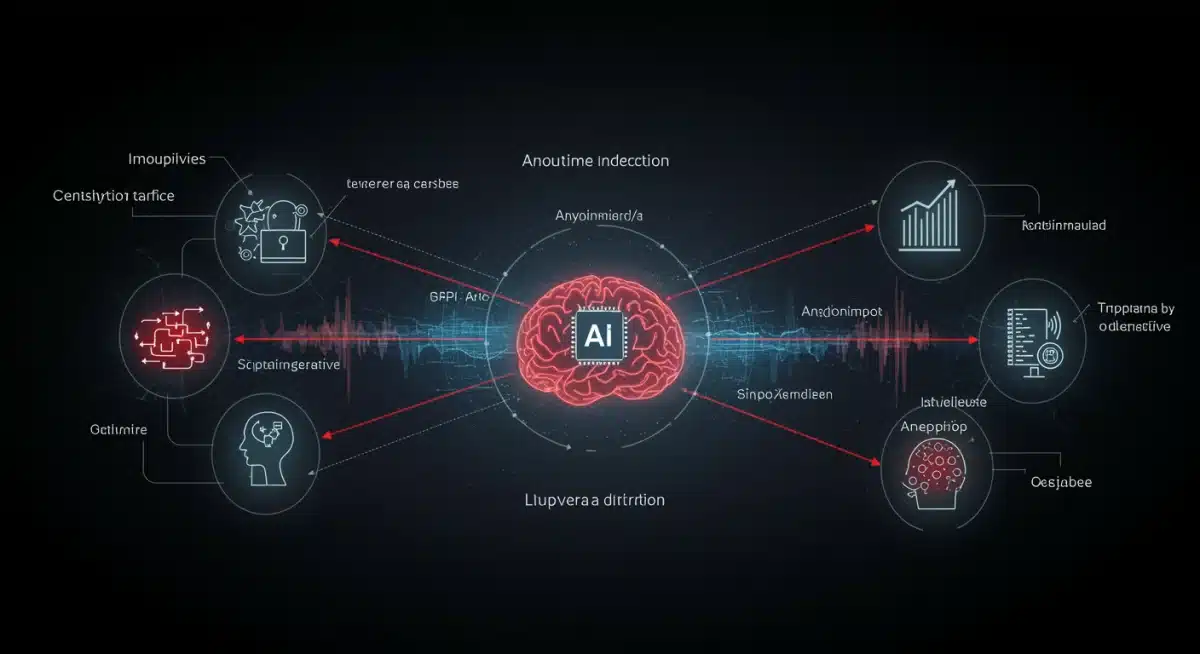
The second essential update for 2025 involves the maturation of autonomous AI response and remediation systems. While predictive intelligence aims to prevent attacks, even the best defenses can be breached. When an incident occurs, the speed of response is paramount in limiting damage. Autonomous AI systems are designed to detect, analyze, and neutralize threats with minimal human intervention, often in milliseconds.
These systems move beyond automated alerts to actively isolate compromised systems, quarantine malicious files, and even patch vulnerabilities on the fly. They learn from every incident, refining their response protocols and becoming more effective over time. This capability is particularly vital in environments where human response times are simply too slow to counteract rapidly evolving threats, such as ransomware or fast-spreading worms.
Self-Healing Networks and Adaptive Defenses
The vision for 2025 includes self-healing networks that can automatically recover from attacks. Autonomous AI will play a central role in this, not just by containing threats but by restoring systems to their pre-attack state, reconfiguring network defenses, and even adapting security policies based on the nature of the attack. This level of automation significantly reduces recovery times and the operational burden on security teams.
Consider a scenario where an AI system detects an intrusion, immediately isolates the affected segment of the network, deploys countermeasures, and simultaneously initiates a forensic analysis to understand the attack vector. All of this happens without a human analyst needing to manually intervene in the initial stages. The human role shifts from first responder to oversight and strategic planning, enhancing overall security efficacy.
The development of these autonomous capabilities will free up security professionals to focus on more complex strategic challenges, such as threat hunting, policy development, and compliance. By automating the routine and rapid-response tasks, AI empowers human experts to leverage their unique skills more effectively, leading to a more resilient and responsive cybersecurity posture for any business.
Update 3: Enhanced AI-Powered Anomaly Detection and User Behavior Analytics
The third crucial update for 2025 centers on significantly enhanced AI-powered anomaly detection and user behavior analytics (UBA). Traditional security often relies on static rules and known attack signatures. However, sophisticated attackers often use legitimate credentials or mimic normal user behavior to evade detection. AI-driven UBA changes this by establishing dynamic baselines of normal activity for every user and entity within a network.
These systems continuously monitor user logins, access patterns, data transfers, and application usage, building a complex profile of typical behavior. Any deviation from this norm, no matter how subtle, is flagged as a potential threat. This includes insider threats, compromised accounts, or lateral movement by an attacker who has already breached the perimeter.
Detecting the Undetectable with Behavioral AI
The true power of enhanced anomaly detection lies in its ability to uncover threats that would otherwise go unnoticed by conventional security tools. It’s not looking for a specific virus signature but rather for actions that are out of character. For instance, an employee suddenly accessing sensitive files outside their typical working hours or from an unusual location would trigger an alert.
- Contextual Awareness: AI considers multiple factors, such as time of day, location, device, and resource accessed, to determine if an action is truly anomalous.
- Peer Group Analysis: Systems can compare an individual’s behavior against their peer group, identifying outliers that might indicate a compromised account or malicious insider.
- Self-Learning Models: AI continuously refines its understanding of normal behavior, reducing false positives and adapting to legitimate changes in user patterns.
This nuanced approach to security significantly strengthens a business’s defense against advanced persistent threats (APTs) and insider risks. By focusing on behavior rather than just signatures, AI-powered anomaly detection provides a dynamic and adaptive layer of security that is essential for protecting sensitive data and intellectual property in 2025. It represents a shift from simply blocking known bad actors to understanding and securing the very fabric of organizational trust.
Integrating AI Cybersecurity Tools into Your Business Strategy
Adopting these advanced AI cybersecurity tools isn’t merely a technical upgrade; it’s a strategic imperative for businesses aiming to thrive in 2025. Successful integration requires more than just purchasing software; it demands a holistic approach that encompasses people, processes, and technology. Businesses must prepare their IT and security teams to work alongside AI, understanding its capabilities and limitations.
The initial phase involves assessing current security infrastructure and identifying areas where AI can provide the most significant impact. This might include enhancing existing SIEM (Security Information and Event Management) systems with AI capabilities or deploying dedicated AI-driven platforms for specific functions like endpoint detection and response (EDR) or network traffic analysis. Training personnel to interpret AI-generated insights and respond to autonomous actions is also crucial.
Best Practices for AI Cybersecurity Implementation
To maximize the benefits of AI in cybersecurity, businesses should follow several best practices. A phased implementation, starting with pilot programs, can help identify challenges and fine-tune configurations before a full rollout. It’s also vital to ensure that AI systems are continuously monitored and updated, as the threat landscape is constantly changing.
- Start Small, Scale Up: Begin with specific use cases where AI can deliver immediate value, then expand its application across the organization.
- Data Quality is Key: Ensure that the data fed into AI models is accurate, comprehensive, and relevant to avoid biased or ineffective security decisions.
- Human-AI Collaboration: Foster a culture where AI augments human capabilities rather than replacing them, empowering security analysts with better tools.
- Regular Audits and Updates: Periodically review AI system performance and update models to reflect new threats and evolving business needs.
By carefully planning and executing the integration of AI cybersecurity tools, businesses can build a more resilient, intelligent, and adaptive defense system. This strategic adoption will not only protect against current threats but also prepare the organization for the unforeseen challenges of the future, safeguarding assets and maintaining stakeholder trust.
Challenges and Future Outlook for AI in Cybersecurity
While the promise of AI in cybersecurity is immense, its implementation is not without challenges. One significant hurdle is the complexity of integrating diverse AI systems into existing infrastructure. Ensuring interoperability and preventing conflicts between different security tools can be a demanding task. Another concern is the potential for AI systems to generate false positives, leading to alert fatigue for security teams. While AI is designed to reduce this, poorly configured or untrained models can inadvertently exacerbate the issue.
Furthermore, the ethical implications of AI in security, particularly concerning privacy and surveillance, require careful consideration. Striking a balance between robust protection and individual rights will be an ongoing debate. The development of AI-powered attack tools by malicious actors also presents an escalating challenge, necessitating continuous innovation in defensive AI.
Navigating the AI Cybersecurity Frontier
Despite these challenges, the future outlook for AI in cybersecurity remains overwhelmingly positive. Research and development are rapidly addressing current limitations, with a focus on creating more explainable AI (XAI) models that can justify their decisions, enhancing trust and transparency. The trend towards federated learning in cybersecurity, where AI models are trained on decentralized data without sharing raw information, will also improve privacy and collaborative threat intelligence.
Looking ahead, we can anticipate AI playing an even more central role in areas such as cyber-physical security, protecting critical infrastructure, and even influencing national security strategies. The continuous evolution of AI capabilities, coupled with increasing investment in cybersecurity innovation, suggests a future where digital defenses are more intelligent, adaptive, and resilient than ever before. Businesses that embrace this evolution will be best positioned to navigate the complex digital landscape of tomorrow.
| Key Update | Brief Description |
|---|---|
| Predictive Threat Intelligence | AI systems forecast emerging threats and vulnerabilities using global data, enabling proactive defense. |
| Autonomous Response Systems | AI detects, analyzes, and neutralizes threats rapidly with minimal human intervention, including self-healing. |
| Enhanced Anomaly Detection | AI-powered User Behavior Analytics (UBA) identifies subtle deviations from normal activity, detecting insider threats. |
| Strategic Integration | Requires businesses to adapt processes and train teams to effectively leverage AI tools for comprehensive security. |
Frequently Asked Questions About AI in Cybersecurity
Predictive threat intelligence uses AI to analyze massive datasets, including global threat feeds and dark web activity, to foresee emerging cyberattack patterns and vulnerabilities before they become active threats. This allows businesses to proactively implement defenses.
Autonomous AI response systems automatically detect, analyze, and neutralize cyber threats with minimal human intervention. They can isolate compromised systems, quarantine malicious files, and even self-heal networks, significantly reducing damage and recovery times.
UBA is an AI-powered system that establishes baselines for normal user and entity behavior within a network. It’s crucial for detecting subtle anomalies that might indicate insider threats, compromised accounts, or advanced persistent threats that bypass traditional security.
No, AI cybersecurity tools are designed to augment human capabilities, not replace them. AI handles repetitive tasks and processes vast data, freeing human analysts to focus on complex strategic challenges, threat hunting, and policy development, fostering a more robust defense.
Key challenges include integrating diverse AI systems, managing potential false positives, and addressing ethical concerns related to privacy. Additionally, the rapid evolution of AI-powered attack tools necessitates continuous innovation in defensive AI strategies.
Conclusion
The digital frontier of 2025 demands a new caliber of defense, and AI stands at the forefront of this evolution. The three essential updates—advanced predictive threat intelligence, autonomous response and remediation, and enhanced anomaly detection—collectively represent a paradigm shift in how businesses approach cybersecurity. By embracing these sophisticated AI tools, organizations can move beyond reactive measures to establish a proactive, resilient, and intelligent defense posture. This strategic integration not only safeguards critical assets but also empowers security teams to navigate the increasingly complex threat landscape with confidence, ensuring business continuity and trust in an interconnected world.