Edge AI 2026: Sub-Millisecond Latency for Real-Time ML in the US

The technological landscape is ever-evolving, and at the forefront of this rapid transformation is Artificial Intelligence. Specifically, the convergence of AI with edge computing, often termed Edge AI Latency, is setting the stage for a paradigm shift in how we process and utilize data. By 2026, the promise of sub-millisecond latency for real-time machine learning applications across the United States will not just be a futuristic vision but a tangible reality, fundamentally altering industries from healthcare to manufacturing, and smart cities to autonomous vehicles.
The sheer volume of data generated globally is staggering, and traditional cloud-centric AI models, while powerful, often grapple with the inherent limitations of network latency. This is where Edge AI steps in, bringing computation and data storage closer to the source of data generation. The implications for real-time decision-making are profound, enabling instantaneous responses that are critical for safety, efficiency, and competitive advantage. Our focus here is on understanding how this ultra-low latency is being achieved, the technologies enabling it, the challenges that need to be overcome, and the transformative impact it will have across various sectors in the US by 2026.
The Imperative of Sub-Millisecond Latency for Edge AI
Why is sub-millisecond latency so critical for Edge AI Latency? In many applications, even a delay of a few milliseconds can have significant consequences. Consider autonomous vehicles: a split-second delay in processing sensor data could mean the difference between avoiding an accident and a collision. In surgical robotics, real-time feedback with minimal delay is paramount for precision and patient safety. Similarly, in high-frequency trading, sub-millisecond decisions can yield massive financial gains or losses.
Traditional cloud computing, while offering immense processing power, introduces latency due to the physical distance data must travel to and from centralized data centers. This round-trip time, coupled with network congestion, can easily push latency into the tens or even hundreds of milliseconds. Edge AI mitigates this by performing computations at or near the data source, drastically reducing the need to transmit raw data to the cloud for processing. This localized processing is the cornerstone of achieving the coveted sub-millisecond response times.
Differentiating Edge AI from Cloud AI
To fully appreciate the value of Edge AI Latency, it’s essential to understand its fundamental differences from cloud AI. Cloud AI thrives on vast datasets and complex model training, where computational resources are virtually unlimited. It’s ideal for tasks like deep learning model development, large-scale data analytics, and non-time-critical applications. However, its Achilles’ heel is latency and bandwidth consumption.
Edge AI, on the other hand, focuses on inference and real-time decision-making using pre-trained models. It prioritizes speed, efficiency, and data privacy. By processing data locally, it reduces bandwidth demands, enhances security (as sensitive data stays on-site), and most importantly, slashes latency. This distributed intelligence model is not meant to replace cloud AI but rather to complement it, forming a powerful hybrid architecture where the cloud handles heavy lifting (training, model updates) and the edge handles instantaneous actions.
Technological Pillars Enabling Sub-Millisecond Edge AI
Achieving sub-millisecond latency for Edge AI Latency is not a trivial task; it requires advancements across multiple technological fronts. By 2026, several key innovations will have matured to make this a widespread reality in the US.
1. Advanced Edge Processors and Accelerators
The core of high-performance Edge AI lies in specialized hardware. Traditional CPUs are not optimized for the parallel processing demands of neural networks. This has led to the proliferation of:
- GPUs (Graphics Processing Units): While traditionally used for graphics, GPUs are excellent for parallel computation and are increasingly found in edge devices for AI inference.
- NPUs (Neural Processing Units): These are purpose-built accelerators designed specifically for AI workloads, offering superior efficiency and performance for inference tasks at the edge. Companies like Google (Tensor Processing Units), Intel (Myriad VPU), and NVIDIA (Jetson series) are leading this charge.
- FPGAs (Field-Programmable Gate Arrays): FPGAs offer flexibility and can be reprogrammed to optimize for specific AI models, providing a balance between performance and adaptability.
- ASICs (Application-Specific Integrated Circuits): For highly specific and high-volume Edge AI applications, ASICs offer the ultimate in performance and power efficiency, albeit with higher initial development costs.
These specialized processors are becoming more powerful and energy-efficient, allowing complex AI models to run on devices with limited power budgets and form factors, from smart cameras to industrial sensors.
2. Optimized AI Models and Algorithms
Hardware alone isn’t enough. The AI models themselves need to be optimized for edge deployment. This involves:
- Model Quantization: Reducing the precision of numerical representations (e.g., from 32-bit floating point to 8-bit integers) significantly shrinks model size and speeds up inference without substantial loss in accuracy.
- Model Pruning: Removing redundant connections or neurons from a neural network to make it smaller and faster.
- Knowledge Distillation: Training a smaller, simpler ‘student’ model to mimic the behavior of a larger, more complex ‘teacher’ model, making it suitable for edge deployment.
- Efficient Architectures: Developing new neural network architectures specifically designed for resource-constrained environments, such as MobileNet or EfficientNet.
These techniques ensure that even sophisticated machine learning models can execute inference within sub-millisecond timeframes on edge devices.
3. Low-Latency Communication Protocols
While Edge AI minimizes data transfer to the cloud, local communication between edge devices and gateways still needs to be ultra-fast. The rollout of 5G and future 6G networks is pivotal here. 5G promises:
- Enhanced Mobile Broadband (eMBB): Higher bandwidth for faster data transfer.
- Ultra-Reliable Low-Latency Communication (URLLC): Designed specifically for mission-critical applications requiring extremely low latency and high reliability, ideal for Edge AI Latency.
- Massive Machine-Type Communications (mMTC): Connecting a vast number of devices efficiently.
Beyond cellular networks, advancements in Wi-Fi 6/6E and other localized wireless technologies also contribute to establishing a robust, low-latency communication fabric at the edge.
4. Edge Operating Systems and Software Frameworks
The software stack supporting Edge AI is equally crucial. Lightweight operating systems optimized for real-time processing, such as FreeRTOS or specialized Linux distributions, are essential. Furthermore, AI frameworks are adapting for edge deployment:
- TensorFlow Lite and PyTorch Mobile: These are optimized versions of popular AI frameworks designed to run efficiently on mobile and edge devices.
- ONNX Runtime: A high-performance inference engine for ONNX (Open Neural Network Exchange) models, enabling cross-platform deployment.
- Containerization (e.g., Docker, Kubernetes for Edge): Facilitates the deployment and management of AI workloads on diverse edge hardware, ensuring consistency and scalability.
These software layers abstract hardware complexities, allowing developers to deploy and manage AI models more effectively at the edge.
Transformative Applications Across US Industries by 2026
The widespread adoption of sub-millisecond Edge AI Latency will revolutionize numerous sectors across the United States. Here’s a glimpse into the future:
Manufacturing and Industrial Automation
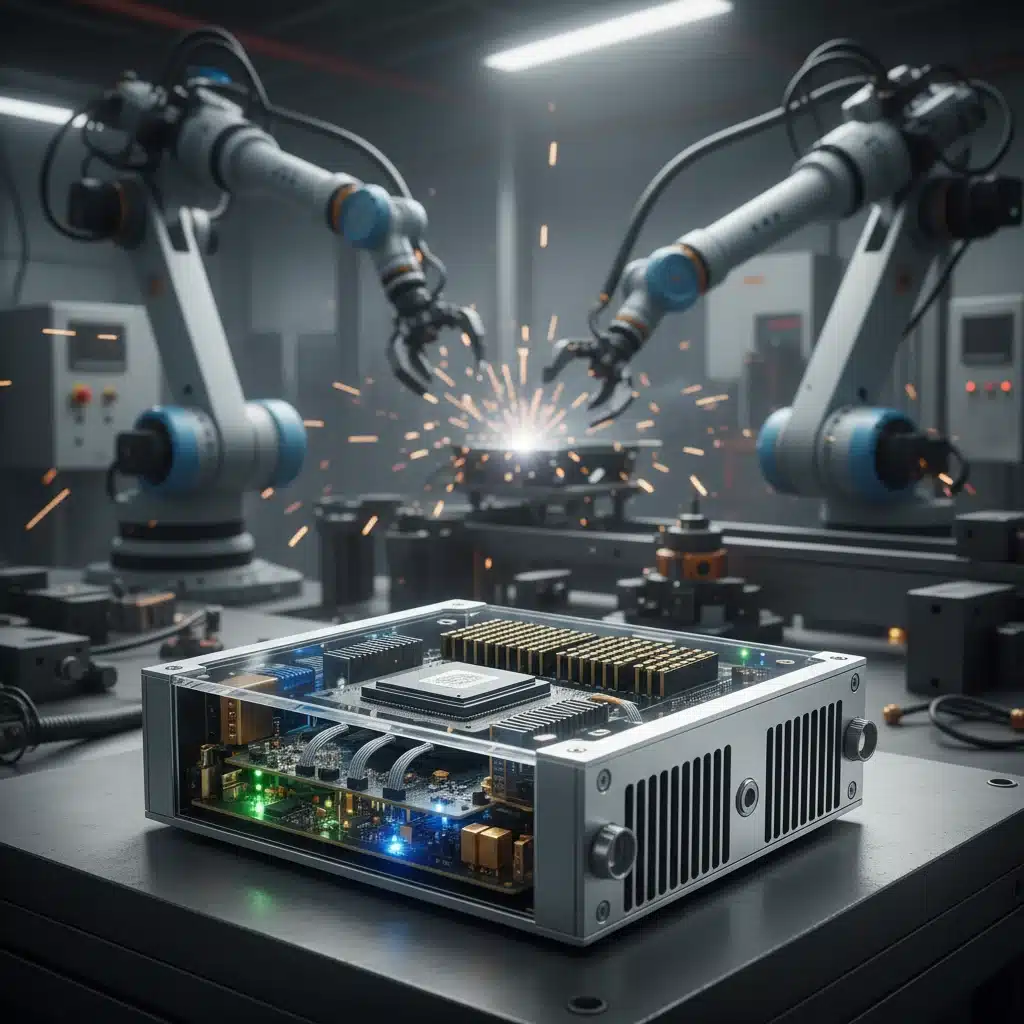
In smart factories, Edge AI will enable predictive maintenance with unprecedented accuracy. Sensors on machinery will detect anomalies in real-time, predicting failures before they occur, thus minimizing downtime and maximizing operational efficiency. Quality control will become fully automated, with AI-powered vision systems inspecting products on assembly lines at high speeds, identifying defects that human eyes might miss, all within sub-millisecond response times. Robotic systems will collaborate more effectively, making instantaneous decisions based on real-time environmental data.
Healthcare and Medical Devices
Edge AI will transform patient care. Wearable medical devices will monitor vital signs and detect critical events (e.g., heart attacks, epileptic seizures) with sub-millisecond latency, alerting medical professionals or even triggering automated interventions. AI-powered surgical robots will gain enhanced precision through real-time image analysis and haptic feedback. In hospitals, Edge AI can analyze medical images (X-rays, MRIs) at the point of care, providing immediate diagnostic assistance to clinicians, especially in remote or underserved areas where cloud connectivity might be unreliable or slow.
Autonomous Vehicles and Transportation
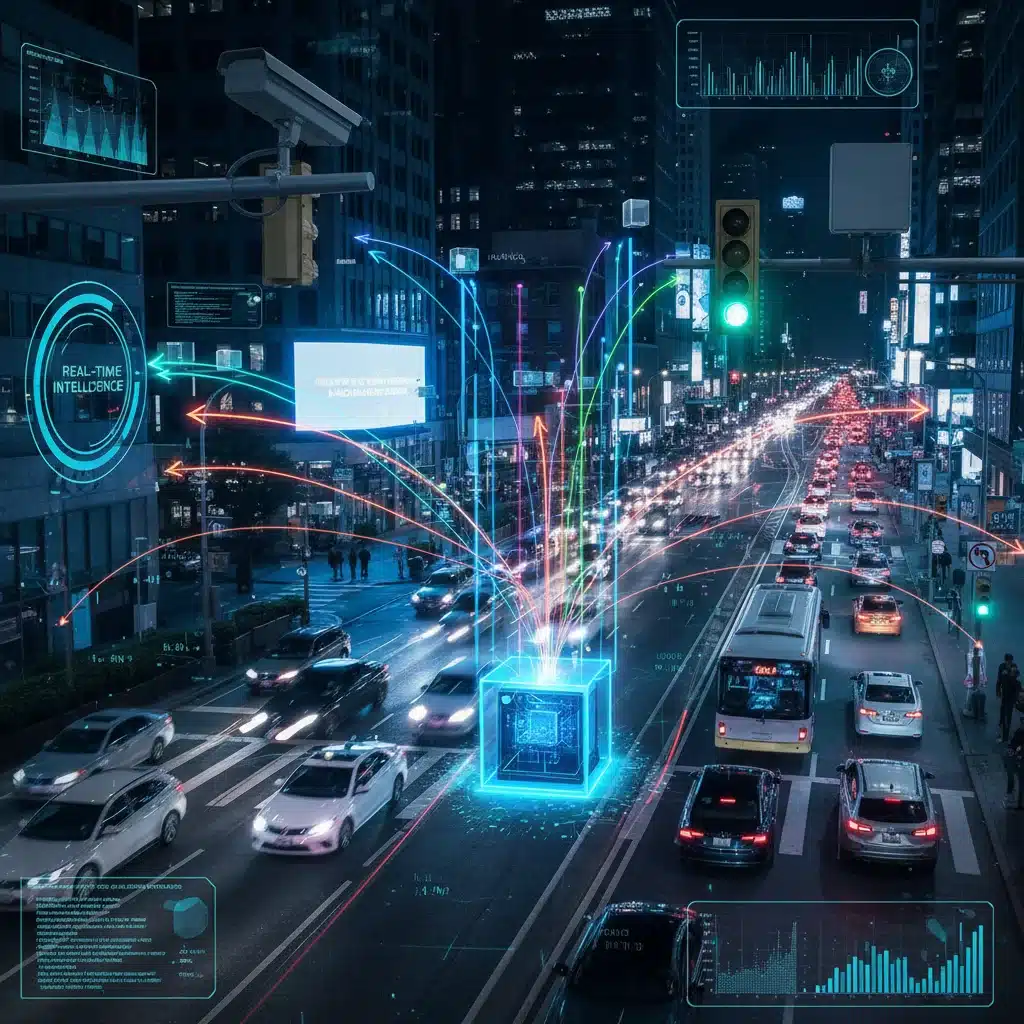
This sector is perhaps the most obvious beneficiary of ultra-low latency Edge AI. Self-driving cars rely on instantaneous processing of massive sensor data (LIDAR, radar, cameras) to navigate, detect obstacles, and make split-second decisions. Sub-millisecond Edge AI Latency is non-negotiable for safe and reliable autonomous operation. Beyond individual vehicles, smart traffic management systems will use Edge AI to optimize traffic flow in real-time, preventing congestion and accidents, and coordinating autonomous fleets.
Smart Cities and Infrastructure
Urban environments will become more intelligent and responsive. Edge AI will power smart streetlights that adapt to traffic conditions, intelligent waste management systems, and real-time public safety monitoring. Environmental sensors will analyze air quality and noise levels instantaneously, providing immediate insights for urban planning. Public transport will be optimized based on real-time demand, improving commuter experience and reducing energy consumption.
Retail and Customer Experience
In retail, Edge AI will enable hyper-personalized customer experiences. Smart cameras can analyze customer movements and preferences in-store, offering real-time recommendations or dynamic pricing. Inventory management will become more efficient with AI tracking stock levels and predicting demand. Checkout processes can be streamlined with frictionless payment systems powered by computer vision and Edge AI, all operating at lightning speed.
Challenges on the Path to Widespread Sub-Millisecond Edge AI
While the vision for Edge AI Latency by 2026 is compelling, several significant challenges must be addressed for its widespread adoption across the US.
1. Hardware Miniaturization and Power Efficiency
Edge devices often operate in constrained environments with limited space and power. Developing powerful AI accelerators that are also small, rugged, and energy-efficient is a continuous engineering challenge. The need for fanless designs and extended battery life for remote deployments adds complexity.
2. Data Privacy and Security
Processing sensitive data at the edge, while reducing cloud exposure, introduces new security vulnerabilities. Protecting edge devices from cyber threats, ensuring data encryption at rest and in transit, and complying with stringent privacy regulations (e.g., HIPAA, GDPR-like state laws) will be paramount. Secure boot, hardware-rooted trust, and robust authentication mechanisms are critical.
3. Model Management and Updates
Deploying and managing thousands or millions of AI models on diverse edge devices presents a significant operational challenge. Over-the-air (OTA) updates, version control, monitoring model performance in real-time, and rolling back faulty models efficiently are essential. This requires sophisticated MLOps (Machine Learning Operations) pipelines tailored for edge environments.
4. Interoperability and Standardization
The Edge AI ecosystem is fragmented, with various hardware vendors, software frameworks, and communication protocols. Achieving seamless interoperability and establishing industry standards will be crucial for scalability and ease of integration. Open-source initiatives and industry alliances will play a vital role here.
5. Connectivity and Infrastructure Gaps
While 5G is expanding, universal coverage, especially in rural areas of the US, remains a challenge. Reliable and low-latency connectivity is essential for managing and updating edge devices, even if local inference occurs offline. Bridging these infrastructure gaps will be key to unlocking the full potential of Edge AI nationwide.
6. Talent Gap
There’s a growing demand for engineers and data scientists proficient in developing, deploying, and managing Edge AI solutions. This requires a unique blend of embedded systems knowledge, machine learning expertise, and network understanding. Addressing this talent gap through education and training programs will be critical.
The Road Ahead: Strategies for Success
To successfully navigate these challenges and fully realize the potential of sub-millisecond Edge AI Latency by 2026, several strategic approaches are being adopted:
Hybrid Cloud-Edge Architectures
The future is not purely edge or purely cloud, but a synergistic hybrid model. The cloud will remain crucial for model training, large-scale data storage, and complex analytics, while the edge handles real-time inference and immediate actions. Seamless integration and orchestration between these two environments will be vital for optimal performance and scalability.
Federated Learning and On-Device Training
To enhance privacy and reduce data movement, federated learning is gaining traction. This approach allows AI models to be trained collaboratively on decentralized edge devices without exchanging raw data. Only model updates are shared and aggregated, preserving data locality and privacy. As edge hardware becomes more capable, limited on-device model retraining or fine-tuning will also become more common, adapting models to local conditions without constant cloud interaction.
AI-as-a-Service (AIaaS) at the Edge
The complexity of deploying and managing Edge AI solutions can be a barrier for many organizations. AIaaS models, where vendors provide pre-configured edge hardware, optimized software stacks, and managed services, will simplify adoption. This allows businesses to focus on their core competencies while benefiting from advanced Edge AI capabilities.
Robust Security Frameworks
Developing comprehensive security frameworks specifically for edge environments, encompassing hardware security modules, secure boot processes, end-to-end encryption, and AI-powered threat detection at the edge, will be non-negotiable. Zero-trust architectures will extend to edge deployments, ensuring that every device and interaction is authenticated and authorized.
Open Standards and Ecosystem Collaboration
Industry collaboration, open-source contributions, and the development of common standards will accelerate innovation and reduce fragmentation. Initiatives like the Linux Foundation Edge and the Open Edge Computing Initiative are fostering an environment where diverse stakeholders can work together to build a robust and interoperable Edge AI ecosystem.
Economic and Societal Impact in the US
The widespread deployment of sub-millisecond Edge AI Latency in the US by 2026 will have profound economic and societal impacts:
Economic Growth and Competitiveness
US industries that embrace Edge AI will gain a significant competitive edge through increased efficiency, automation, and the creation of new products and services. This will drive economic growth, create new job categories, and solidify the US’s position as a leader in AI innovation.
Improved Quality of Life
From safer transportation and more responsive healthcare to smarter cities and personalized retail experiences, Edge AI will enhance the quality of life for citizens. It will enable more proactive public services and empower individuals with intelligent tools that respond instantaneously to their needs.
Enhanced Sustainability
By optimizing energy consumption in smart buildings, improving efficiency in industrial processes, and enabling intelligent resource management in agriculture, Edge AI can contribute significantly to sustainability efforts, reducing waste and carbon footprints.
Data Sovereignty and Privacy
With more data processed locally, organizations and individuals will have greater control over their data, aligning with evolving data sovereignty and privacy regulations. This localized processing can build greater trust in AI systems.
Conclusion
The journey towards pervasive sub-millisecond Edge AI Latency by 2026 is an ambitious one, but the technological advancements and strategic investments being made across the United States indicate that this future is well within reach. From specialized hardware and optimized algorithms to advanced communication networks and robust software frameworks, every piece of the puzzle is falling into place.
The transformative potential for industries such as manufacturing, healthcare, autonomous vehicles, and smart cities is immense, promising unprecedented levels of efficiency, safety, and innovation. While challenges related to hardware, security, and management remain, continuous innovation and collaborative efforts are paving the way for a future where real-time machine learning at the edge is not just a possibility, but a fundamental pillar of our technologically advanced society. By 2026, the US will be a testament to the power of Edge AI, unlocking new frontiers of intelligent automation and real-time responsiveness that were once confined to the realm of science fiction.