AI Transparency: The Growing Demand from US Consumers by 2026

The Inevitable Shift: Why 75% of U.S. Consumers Will Demand AI Transparency by 2026
The landscape of artificial intelligence is evolving at an unprecedented pace, transforming industries, economies, and daily lives. As AI systems become more sophisticated and integrated into critical aspects of society, from financial decisions to healthcare diagnoses, a fundamental question arises: how much do we truly understand about their inner workings? This question is not merely academic; it is rapidly becoming a central tenet of consumer expectation. A recent projection indicates a monumental shift: by 2026, a staggering 75% of U.S. consumers will demand AI transparency. This isn’t just a trend; it’s a profound reorientation of the relationship between technology and its users, driven by a growing awareness of AI’s power and potential impact. Understanding this burgeoning demand for AI transparency is crucial for businesses, policymakers, and indeed, anyone involved in the development or deployment of AI systems.
What Exactly is AI Transparency?
Before delving into the reasons behind this escalating demand, it’s essential to define what we mean by AI transparency. At its core, AI transparency refers to the ability to understand *how* an AI system arrives at a particular decision or outcome. It’s about demystifying the ‘black box’ phenomenon that often characterizes complex AI algorithms. This encompasses several key aspects:
- Explanability: The capacity to explain the reasoning behind an AI’s output in a human-understandable way. This means being able to articulate why a certain loan was approved or denied, or why a specific medical diagnosis was suggested.
- Interpretability: The degree to which a human can understand the cause and effect of an AI system’s internal workings. This is about being able to trace the data inputs and algorithmic steps that lead to a result.
- Accountability: The ability to attribute responsibility for an AI’s actions or decisions. If an AI makes an error or causes harm, who is accountable? Transparency helps in identifying the points of failure or bias.
- Fairness: Ensuring that AI systems do not perpetuate or amplify existing societal biases, and that their decisions are equitable across different demographic groups. Transparency allows for the inspection of potential biases in training data or algorithmic design.
- Data Provenance: Understanding the source and nature of the data used to train the AI model. This includes knowing if the data is representative, accurate, and ethically sourced.
In essence, AI transparency moves beyond simply knowing what an AI does, to understanding how and why it does it. This level of insight is becoming non-negotiable for consumers who are increasingly aware of the profound implications of AI in their lives.
The Driving Forces Behind the Demand for AI Transparency
Several converging factors are contributing to the rapidly accelerating demand for AI transparency among U.S. consumers. These forces are reshaping public perception and setting new benchmarks for technological adoption.
1. The Rise of AI in Critical Decision-Making
AI is no longer confined to niche applications; it’s deeply embedded in systems that directly impact individuals’ well-being and opportunities. From credit scoring and employment screening to personalized medicine and criminal justice, AI algorithms are making decisions that have tangible consequences. Consumers are rightly concerned when these critical decisions are made by opaque systems. If an AI algorithm denies a loan, affects a job application, or influences a medical treatment, individuals want to know the rationale. The stakes are simply too high for blind trust.
2. Growing Awareness of Algorithmic Bias
Numerous high-profile incidents have brought the issue of algorithmic bias to the forefront of public consciousness. Reports of AI systems exhibiting racial, gender, or other forms of discrimination have eroded public trust. For example, facial recognition systems proven to be less accurate for people of color, or hiring algorithms inadvertently favoring certain demographics, highlight the urgent need for scrutiny. Consumers are learning that AI is not inherently neutral; it reflects the biases present in its training data and the assumptions of its developers. To combat this, consumers are demanding AI transparency to ensure fairness and prevent discriminatory outcomes.
3. Data Privacy Concerns
The collection and utilization of vast amounts of personal data are fundamental to many AI systems. However, this also raises significant privacy concerns. Consumers are increasingly wary of how their data is being used, processed, and potentially exploited by AI models. Transparency in data handling, including information on data collection methods, storage, and algorithmic usage, is becoming a prerequisite for many. The desire for AI transparency is intertwined with a broader movement towards greater control over personal data.
4. The Need for Accountability and Recourse
When an AI system makes a mistake or causes harm, who is responsible? The ‘black box’ nature of many AI models makes it incredibly difficult to assign accountability. If a self-driving car is involved in an accident, or an AI-powered diagnostic tool provides an incorrect medical assessment, consumers need to understand the underlying causes and have avenues for recourse. AI transparency provides the necessary insights to establish accountability, enabling individuals to challenge decisions, seek redress, and understand the mechanisms of potential failures.
5. Philosophical and Ethical Considerations
Beyond practical concerns, there’s a growing ethical discourse around AI. Questions about autonomy, human agency, and the very nature of decision-making are being explored. Consumers are not just passive recipients of technology; they are active participants in shaping its ethical trajectory. The demand for AI transparency reflects a desire for AI to align with human values and ethical principles, fostering a sense of control and understanding rather than alienation.
The Business Imperative: Why Companies Must Prioritize AI Transparency
For businesses, the escalating demand for AI transparency is not merely a compliance issue; it’s a strategic imperative. Companies that fail to adapt risk losing consumer trust, market share, and competitive advantage. Conversely, those that embrace AI transparency stand to gain significantly.
1. Building and Maintaining Consumer Trust
Trust is the bedrock of any successful customer relationship. In an era where AI influences so many aspects of consumer interaction, a lack of transparency can quickly erode that trust. When consumers understand how an AI system works, they are more likely to trust its outputs and feel comfortable engaging with AI-powered services. A transparent approach signals integrity and respect for the user, fostering long-term loyalty. This is especially true for sensitive applications like financial services or healthcare, where trust is paramount.
2. Enhancing Brand Reputation
In a competitive market, a commitment to ethical AI and transparency can be a powerful differentiator. Companies known for their responsible AI practices will attract a more discerning customer base and enhance their overall brand reputation. This positive image can translate into increased customer acquisition and retention, as well as attracting top talent in the AI field who prioritize ethical development.
3. Mitigating Risks and Avoiding PR Crises
Opaque AI systems are breeding grounds for unexpected biases, errors, and public backlash. By proactively implementing AI transparency measures, businesses can identify and address potential issues before they escalate into costly PR crises or legal challenges. Understanding the ‘why’ behind an AI’s decision allows for faster debugging, better auditing, and more robust risk management. The cost of rectifying a major AI-related controversy far outweighs the investment in transparent development practices.
4. Fostering Innovation and Collaboration
Transparency within an organization can also foster greater collaboration and innovation. When developers, ethicists, and business stakeholders can all understand and scrutinize an AI model, it leads to better design, more robust testing, and a more holistic approach to AI development. An open approach to AI development can also attract external researchers and partners, leading to new insights and advancements.
5. Preparing for Future Regulation
Governments and regulatory bodies worldwide are increasingly turning their attention to AI governance. The European Union’s AI Act, for instance, mandates specific transparency requirements for high-risk AI systems. While U.S. regulation is still evolving, the trend is clear: greater oversight and accountability are coming. Businesses that proactively adopt AI transparency now will be better positioned to comply with future regulations, avoiding costly retrofits and legal entanglements. Early adoption can even give companies a voice in shaping future policy.
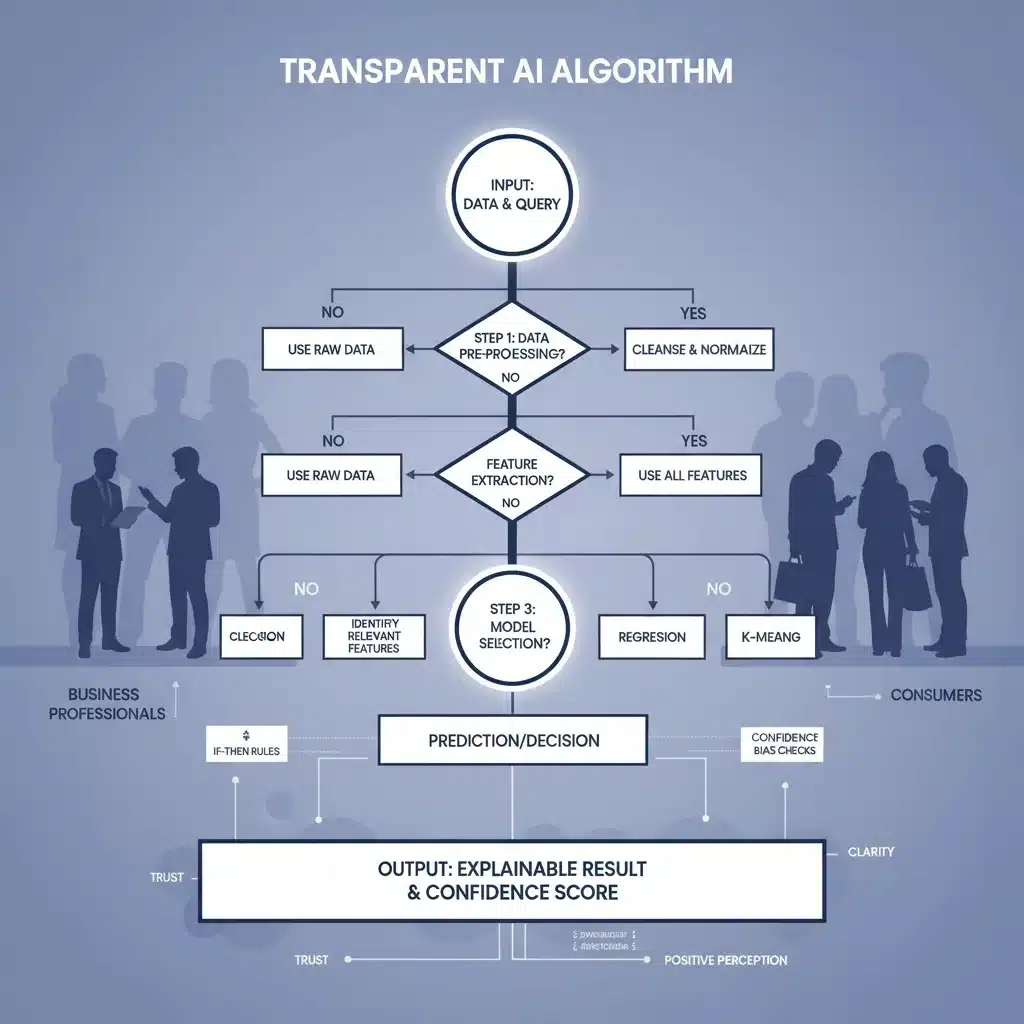
Strategies for Achieving AI Transparency
Achieving AI transparency is not a one-size-fits-all solution; it requires a multi-faceted approach involving technological, organizational, and ethical considerations. Here are key strategies businesses can adopt:
1. Invest in Explainable AI (XAI) Technologies
XAI is a field of AI development focused on creating models whose outputs can be understood by humans. This includes techniques such as:
- LIME (Local Interpretable Model-agnostic Explanations): Explains the predictions of any classifier in an interpretable and faithful manner.
- SHAP (SHapley Additive exPlanations): A game theory approach to explain the output of any machine learning model.
- Decision Trees and Rule-Based Systems: Inherently more interpretable models for certain applications.
Investing in these technologies allows developers to build AI systems that can provide clear, concise justifications for their decisions, directly addressing the demand for AI transparency.
2. Implement Robust Data Governance and Auditing
Transparency begins with data. Companies must establish clear policies for data collection, storage, usage, and retention. This includes:
- Documenting Data Sources: Clearly identifying where training data comes from and its characteristics.
- Bias Detection and Mitigation: Regularly auditing datasets for biases and implementing strategies to correct them.
- Data Lineage Tracking: Maintaining a clear record of how data has been transformed and used throughout the AI development lifecycle.
Regular, independent audits of AI systems, including their data inputs and outputs, are crucial for ensuring fairness and accountability.
3. Develop Clear Communication Frameworks
Technical transparency is only part of the equation. Businesses must also communicate how their AI systems work in a way that is understandable to non-technical users. This can involve:
- User-Friendly Explanations: Providing clear, jargon-free explanations of AI decisions in customer-facing applications.
- Transparency Reports: Publishing regular reports on AI performance, ethical considerations, and bias mitigation efforts.
- Dedicated Support Channels: Offering avenues for users to inquire about AI decisions and receive explanations.
The goal is to empower users with information, not overwhelm them with technical details.
4. Establish Ethical AI Guidelines and Teams
Embed ethical considerations into every stage of the AI development lifecycle. This includes:
- Cross-Functional Ethics Committees: Bringing together experts from AI, ethics, legal, and business to review AI projects.
- AI Ethics Training: Educating developers and stakeholders on the ethical implications of AI.
- Value-Based Design: Designing AI systems with human values and societal well-being at their core.
An ethical framework provides a guiding light for developing responsible and transparent AI. This proactive approach ensures that AI transparency is not an afterthought but a foundational principle.
5. Embrace Open Source and Collaboration (Where Appropriate)
For certain types of AI, embracing open-source principles can significantly enhance transparency. Sharing code, models, and methodologies allows for broader scrutiny and collaboration within the AI community, leading to more robust and trustworthy systems. While not always feasible for proprietary systems, the spirit of openness can still inform internal development practices.
The Future Landscape: Beyond 2026
The projection that 75% of U.S. consumers will demand AI transparency by 2026 is not an endpoint, but rather a significant milestone in the ongoing evolution of AI ethics and governance. Beyond this date, the expectations for AI transparency are likely to become even more stringent and nuanced.
Standardization and Certification
We can anticipate the emergence of industry standards and certification programs for AI transparency. Similar to how organic food or fair trade products receive certifications, AI systems might be evaluated and labeled based on their level of explainability, fairness, and data governance. This would provide consumers with clear indicators of trustworthy AI and incentivize businesses to adhere to best practices.
AI Literacy and Education
As AI becomes more pervasive, there will be a growing need for AI literacy among the general public. Educational initiatives, from school curricula to public awareness campaigns, will empower consumers to understand basic AI concepts, identify potential biases, and effectively demand transparency. A more informed populace will drive the continued evolution of responsible AI practices.
Personalized Transparency
The future of AI transparency might also involve more personalized approaches. Instead of generic explanations, individuals might receive tailored insights into how an AI system made a decision specifically related to them, taking into account their unique data profile and context. This would move beyond broad explanations to highly relevant and actionable insights.
Global Harmonization of AI Ethics
While this discussion focuses on U.S. consumers, the demand for AI transparency is a global phenomenon. We can expect increasing efforts towards international harmonization of AI ethics and regulatory frameworks, ensuring that transparent and responsible AI practices are adopted across borders. This will create a more level playing field for businesses and provide consistent protections for consumers worldwide.

Challenges on the Path to Full AI Transparency
While the benefits of AI transparency are clear, achieving it is not without its challenges:
- Complexity of Models: Modern deep learning models, with their millions of parameters, are inherently complex. Making their internal workings fully interpretable while maintaining performance is a significant technical hurdle. There’s often a trade-off between model accuracy and explainability.
- Computational Overhead: Implementing XAI techniques can sometimes add computational overhead, potentially impacting the speed and efficiency of AI systems, especially in real-time applications.
- Proprietary Information: Companies may be reluctant to reveal too much about their AI algorithms due to intellectual property concerns and competitive reasons. Finding a balance between transparency and protecting proprietary information is crucial.
- Defining ‘Good Enough’ Transparency: What constitutes sufficient transparency can vary depending on the AI application and the user’s needs. Establishing clear, universally accepted benchmarks for transparency remains an ongoing challenge.
- Human Cognitive Limitations: Even with advanced XAI tools, presenting complex AI explanations in a way that is easily digestible and actionable for all users requires careful design and consideration of human cognitive limitations.
Overcoming these challenges will require continued research, innovative technological solutions, and a collaborative effort between industry, academia, and government.
Conclusion: The Era of Accountable AI
The statistic that 75% of U.S. consumers will demand AI transparency by 2026 is a powerful indicator of a paradigm shift. It signifies a move away from passive acceptance of technology towards an active, informed, and ethically conscious engagement with artificial intelligence. For businesses, this is not a distant future but an immediate call to action. Embracing AI transparency is no longer optional; it is fundamental to building enduring trust, ensuring ethical operation, and securing a competitive edge in the rapidly evolving digital economy. The era of the AI ‘black box’ is drawing to a close, paving the way for an era of accountable, understandable, and ultimately, more trustworthy artificial intelligence. Companies that proactively invest in explainable AI, robust data governance, clear communication, and ethical frameworks will not only meet consumer expectations but will also lead the charge towards a more responsible and beneficial AI future.